The floor plan looked flawless on the architect's screen. Every piece of equipment fit, every zone was labeled, and the budget checked out. Then construction wrapped, the team moved in, and everything fell apart: servers collided with prep cooks during the dinner rush, the walk-in cooler opened directly into the hot line's path, and the ventilation system failed its first inspection. Scenarios like this play out across the hospitality industry every year — and they almost always trace back to preventable layout decisions made during construction planning.
For hotel operators, resort executives, and F&B directors, these mistakes carry real financial consequences, especially since large construction projects typically run 80% over budget according to McKinsey & Company, and inefficient layouts can reduce kitchen productivity by up to 30% over the long term.
This guide breaks down the most common errors and how to avoid them.
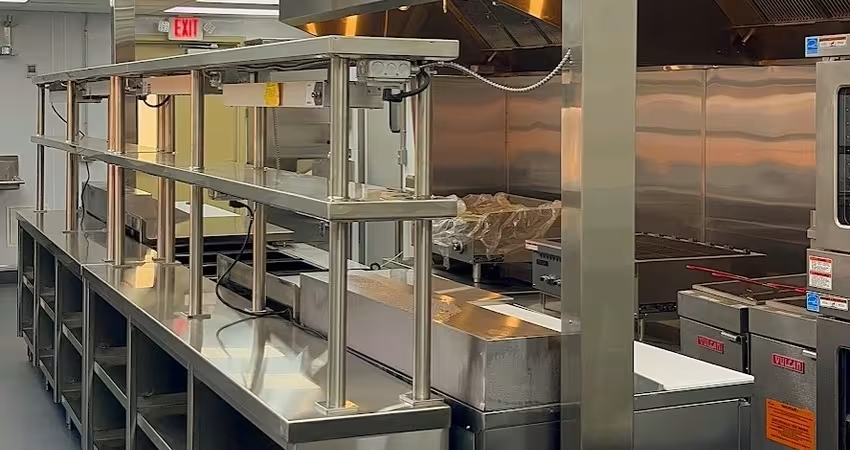
The most fundamental of all commercial kitchen design mistakes is arranging equipment and stations without mapping the end-to-end flow of food. A commercial kitchen should follow a logical production sequence: Receiving → Storage → Prep → Cooking → Plating/Service → Dishwashing. When this sequence is broken — for example, when the walk-in cooler sits opposite the prep station, or the dish return sits adjacent to the plating line — the result is constant cross-traffic and bottlenecks during peak service.
Every unnecessary step a cook takes is multiplied across every ticket, every shift, every day. In a hotel kitchen producing 500+ covers daily, even five extra steps per plate compounds into thousands of wasted movements per week.
Note: Before finalizing any floor plan, walk the path of a single dish from raw ingredient to guest plate. If any segment requires backtracking, the layout needs revision. For proven templates designed around efficient commercial kitchen workflow design, working with an experienced designer or modular provider prevents this mistake entirely.
Ventilation is one of the most technically complex elements of commercial kitchen construction, yet it's routinely treated as an afterthought. Undersized exhaust hoods, insufficient make-up air, and poorly routed ductwork create problems ranging from uncomfortable working conditions to fire code violations.
NFPA 96 governs ventilation control and fire protection in commercial cooking operations, while ASHRAE Standard 62.1 establishes make-up air requirements. Key failure points include:
Tip: Engage your mechanical engineer and ventilation and exhaust hood specialist before the kitchen layout is finalized. Hood placement should drive equipment placement, not the other way around. This is one of the most frequently cited commercial kitchen layout mistakes by food service consultants.
Operators tend to prioritize the cooking line and treat storage as whatever space remains. This is one of the most persistent kitchen construction planning errors. Inadequate cold storage forces more frequent deliveries, increases food waste, and disrupts workflow. Undersized dry storage leads to cluttered prep areas and potential FDA Food Code violations around food storage separation.
A well-planned commercial kitchen allocates space for:
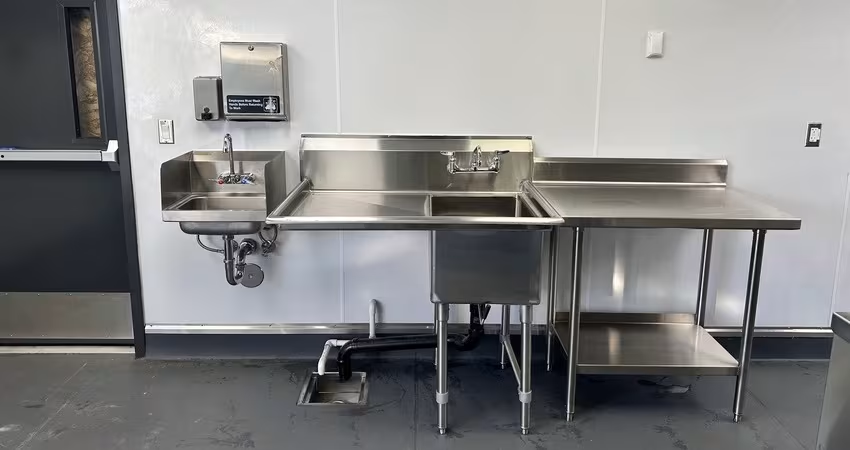
Note: Don't forget the dish pit. Warewashing zones need adequate landing space for soiled and clean dishware. Undersizing this area creates backups that ripple through the entire kitchen during high-volume service.
Building code and ADA Standards for Accessible Design compliance are not optional items to address during the punch list. Yet many projects treat them as afterthoughts — a commercial kitchen design mistake that leads to costly late-stage redesigns or failed final inspections.
Commercial kitchens must comply with overlapping regulatory frameworks including the International Building Code (IBC), NFPA 96, FDA Food Code, ADA Standards, and local health department regulations. Discovering a non-compliant element after framing is complete can mean tearing out walls, rerouting plumbing, or redesigning entire zones.
Tip: Contact your local Authority Having Jurisdiction (AHJ) during the design phase — not after construction begins. Every jurisdiction interprets codes differently, and a proactive conversation can prevent expensive surprises. ContekPro's guide to the building code and permitting process outlines how to navigate this effectively.
Packing every possible piece of equipment into the available footprint is common — especially when the menu is ambitious. But overcrowded kitchens cause problems beyond tight working conditions. Equipment manufacturers specify minimum clearances for ventilation, heat dissipation, and service access. Ignoring these leads to:
Tip: For every piece of equipment, verify the manufacturer's required clearances on all sides — including the rear, where utility connections and service panels are located.
Rule of thumb: High-traffic kitchen aisles should typically allow enough clearance for two staff members to pass safely while carrying pans or rolling carts. If cooks must turn sideways to pass each other, the kitchen will bottleneck during peak service.
A commercial kitchen build involves multiple stakeholders: architects, food service consultants, MEP engineers, general contractors, and equipment vendors. When these parties work in silos, the results are mismatched specs, utility conflicts, and delays. The most common failures include:
Note: Establish a single point of coordination responsible for ensuring all parties work from the same current documents. See ContekPro's article on hotel kitchen design best practices for guidance.
Drainage is one of the most overlooked commercial kitchen layout mistakes — and one of the hardest to fix after construction is complete. Floor sinks, trench drains, and floor pitch must be engineered around real washdown conditions, grease-producing equipment, and sanitation workflows.
When drainage is poorly planned, kitchens deal with standing water, foul odors, slippery floors, and repeated health inspection issues. Even worse, improper drain placement often forces staff to use hoses across walkways, creating both safety hazards and workflow disruptions.
Common drainage-related construction failures include:
Tip: Drainage must be designed alongside the dish pit, prep sinks, mop sinks, and grease-producing equipment. If your plumbing plan treats drainage as “standard,” it’s a red flag.
A kitchen designed exclusively around today's menu, volume, and service model will need expensive modifications within a few years. Delivery and takeout volumes have surged, ghost kitchen models are expanding, and menu flexibility is more important than ever.
Smart future-proofing means building in infrastructure flexibility, not just rearrangeable equipment:
Choosing the right kitchen layout from the start is far less expensive than retrofitting later.
Every mistake in this guide — from workflow disconnects and ventilation undersizing to late-stage compliance failures and cross-trade coordination breakdowns — shares a common thread: they originate in the fragmented, sequential nature of traditional kitchen construction.
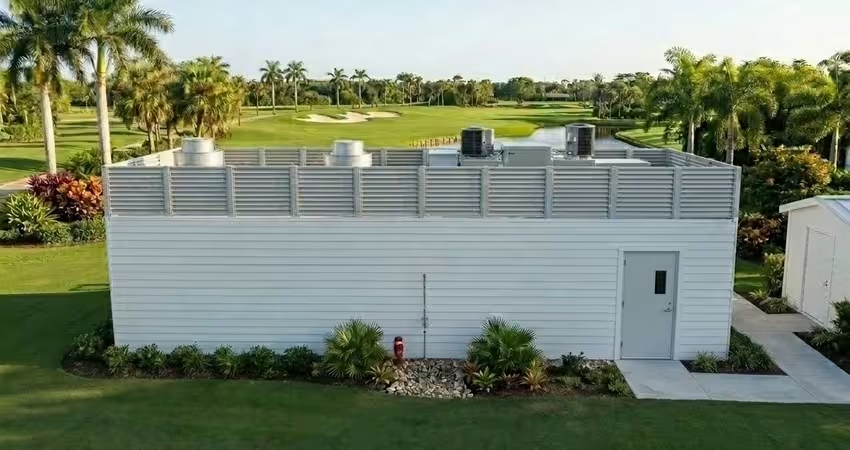
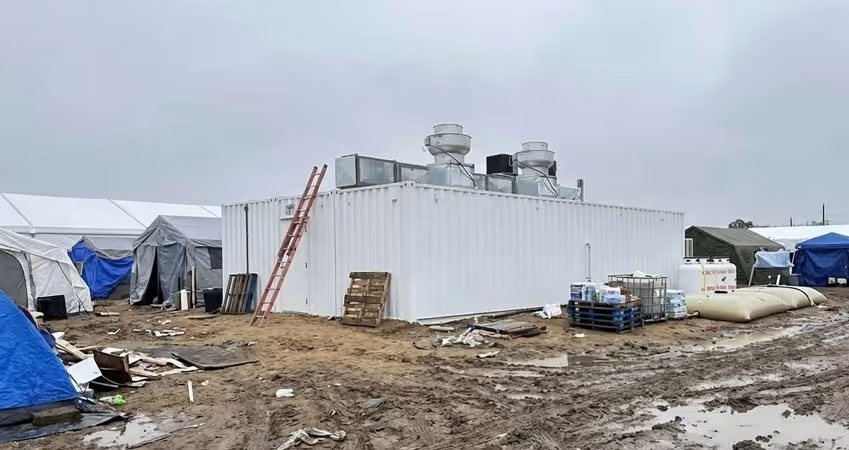
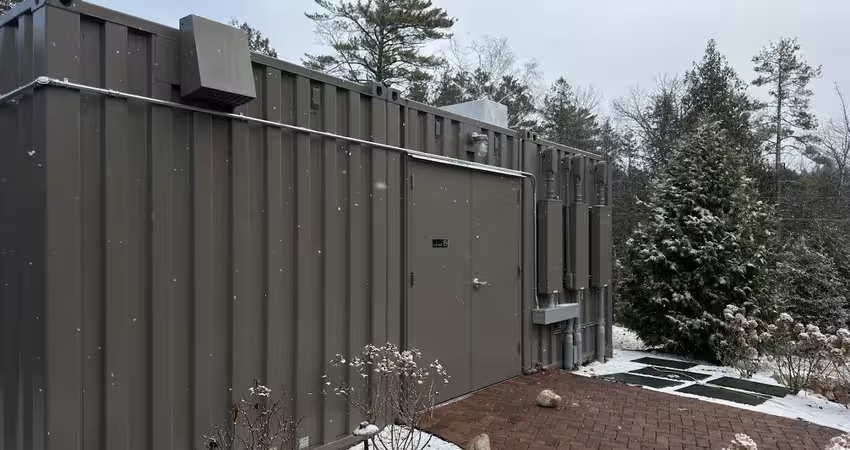
Prefabricated modular construction eliminates these failure points by consolidating design, engineering, and assembly into a single controlled process.
Modular kitchen solutions are built in a factory environment where layout, ventilation, MEP, and code compliance are resolved before a single utility is stubbed on-site.
ContekPro's prefabricated kitchens arrive up to 95% finished, with equipment, insulation, and plumbing pre-installed and third-party inspected. For hospitality operators managing high-stakes builds on tight timelines, this approach converts months of on-site construction risk into a predictable, factory-controlled delivery.
Every commercial kitchen layout mistake in this guide shares a common root cause: decisions made too late, in isolation, or without enough planning. Whether you're building a new hotel kitchen, expanding a resort's F&B capacity, or replacing an aging country club kitchen, avoiding these commercial kitchen layout mistakes starts before construction begins.
Explore how prefabricated modular construction can simplify your project and reduce risk — view ContekPro's hotel kitchen solutions or request a quote to discuss your project with our team.

The most common mistake is failing to plan the layout around a logical workflow sequence — from receiving and storage through prep, cooking, plating, and dishwashing. When these zones aren't arranged to follow the natural flow of food production, the result is staff congestion, wasted motion, and slower ticket times that compound during peak service.
Layout flaws can reduce kitchen productivity by up to 30%. Beyond lost labor efficiency, costs include post-construction rework (which can exceed 15–20% of the original build budget), failed inspections, and ongoing operational workarounds that increase food waste and energy consumption.
Commercial kitchens in the U.S. must comply with the International Building Code (IBC) for structural requirements, NFPA 96 for ventilation and fire suppression, the FDA Food Code for food safety, ADA Standards for accessibility, and local health department regulations. Engaging your local AHJ early is critical.