.avif)
You've done the math, negotiated with vendors, and signed off on a commercial kitchen construction budget you're confident about. Six months later, you're staring at invoices that have ballooned 30% beyond your original numbers and the kitchen still isn't operational.
This scenario plays out across the hospitality industry with alarming regularity. Industry data shows that nine out of ten construction projects experience cost overruns, with kitchen builds particularly vulnerable due to their complex mechanical, electrical, and plumbing requirements. For hotels, resorts, and country clubs, these overruns don't just hurt the balance sheet — they delay revenue, disrupt operations, and strain relationships with stakeholders.
This article exposes the hidden costs that sabotage commercial kitchen construction budgets and outlines practical strategies hospitality leaders use to protect their investments.
Construction budget overruns aren't occasional mishaps, they're the industry norm. According to McKinsey research, 85% of construction projects completed over a 70-year period experienced cost overruns, with an average increase of 28% above original estimates. For commercial kitchen projects specifically, a survey found that budget overruns average 34%.
These aren't rounding errors. On a $500,000 kitchen build, a 34% overrun translates to $170,000 in unexpected costs: enough to fund an entire additional project or significantly impact a property's annual capital budget.
Commercial kitchens concentrate multiple high-risk systems into a small footprint:
Each system must align precisely with the others. A misstep in one area triggers rework across multiple trades, amplifying costs and delays. Traditional multi-contractor delivery models further increase risk when schedules and responsibilities overlap without a single point of accountability. According to the Project Management Institute, poor communication between project stakeholders contributes to one-third of all project failures.
.avif)
Understanding where budget overruns originate is the first step toward preventing them. These nine cost categories consistently surprise hospitality operators during commercial kitchen construction projects.
Commercial kitchens often require 200–400 amp electrical service or more, along with upgraded gas, water, and sewer capacity. Many existing buildings (especially older hotels, resorts, and clubs) simply aren’t equipped to support this demand.
Common surprises include:
These costs frequently surface after construction begins, when options are limited and pricing is less flexible.
Kitchen permits involve multiple authorities:
Each agency reviews plans independently and their requirements don’t always align. A fire marshal revision may conflict with health department specs, triggering multiple redesign cycles.
Permit fees themselves typically range from $2,000 to $5,000, but the real cost lies in delays. Each revision cycle can add two to four weeks to a project timeline, with associated carrying costs for equipment storage, extended contractor commitments, and delayed revenue generation.
Note: For a detailed breakdown of the health permit process, understanding requirements upfront prevents costly surprises.
Commercial kitchen ventilation is governed by NFPA 96, and compliance is non-negotiable.
Common underestimates include:
Ventilation miscalculations are among the most common causes of cost overruns. A single ventilation-related incident can exceed $23,000 in damages, excluding downtime or reputational impact.
Note: Our commercial kitchen hood guide details the technical requirements that drive these costs.
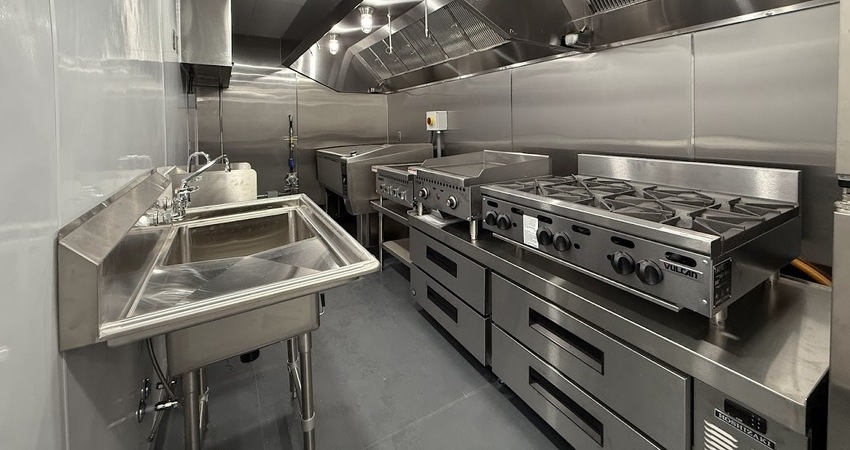
Once construction begins, modifications to the original plan trigger change orders and each change order carries premium pricing. The Project Management Institute found that scope changes contribute to cost overruns in 52% of construction projects. In kitchen builds, common triggers include:
What appears to be a minor modification (shifting a prep station location by three feet) can cascade into electrical rerouting, plumbing changes, and ventilation adjustments, each billed at change order rates that exceed original contract pricing.
Traditional kitchen construction relies on multiple specialized trades:
When coordination fails, rework follows.
Studies show that up to 70% of construction rework stems from design or communication failures. Each instance adds labor, materials, and schedule delays — quietly inflating the budget.
Long construction timelines expose projects to pricing risk. Between 2020 and 2021 alone, construction input costs rose 23.1%, far outpacing general inflation.
High-risk materials include:
Supply chain disruptions further compound the problem, forcing operators to either pay premiums or delay projects — both expensive outcomes.
Construction delays don't just push back opening dates, they generate ongoing expenses:
U.S. Bureau of Labor Statistics data indicates that 70% of construction contractors struggle to meet deadlines due to difficulty finding skilled workers. When subcontractors can't staff projects adequately, schedules slip regardless of how well the project was originally planned.
Existing conditions frequently differ from what plans and inspections suggest. Demolition reveals structural issues, outdated wiring, asbestos-containing materials, or plumbing configurations that require remediation before new construction can proceed. Older buildings (common in resort and historic hotel properties) present elevated risk for discovery-phase surprises.
Common site-specific issues that blow budgets include:
The earlier these issues surface, the more options exist for addressing them cost-effectively.
The final phase consistently takes longer and costs more than expected.
Punch lists include:
Rushing this phase to meet opening deadlines often creates operational issues that persist long after construction ends.
%20(1).avif)
For hotels, resorts, and country clubs, kitchen construction delays don’t just push timelines — they directly impact revenue. A project that runs three months over schedule during peak season can mean missed banquet bookings, reduced restaurant capacity, and lost food and beverage revenue. In some cases, it may even affect room nights when guests expect full-service dining that isn’t yet available.
For seasonal hospitality businesses, these delays are especially costly. Country clubs may lose event-driven income, while resorts risk disappointing guests during high-demand periods. The longer a kitchen remains offline, the longer revenue-generating spaces sit idle.
Extended construction impacts far more than the kitchen footprint. Ongoing noise, dust, contractor traffic, and intermittent utility shutdowns disrupt daily operations and degrade the guest experience across the property. Even well-managed construction sites strain front-of-house operations when timelines stretch beyond expectations.
Prolonged builds also force hospitality teams to rely on temporary kitchen setups for longer than planned. These stopgap solutions often limit menu offerings, slow service, increase labor inefficiencies, and frustrate staff. While these costs rarely appear as line items on construction budgets, the reputational damage and operational fatigue can have lasting effects on guest satisfaction and brand perception.
Thorough site evaluation before finalizing budgets prevents many surprise costs. This includes:
Building contingency reserves into project budgets acknowledges the reality of construction uncertainty. Industry experts recommend 15-20% contingency for commercial kitchen projects which is higher than typical commercial construction due to the technical complexity involved.
Tip: Applying sound commercial kitchen design principles from the outset reduces costly mid-project changes.
Design-build firms that handle both design and construction under single contracts reduce coordination failures and provide clearer cost accountability. Turnkey arrangements that include equipment procurement, installation, and commissioning eliminate the gaps between contractors where budget overruns often hide.
Fixed-price contracts shift risk from the operator to the provider, though they require clear scope definition upfront. The trade-off between flexibility and cost certainty favors fixed pricing for operators who prioritize budget predictability over mid-project modifications.
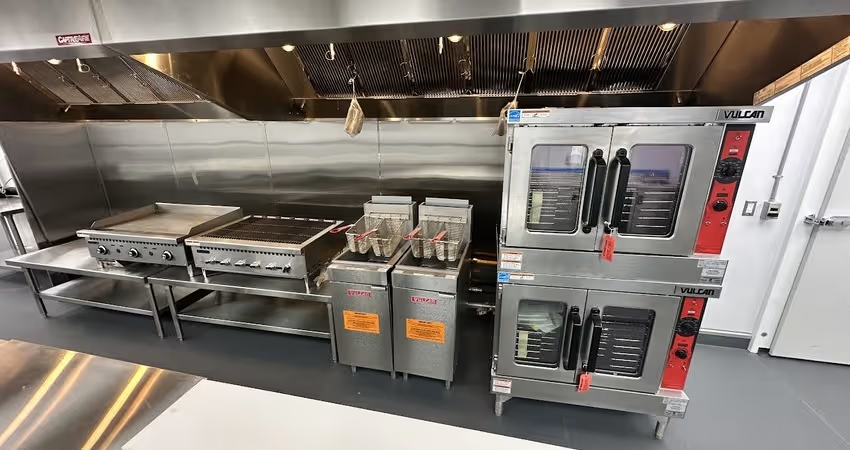
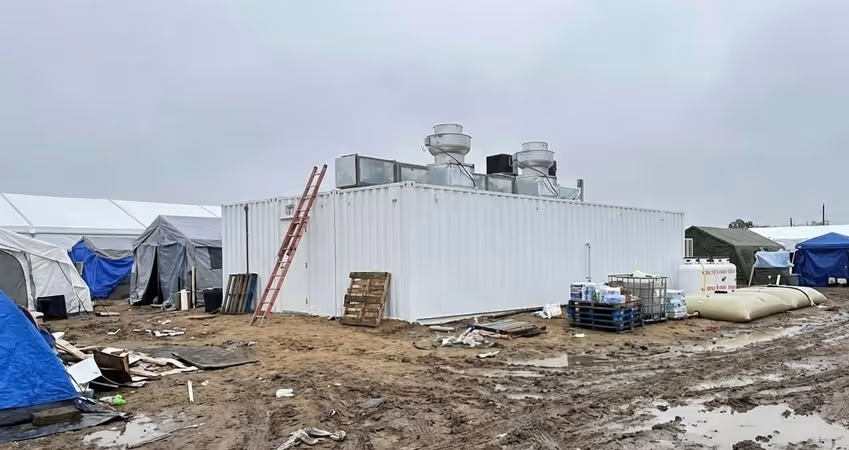
Modular and prefabricated kitchens address many of the structural causes of cost overruns by removing construction complexity from active hospitality sites.
Key advantages include:
From an operational standpoint, modular kitchens deliver:
From a sustainability and quality perspective:
For hospitality operators prioritizing predictability, speed, and capital discipline, modular kitchens remove uncertainty at the source rather than attempting to manage it mid-project.
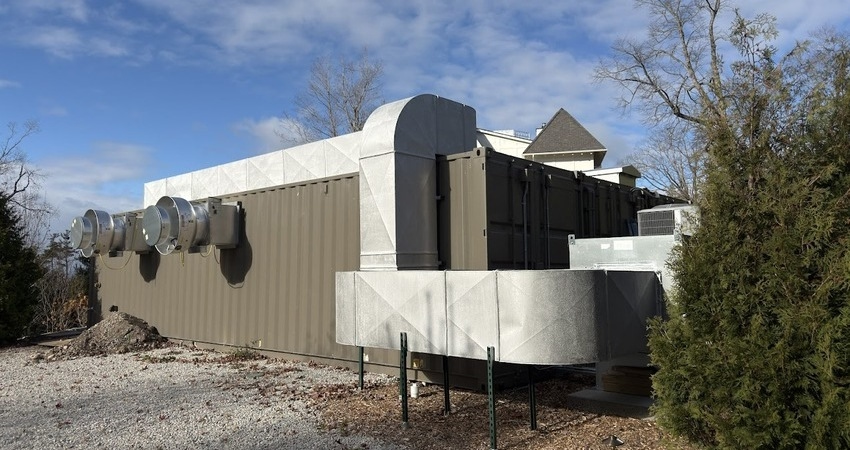
A luxury resort in the Caribbean needed to replace an aging kitchen without disrupting peak-season guest operations. Traditional construction estimates projected six to eight months of on-site work, along with significant noise, utility shutdowns, and operational disruption across the property.
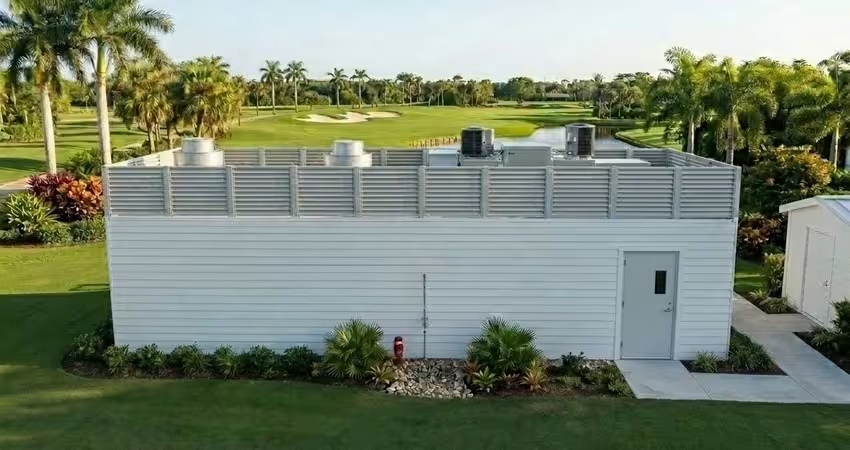
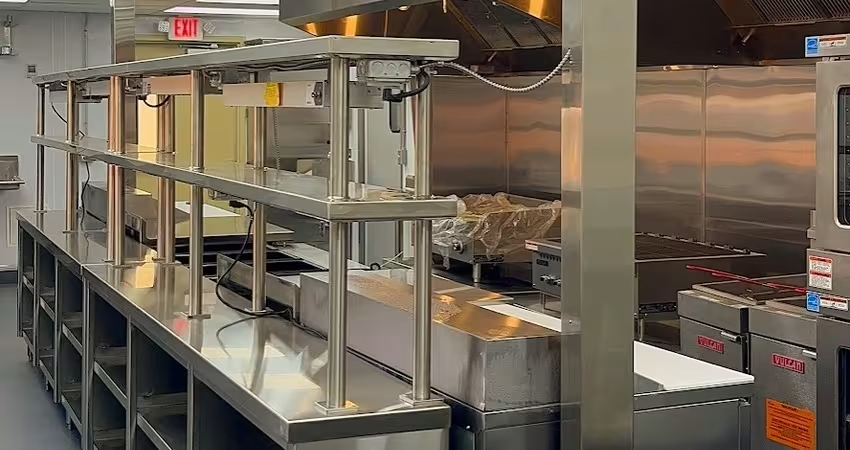
Instead, the resort deployed a 960 sq. ft. prefabricated modular kitchen, manufactured off-site while only minimal foundation work occurred on property. The unit arrived fully equipped with commercial-grade Vulcan and Hoshizaki appliances, pre-installed ventilation, and an integrated fire suppression system — ready for rapid commissioning.
Total time from delivery to full food-and-beverage operations: eight weeks.
Results:
Commercial kitchen construction costs don't have to spiral beyond control. Understanding where hidden expenses originate, from utility upgrades and permitting cycles to contractor coordination failures and material volatility enables hospitality leaders to structure projects that minimize exposure to budget overruns.
The most effective protection combines thorough pre-construction due diligence, appropriate contingency reserves, and construction approaches that eliminate variables rather than managing them reactively. For operators who prioritize budget certainty alongside operational performance, modular prefabricated solutions offer a compelling alternative to traditional construction's inherent unpredictability.
Ready to eliminate the budget surprises from your commercial kitchen project? ContekPro's turnkey modular kitchens are delivered with fixed pricing and predictable timelines so you can focus on your culinary vision, not construction chaos. Request a quote and discover how modular construction can protect your budget.
Commercial kitchen construction typically costs between $250-$500 per square foot for traditional builds, with total projects ranging from $100,000 to over $1 million depending on size and complexity. Equipment alone can represent 40-60% of total costs, with MEP systems (mechanical, electrical, plumbing) adding another 20-30%. Location significantly impacts costs, with urban markets running 20-50% higher than suburban areas.
Nine out of ten commercial kitchen projects exceed their original budget, with the average overrun reaching 34%. The most common causes include underestimated utility infrastructure requirements, permitting delays, change orders from design modifications, material price volatility, and poor contractor coordination. Kitchen projects are particularly vulnerable because of their complex MEP requirements and strict regulatory compliance demands.
Prevention starts with thorough pre-construction site evaluation and realistic budgeting that includes 15-20% contingency. Working with design-build firms or turnkey providers reduces coordination failures between trades. Modular prefabricated kitchens offer fixed-price contracts that eliminate most cost variables, with off-site manufacturing providing greater budget certainty than traditional on-site construction.