Upgrading a commercial kitchen isn't just a construction decision, it's an operational strategy.
Commercial kitchens don't last forever. Equipment wears out, regulations evolve, and operational demands change. When your kitchen no longer meets the needs of your hospitality property, you face a critical choice:
Each path carries different implications for cost, downtime, design flexibility, and long-term ROI. According to the National Restaurant Association, 90% of commercial construction projects experience budget overruns — making informed decision-making essential.
For hotels, resorts, and country clubs, the stakes are even higher. Extended kitchen downtime translates directly to lost revenue and diminished guest satisfaction.
This guide examines both approaches plus a third strategic alternative to help you choose the right path for your property.
A commercial kitchen upgrade is more than swapping out equipment. It's a comprehensive transformation that impacts daily operations, compliance, and long-term performance.
The key takeaway: a kitchen upgrade isn't just about the physical space. It's about how your operation runs before, during, and after construction.
Renovation means updating, reconfiguring, or overhauling your existing kitchen while working within the constraints of the current structure. The scope can vary widely:
Renovation is often perceived as the more affordable option because it avoids the cost of new construction and site development. Typical renovation costs range from $120 to $300 per square foot, meaning a 1,500 sq ft kitchen may require an investment of $180,000 to $450,000.
On paper, this can appear 20–40% less expensive than building a new kitchen from the ground up, making renovation attractive for capital-constrained projects.
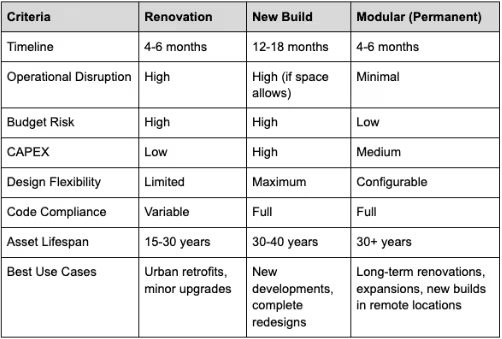
Renovation timelines are generally shorter than new construction when projects proceed as planned. Minor upgrades may be completed in as little as 6–12 weeks, while full overhauls commonly fall within a 4–6 month window.
For operators under time pressure, this perceived speed is often a key factor in choosing renovation over new build solutions.
Renovating allows operators to preserve the value of existing buildings and locations. Established zoning, permits, and site access are already in place, reducing administrative complexity. In hotels, resorts, and historic properties, renovation also helps maintain architectural character and avoids the visual disruption that new construction may introduce.
One of the biggest risks in renovation projects is uncovering unforeseen problems once demolition begins. Older commercial kitchens frequently contain outdated electrical systems that cannot support modern equipment loads, undersized plumbing, or structural limitations that restrict layout changes. Hazardous materials such as asbestos or lead paint may also be discovered, requiring specialized remediation.
According to Technomic, commercial kitchen renovations frequently exceed initial budgets by 15-25% due to unforeseen conditions.
Even extensive renovations are constrained by the existing building. Load-bearing walls limit reconfiguration options, ceiling heights may prevent the installation of modern hood or ventilation systems, and fixed utility locations can dictate equipment placement.
In some cases, historic preservation requirements further restrict what changes are allowed, adding time and cost without improving operational efficiency.
Operational disruption is often the most underestimated cost of renovation. Phased renovations, while intended to keep kitchens partially operational, frequently extend project timelines by 15–25% and increase labor costs. Full shutdowns eliminate food service revenue entirely.
For a 200-room hotel, a four- to six-month kitchen closure can result in $500,000 to $1.5 million in lost food-and-beverage revenue. Even when temporary kitchen solutions are used, operators may still incur $15,000 to $50,000 per month in additional costs.
Renovation solves immediate problems but does so within the limits of an aging structure. Capacity expansion may be restricted by structural or utility constraints, and future menu or volume changes can quickly outgrow the renovated space. In many cases, operators find themselves facing another costly renovation sooner than expected.
New build construction means developing an entirely new kitchen from the ground up: foundation, structure, MEP systems, and all. This approach provides a blank canvas for implementing the latest efficient hotel kitchen design principles.
The most compelling advantage of new construction is unrestricted design flexibility. Layouts can be optimized without structural compromises, allowing equipment placement, workflow patterns, and circulation paths to be designed purely around operational efficiency. Utilities and ventilation systems are integrated from the start, and future expansion can be planned into the building rather than retrofitted later.
New builds are constructed to meet current regulatory standards from day one. Facilities are designed in accordance with the latest International Building Code (IBC) and comply with FDA Food Code, NFPA, and ADA requirements without the complications of legacy compliance issues. This significantly reduces the risk of costly redesigns or delayed approvals.
Because systems are specified and integrated as a complete package, new kitchens typically operate more efficiently than renovated facilities. Energy-efficient ventilation, modern cooking equipment, and optimized workflows can reduce operating costs by 20–30% compared to older kitchens.
New construction also benefits from accelerated depreciation schedules and delivers an expected asset lifespan of 30–40 years, improving long-term return on investment.
In properties with sufficient space, a new kitchen can be constructed while the existing facility remains operational. This allows food service to continue uninterrupted until the new kitchen is ready to open, avoiding the immediate revenue losses associated with renovation shutdowns.
The primary barrier to new construction is cost. Building a commercial kitchen from scratch typically ranges from $200 to $450 per square foot, placing a 1,500 sq ft kitchen between $300,000 and $675,000 for construction alone. Beyond base construction, additional expenses can significantly increase total project cost, including:
These layered costs often push new builds well beyond initial budget expectations.
New construction also requires substantially more time than renovation or modular alternatives. From initial design to occupancy, most projects take 12–18 months, with complex or remote sites extending to 24 months. This timeline typically includes:
For operators facing urgent capacity needs, these extended timelines can create significant opportunity costs.
Traditional construction exposes projects to market volatility and logistical challenges. According to the U.S. Energy Information Administration, construction conditions in 2024–2025 are marked by 20–30% steel price fluctuations, lumber costs roughly 40% higher than pre-pandemic levels, ongoing labor shortages, and persistent supply-chain disruptions.
Weather delays further compound schedule risk, particularly in seasonal or remote locations.
Before choosing a path, evaluate these critical factors:
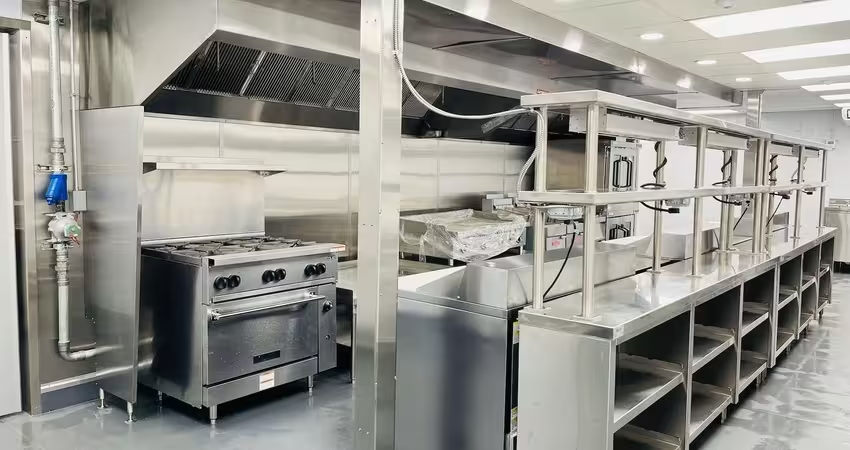
The traditional choice between renovation and new construction isn't the only option. Modular prefabricated commercial kitchens represent a third path that addresses the limitations of both approaches.
Modular kitchens are:
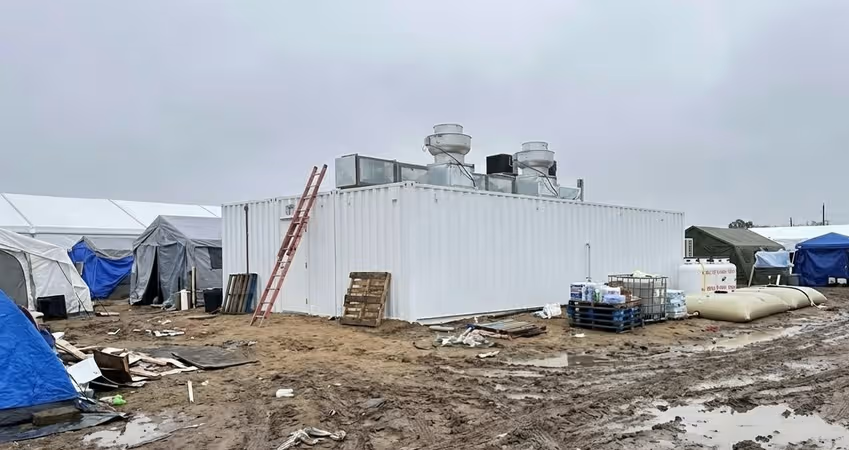
One of the most powerful applications of modular kitchens is supporting operations while your permanent kitchen undergoes renovation.
Modular kitchens aren't just temporary solutions, they can serve as permanent replacements for traditional ground-up construction.
For a detailed comparison, see our analysis of modular vs traditional construction.
.avif)
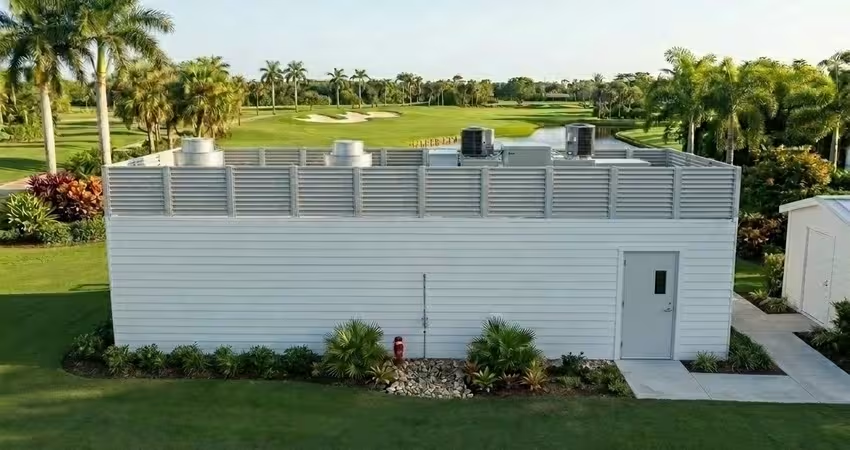
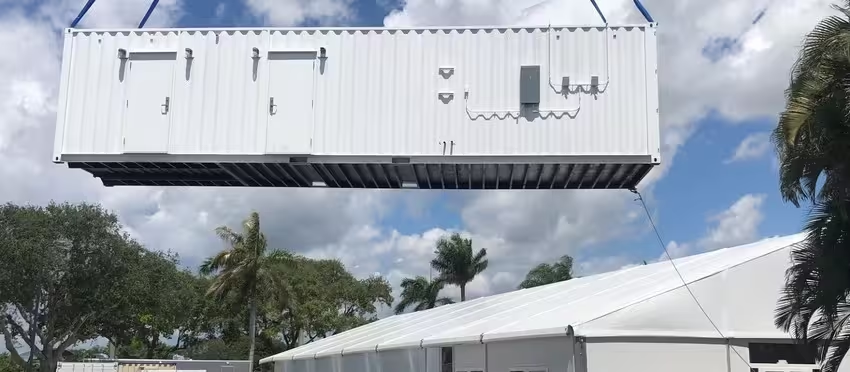
Challenge: A high-end Florida golf club with three world-class 18-hole courses, needed to urgently deploy a full-service kitchen before their official opening while construction was still underway. The kitchen had to handle high-volume service, support premium cuisine, and withstand Florida's demanding climate.
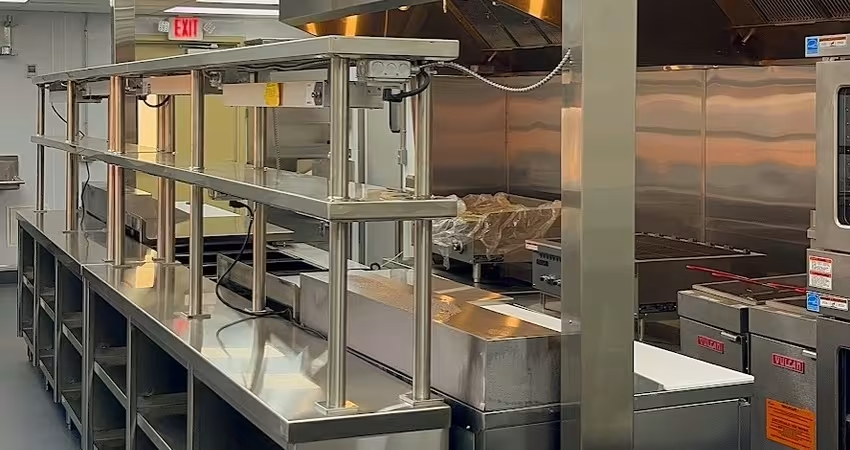
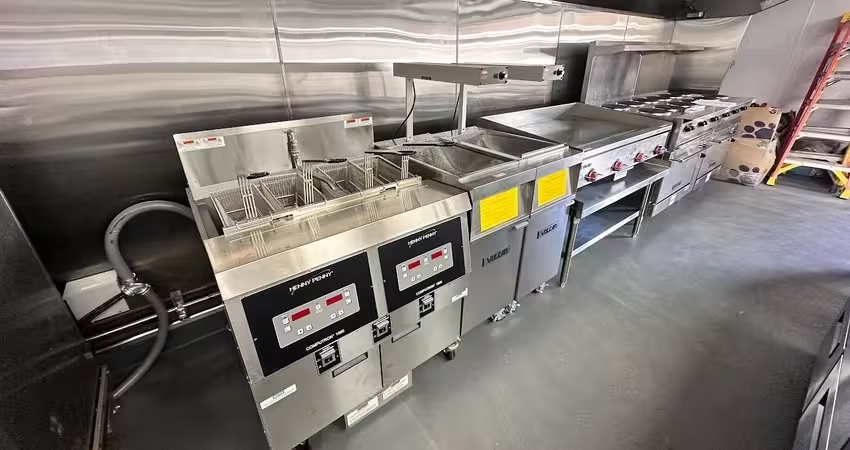
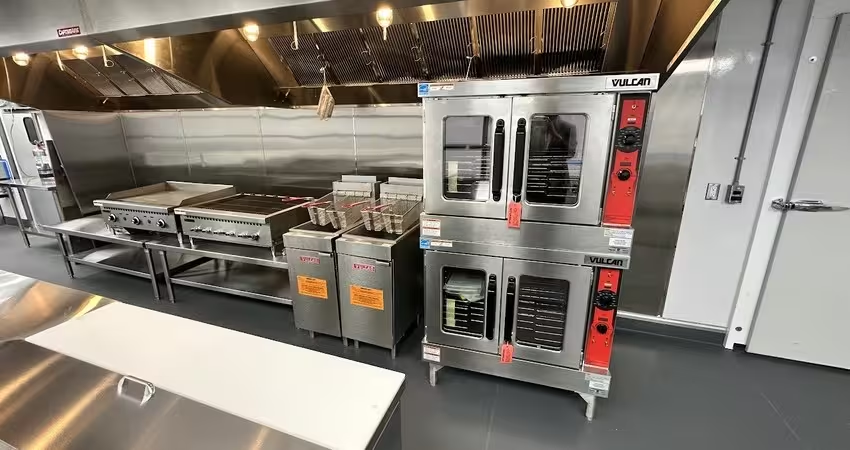
Solution: ContekPro designed and manufactured a 1,280 sq ft modular kitchen optimized for high-volume service and premium culinary standards. The layout prioritized efficiency with specialty equipment including Vulcan charbroilers, salamander broilers, griddles, and heavy-duty gas fryers. Multiple Beverage-Air refrigeration units provided ample cold storage.
Outcome: The club opened on schedule with a fully operational, durable, and relocatable kitchen — maintaining food service throughout the construction phase without interruption.
Challenge: A resort is expanding occupancy and needs additional production capacity within months, not years. Traditional construction would require extensive permitting, site work, and a 12-18 month timeline.
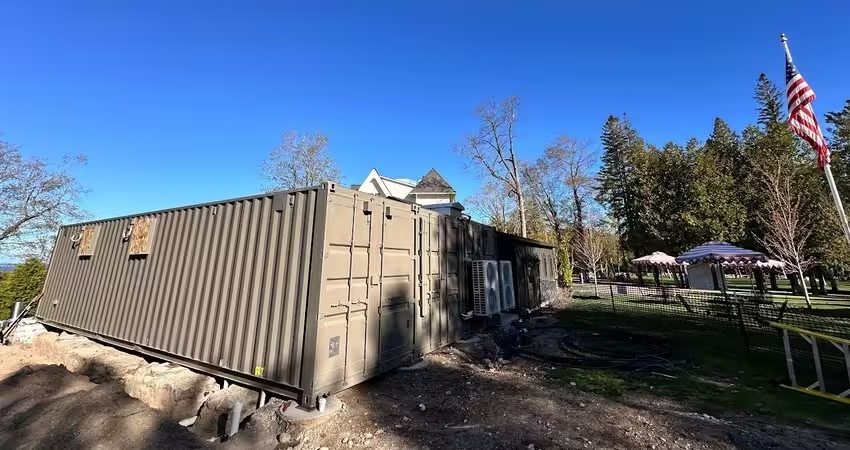
Solution: Install a permanent modular kitchen as a centralized production hub. The kitchen is manufactured off-site while minimal site preparation occurs simultaneously, bypassing the lengthy construction process.
Outcome: New capacity online in 4-6 months, predictable costs, scalable for future growth — all without permanent building work or major site disruption.
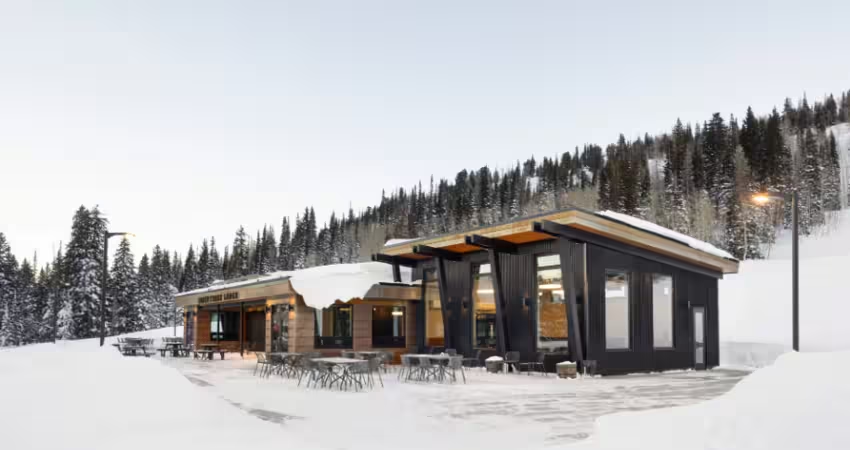
Challenge: A top ski resort in Utah needed a new lodge with enhanced amenities but couldn't afford the timeline or costs of traditional construction. Most critically, the facility had to be operational before ski season began.
Solution: ContekPro delivered a 640 sq ft prefabricated quick-service kitchen paired with a 320 sq ft modular restroom. A custom building structure integrated both units with the resort's modern architectural style, achieving the right balance of functionality and aesthetics.
Outcome: Rapid installation was completed before ski season, proving the advantages of modular construction in quality, cost-efficiency, and speed. The project exceeded expectations and set a new standard for the resort's hospitality operations.
Learn more about modular commercial kitchen benefits for resorts and prefabricated hotel kitchens.
Note: For temporary operational continuity during renovation projects, mobile kitchen rentals provide fully equipped solutions that maintain food service while construction progresses.
The traditional decision between renovation and new construction doesn't have to be binary.
The right approach balances continuity, cost, and long-term performance. In today's foodservice environment, the smartest kitchen upgrades are designed for both today's operations and tomorrow's changes.
Ready to explore your commercial kitchen construction options?
Contact us today to discuss your project and receive a detailed consultation tailored to your hospitality property.
Building a new commercial kitchen from scratch typically costs $200 to $450 per square foot, depending on equipment specifications, location, and finish quality. A 1,500 sq ft kitchen ranges from $300,000 to $675,000 for complete construction. Costs can exceed $500 per square foot in remote locations or major metropolitan areas due to labor shortages and material transportation.
Renovation is often 20-40% cheaper initially, with costs ranging from $120 to $300 per square foot versus $200 to $450 for new builds. However, older buildings may require extensive code compliance upgrades, structural reinforcement, and utility expansion that can close the cost gap. The true comparison depends on existing infrastructure condition and whether operations can continue during construction.
Modular construction offers up to 50% faster project completion because manufacturing occurs off-site while site preparation progresses simultaneously.