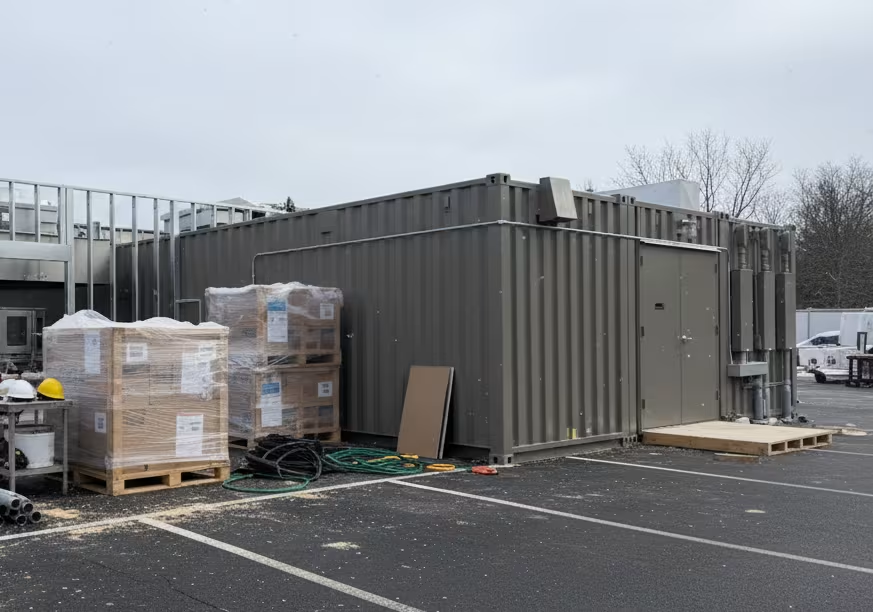
When Sarah signed the lease for her boutique hotel's new restaurant space, she had no idea she'd soon be juggling calls between an architect, general contractor, foodservice consultant, equipment supplier, HVAC specialist, fire suppression installer, and three different inspectors. Six months and 15% over budget later, her commercial kitchen finally opened but the coordination chaos could have been avoided.
The success of any commercial kitchen construction project hinges not just on what you build, but on who builds it and who leads the effort. With 8-12 different contractors typically involved, understanding team roles and establishing clear leadership is critical to staying on schedule and within budget.
This guide breaks down every stakeholder involved in commercial kitchen construction, their responsibilities, and how to determine who should lead your project for the best outcomes.
Commercial kitchen construction is fundamentally different from standard building projects. The combination of complex mechanical systems, stringent health codes, specialized equipment, and operational workflow requirements creates a project that demands specialized expertise across multiple disciplines.
According to industry data, 90% of commercial construction projects experience budget overruns, with poor coordination among stakeholders being a primary contributor. A misaligned team can result in:
Each team member brings essential expertise, but without clear leadership and communication channels, even the most qualified professionals can work at cross-purposes.
The question isn't whether you need a skilled team — you absolutely do. The real question is: who coordinates them, and who takes ultimate responsibility for delivering your project on time, on budget, and ready to operate?
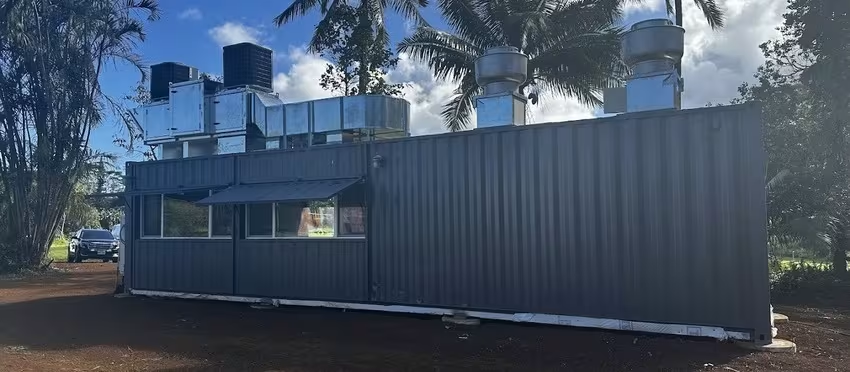
Understanding who does what is the first step toward assembling an effective commercial kitchen construction team. Here are the key players you'll likely encounter.
The architect creates the overall building design and ensures your commercial kitchen construction complies with local building codes, zoning regulations, and accessibility requirements.
Key Responsibilities:
Licensed architects registered with the American Institute of Architects (AIA) provide the technical expertise needed for building structure. However, architects typically focus on the building envelope and structural integrity — not kitchen-specific operational design.
The general contractor commercial kitchen team oversees the physical construction, manages subcontractors, ensures work meets quality standards, and keeps the project on schedule.
What They Handle:
Licensed general contractors affiliated with organizations like the Associated General Contractors of America (AGC) serve as the main point of contact during construction.
A skilled general contractor with commercial kitchen experience understands the sequencing challenges unique to foodservice facilities like coordinating hood installation with ductwork, or ensuring floor drains slope correctly before pouring concrete.
This is where commercial kitchen construction diverges sharply from standard construction. A foodservice consultant specializes in designing efficient kitchen operations, not just attractive spaces.
Their Expertise:
Certified consultants through the Foodservice Consultants Society International (FCSI) bridge the gap between culinary needs and construction realities.
Without a foodservice consultant, you risk building a beautiful kitchen that simply doesn't work efficiently.
Commercial kitchen construction requires several specialized subcontractors who handle critical systems.
Plumbing Contractors:
Electrical Contractors:
HVAC Specialists:
Fire Suppression Installers:
Each specialist must coordinate their work with others — hood placement affects ductwork routing, which affects structural supports, which affects electrical runs. This interdependence is why coordination is so critical in commercial kitchen construction.
Equipment suppliers play a critical role in ensuring your kitchen is properly outfitted, functional, and aligned with the overall construction timeline.
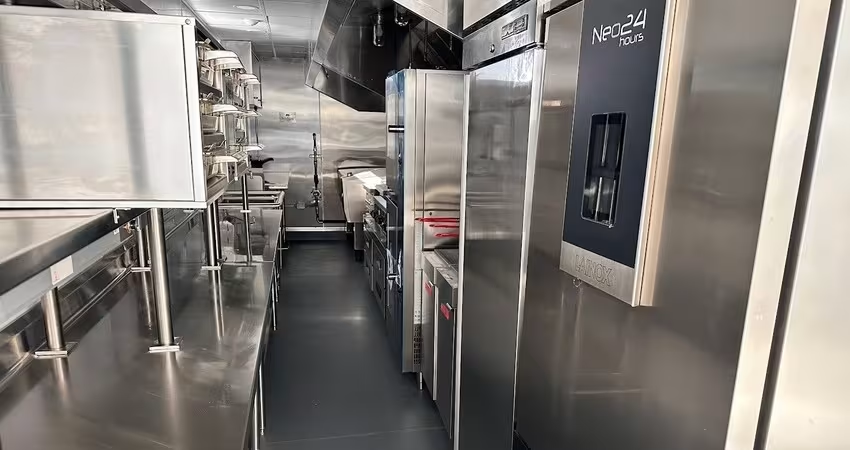
With so many moving parts, the question of leadership becomes critical. Who coordinates all these professionals? Who ensures nothing falls through the cracks?
You have several options, each with distinct advantages and challenges.
In traditional commercial kitchen construction, the general contractor often serves as the primary project manager.
What They Coordinate:
When This Works Well:
The Risk:
If your general contractor lacks commercial kitchen expertise, they may not recognize kitchen-specific issues until they become expensive problems. A contractor experienced in office buildings or retail spaces won't necessarily understand the complexities of commercial kitchen project management.
Design-build firms integrate architecture, engineering, and construction services under a single contract.
Key Benefits:
Research by the Construction Industry Institute found that design-build commercial kitchen projects are completed 33.5% faster with 6.1% cost savings compared to traditional design-bid-build methods.
Considerations:
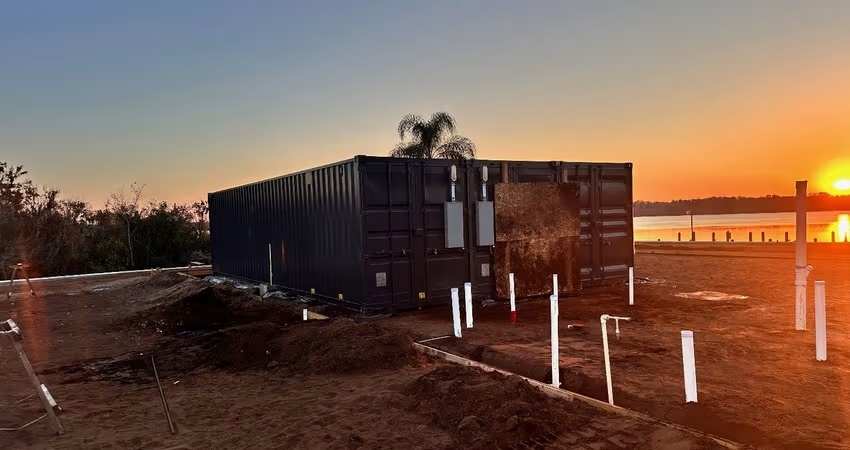
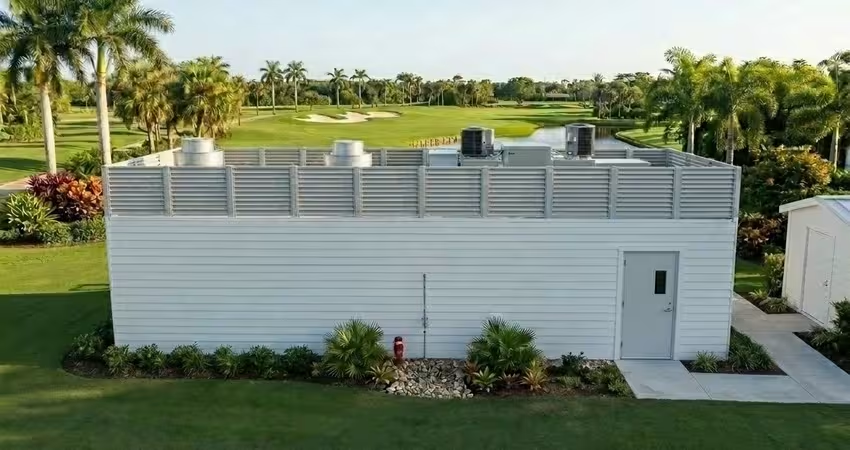
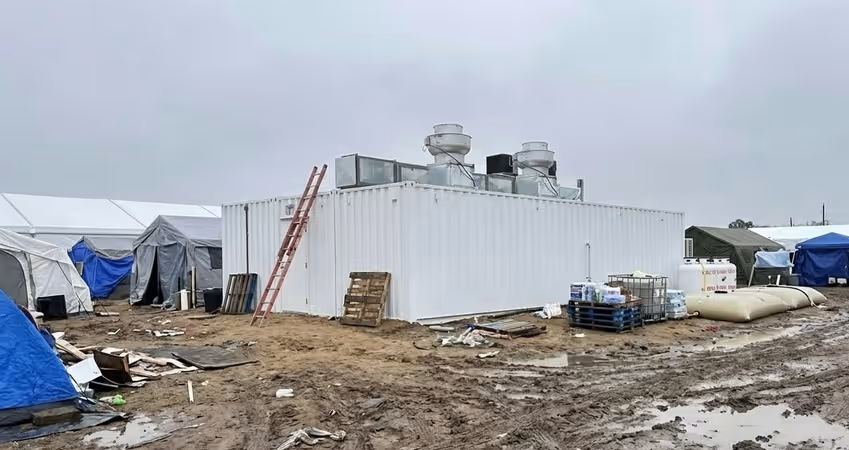
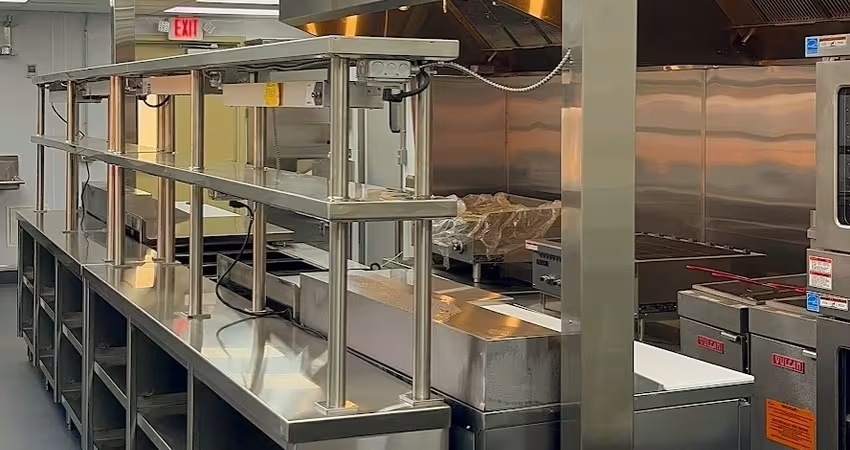
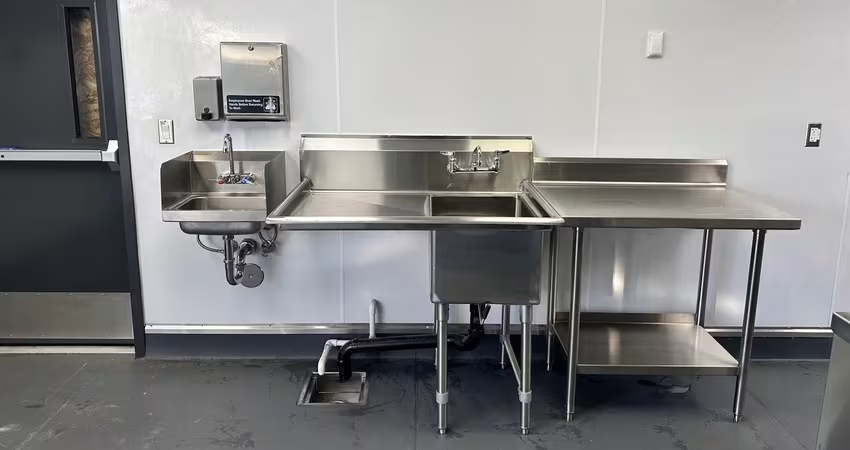
An increasingly popular option for commercial kitchen construction is working with a modular kitchen manufacturer that provides turnkey solutions.
Rather than managing dozens of separate consultants and trades, this approach consolidates responsibility for the kitchen itself under one specialized provider.
What’s Included:
Why This Approach Works Well:
Note: A general contractor is still required to handle site work, building structure, foundations, utilities, and overall project coordination outside the modular kitchen scope.
The six core principles of commercial kitchen design are built into the manufacturing process, and equipment planning and selection is handled by specialists who build commercial kitchens daily.
The Trade-off:
Less customization than a fully bespoke design — though most modular manufacturers offer extensive configuration options. For hotels, resorts, and hospitality businesses facing tight timelines and remote locations, the speed and predictability of modular kitchen construction often outweighs the desire for total customization.
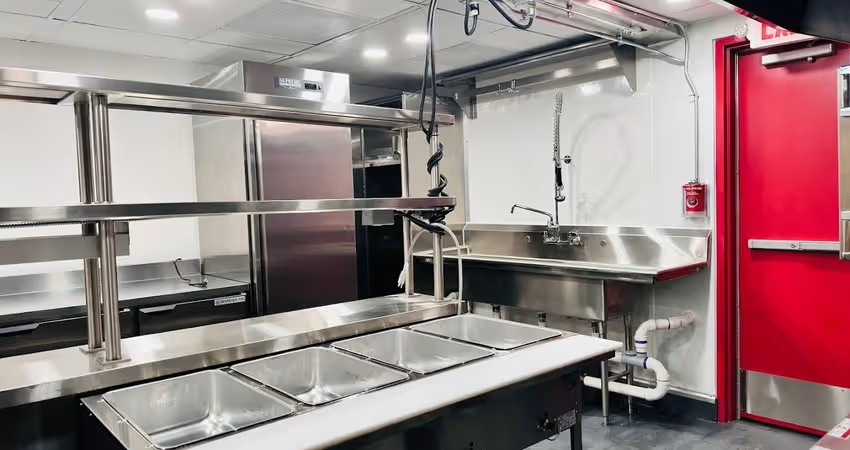
Regardless of which leadership model you choose, watch for these warning signs that suggest coordination problems ahead:
If you're unclear who to contact with questions, or if team members contradict each other, you have a leadership problem. Effective commercial kitchen project management requires defined reporting structures.
If answers to these questions are unclear, expect problems. Leadership means clearly defined roles and accountability.
If your general contractor has built offices and retail but never a commercial kitchen, if your architect has designed restaurants but doesn't understand foodservice workflow, or if no one on the team has dealt with health department inspections — you're taking unnecessary risks.
At ContekPro, we've designed our process specifically to eliminate the coordination challenges that plague traditional commercial kitchen construction.
Our integrated approach consolidates the team you need under one roof.
This means you have a single point of contact throughout ContekPro's 6-step process — from initial discovery through final installation.
This approach enables operators to move from concept to operation in weeks rather than months without sacrificing compliance, quality, or operational performance.
The success of your commercial kitchen construction project depends on assembling the right team and choosing the right leader. Whether you opt for traditional construction with a general contractor, a design-build firm for integrated services, or a modular manufacturer for turnkey delivery, make sure your project leader has proven commercial kitchen experience.
Ready to simplify your commercial kitchen construction project? ContekPro's turnkey modular kitchens eliminate the coordination headaches of traditional builds. Our in-house team handles design, engineering, permitting support, and installation assistance — giving you a single point of contact from concept to commissioning. Contact us today to discuss your project requirements and discover how we can deliver your fully-equipped commercial kitchen in weeks, not months.
Most modular commercial kitchens are delivered in 2 to 6 months, depending on the kitchen size and project location. This timeline includes design, permitting, production, delivery, and installation, with off-site construction helping reduce delays and on-site build time.
Design-build firms typically offer superior coordination for commercial kitchen projects because they integrate architecture, engineering, and construction under one contract. Research by the Construction Industry Institute found that design-build projects are delivered 33.5% faster with 6.1% cost savings compared to traditional methods. However, general contractors can be effective if they have specific commercial kitchen experience and strong relationships with foodservice consultants. The key is ensuring your project leader has completed similar projects and understands commercial kitchen requirements.
Traditional commercial kitchen construction typically involves 8-12 different contractors and specialists including a general contractor, architect, foodservice consultant, plumber, electrician, HVAC contractor, fire suppression specialist, equipment installer, gas fitter, refrigeration technician, and flooring contractor. Each trade requires careful coordination, scheduling, and inspection. This complexity is why many hospitality operators are turning to modular kitchen solutions that reduce stakeholders to 2-3 parties, significantly simplifying project management.