%20(1).avif)
Food and beverage demand at marinas and yacht clubs doesn’t follow a neat, predictable curve, it comes in waves. Regattas, busy summer weekends, visiting superyachts, cruise-tender arrivals, member events, and day-to-day transient traffic all create sudden spikes in different corners of the property. One weekend the pressure is on the fuel dock and transient berths, the next it’s the pool deck or event lawn. Traditional bricks-and-mortar construction rarely keeps up with that pace, and once you build a fixed kitchen, you’re locked into that location even if guest patterns shift.
At the same time, F&B has shifted from amenity to core revenue engine. Many marinas and clubs now rely on strong dining and bar programs to diversify income beyond dockage and storage. Research on tourist harbors and marinas shows that commercial marinas and yacht clubs have seen considerable increases in food and beverage revenues as part of broader diversification efforts, and member expectations have risen accordingly from “somewhere to grab a snack” to “reliable, high-quality food and drink wherever I am on the waterfront.” The challenge is that adding capacity through conventional construction is slow, capital-intensive, and geographically constrained.
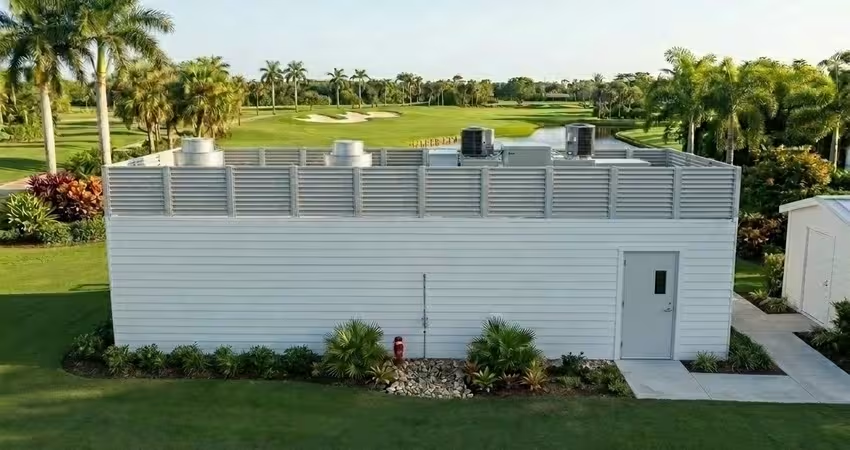
A shipping container kitchen changes that equation. Built to commercial code, engineered specifically for coastal environments, and delivered fully fitted, it allows marinas and yacht clubs to deploy a permanent, high-performance kitchen exactly where demand exists.
This blog will walk you through how to assess whether a shipping container kitchen is right for your marina or yacht club, how to plan and site it on the waterfront, which health, fire, and building codes apply, how to handle utilities and coastal conditions like wind, flood, and corrosion, and the key factors that drive cost and long-term ROI.
A shipping container kitchen is a permanent-grade, prefabricated commercial kitchen built inside one or more ISO container–sized modules. Unlike food trailers, these units are engineered to meet building, fire, and health codes (including the intermodal container provisions in the 2021 International Building Code) and are reviewed by the local Authority Having Jurisdiction (AHJ).
Factory-built off-site, container kitchens arrive ready to install with:
To understand more about what shipping container kitchens are, read our article here.
Marinas and yacht clubs face a specific set of constraints:
A single, fixed kitchen buried in the main clubhouse rarely matches this reality — it might be too far from the docks, too small, or too rigid for evolving F&B strategy.
A shipping container kitchen offers a compact, self-contained back-of-house that can be placed precisely where you need permanent capacity:
A shipping container prep kitchen is often a smarter choice than planning a new masonry or stick-built kitchen from the ground up when:
Instead of committing to a long, complex building project, a containerized solution lets you add permanent kitchen capacity with a shorter timeline, a more predictable budget, and a design that can scale across multiple waterfront locations.
.avif)
Start by mapping how different users move through your property:
Decide where you want each group to order, pick up, and dine:
Your shipping container kitchen should make these journeys smoother and more direct, not more complicated or crowded.
Once you’ve clarified your concept and service points, define the backbone of your kitchen:
A modular provider like ContekPro can help translate your menu into a precise equipment specification that fits within a container footprint while staying fully code-compliant.
Typical container kitchen options include:
You can also combine units — for example:
This creates a robust back-of-house that still installs quickly and cleanly on the waterfront.
In a container, every inch matters. Focus on:
High-quality prefabricated designs come with optimized layouts. You can then tailor those templates to your specific F&B model rather than designing from a blank page.
Before installation, confirm that your site can support the kitchen:
Working with a pre-engineered container kitchen simplifies this process because utility requirements and connection points are clearly defined upfront, making coordination with your marina engineer, contractor, or facilities team far more predictable.
.avif)
Most U.S. jurisdictions base their retail food regulations on the FDA Food Code, which provides a model for safeguarding public health and ensuring food offered at retail is safe and honestly presented.
Your container kitchen design should support:
For commercial cooking operations, NFPA 96 sets out requirements for hoods, exhaust, grease removal, fire suppression, clearances, and ongoing inspection and maintenance.
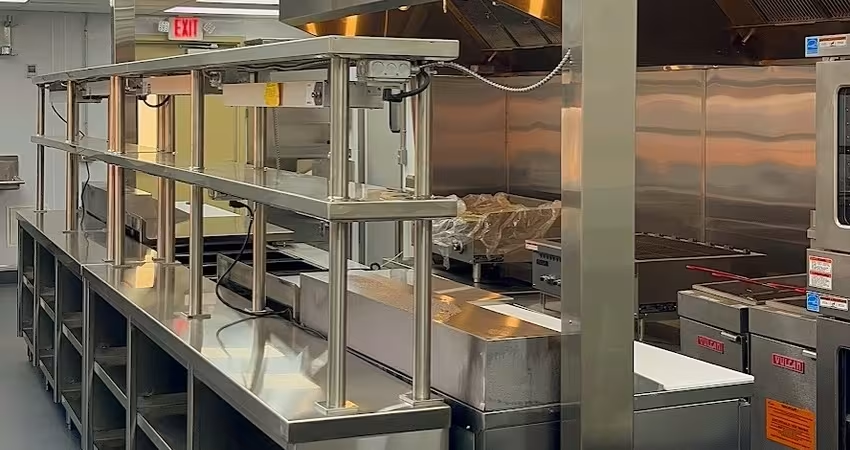
A properly designed container kitchen will integrate:
The 2021 International Building Code (IBC) explicitly addresses intermodal shipping containers as building elements in Section 3115, providing a clearer framework for using containers as code-compliant structures.
A qualified container kitchen manufacturer will work with structural and code consultants to align with:
For waterfront and marina sites, design should also address:
While every project is unique, you can think about shipping container kitchen cost and ROI in terms of trade offs vs. a traditional build and new revenue capture.
Compared to expanding a clubhouse or building a new masonry kitchen, a container kitchen can reduce:
You still need to budget for:
But these elements tend to be more predictable than a fully bespoke waterfront build, where site surprises and change orders are common.
A well-placed container kitchen can drive ROI in several ways:
Even simple directional modeling helps make the case. For example:
Your actual numbers will depend on your pricing, volume, labor model, and season length—but this is the logic boards and committees are looking for.
Once you’ve proven a configuration at your flagship marina, you can:
That means the design and engineering investment pays off multiple times across your network, not just at one site.
%20(1).avif)
ContekPro designs and manufactures permanent-grade shipping container kitchens built to commercial building, health, and fire codes. Units are engineered to meet standards like NFPA 96 and relevant building codes, then reviewed by the local Authority Having Jurisdiction (AHJ), so you’re deploying a true commercial kitchen, not a modified trailer.
ContekPro offers pre-engineered 20' and 40' container kitchen configurations designed for compact footprints, tight waterfront parcels, and high-output service lines. Layouts are optimized for clear workflow, safe circulation, and efficient integration of your chosen equipment.
Instead of forcing your concept into a generic box, ContekPro starts with your menu, service model, and volume targets. The team helps translate that into an equipment package and layout that fits a container footprint while remaining compliant and operationally efficient for dockside, poolside, fuel dock, or outstation service.
Marina and yacht club projects face corrosion, wind, and flood considerations. ContekPro container kitchens can be engineered with appropriate coatings, insulation, structural reinforcement, and foundations to address coastal conditions and align with your local codes and consultants.
Each unit comes with defined electrical, gas, water, and wastewater requirements and connection points. That makes it easier for your marina engineer, contractor, or facilities team to plan power distribution, water/waste routing, and gas or propane runs without guesswork.
Because the kitchens are factory-built, once a design is approved it can be produced, delivered, and installed more quickly than a traditional ground-up kitchen. This helps marinas and yacht clubs bring new F&B capacity online on a shorter timeline.
If you operate multiple marinas, outstations, or satellite sites, you can replicate the same ContekPro design across your network. That supports consistent operations, simpler staff training, and streamlined maintenance and spare parts planning.
ContekPro can collaborate with your architect, engineer, and operations team to align the container kitchen with your overall site plan, guest journeys, and long-term F&B strategy so the container becomes a core, permanent part of your waterfront infrastructure.
.avif)
For marinas and yacht clubs, food and beverage isn’t just an amenity, it’s a strategic lever. You’re managing complex guest journeys across docks, fuel stations, pool decks, terraces, and clubhouses, all while working within tight waterfront footprints and strict codes. A traditional, single back-of-house often can’t keep up with where and how your members actually want to dine.
A shipping container kitchen gives you a different path. Instead of embarking on a long, ground-up building project, you can deploy a permanent, code-compliant commercial kitchen exactly where you need capacity: beside the docks, at a pool bar, on an event lawn, or at a remote outstation. With the right planning, you get a compact, efficient back-of-house that feels custom to your property but is built with industrial consistency and control.
The return isn’t just operational. A well-placed container kitchen can support higher check volumes, faster ticket times, and more attractive F&B concepts across your waterfront. It also creates a repeatable model: once the design is proven, you can replicate it across other marinas or satellite locations in your network, standardizing training, maintenance, and guest experience.
ContekPro focuses specifically on permanent, pre-engineered shipping container kitchens for operators who want to expand, scale, or open new locations with less risk and more predictability. If you’re exploring ways to add serious F&B capacity to your marina or yacht club, a containerized commercial kitchen is one of the most effective long-term investments you can make.
Ready to explore how a ContekPro shipping container kitchen can help you transform? Get in touch with our team today to start planning your solution.
Explore more modular hospitality solutions:
Shipping container kitchens from providers like ContekPro are designed as permanent, code-compliant commercial kitchens. They’re built to meet building, health, and fire codes and are reviewed by the local Authority Having Jurisdiction (AHJ). Many marinas use them as long-term infrastructure to expand F&B capacity at docks, pool decks, fuel docks, and outstations.
In many cases, yes. Container kitchens are well-suited for dockside or waterfront locations, provided the site is properly engineered. Your design team will address foundations, wind and flood requirements, corrosion protection, and safe routing of utilities so the unit can operate reliably in a coastal environment.
A typical shipping container kitchen requires:
Pre-engineered solutions like ContekPro provide clear utility loads and connection points, making it easier for your engineer or contractor to plan the necessary infrastructure on site.