%20(1).avif)
A gleaming row of commercial ranges, a walk-in cooler the size of a studio apartment, the latest combi ovens and yet, service grinds to a halt every Friday night. The problem isn't the equipment. It's the workflow.
Too many hospitality operators approach kitchen design as an equipment shopping exercise, selecting appliances first and fitting operations around them. This creates bottlenecks, increases labor costs, and undermines the guest experience. According to the National Restaurant Association, labor remains one of the largest operational expenses for foodservice businesses and poor kitchen flow amplifies that cost.
In this guide, we'll explore why commercial kitchen workflow design must precede equipment selection and how hotels, resorts, and food service operators can apply workflow-first principles to build kitchens that perform under pressure.
When equipment selection comes before workflow planning, inefficiencies become structural rather than occasional. Over time, these decisions compound into measurable operational losses:
Note: Even the most advanced commercial appliances cannot compensate for layouts that force staff to backtrack, queue, or work around one another during service.
When kitchens are planned around how food, people, and dishes actually move, efficiency becomes a built-in advantage rather than a daily struggle. Industry professionals consistently rank workflow planning as a foundational design principle. The Certified Food Service Professionals (CFSP) handbook identifies workflow as one of the six core elements of effective commercial kitchen design.
Operators who adopt workflow-first layouts typically see improvements across multiple metrics:
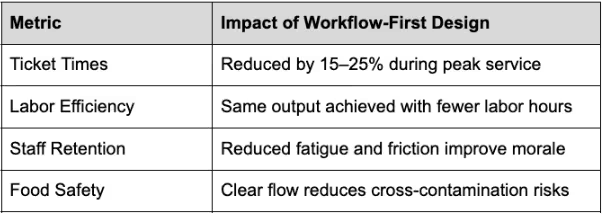
Rather than relying on staff to “work around” design flaws, workflow-driven kitchens allow teams to operate at full capacity with less friction.
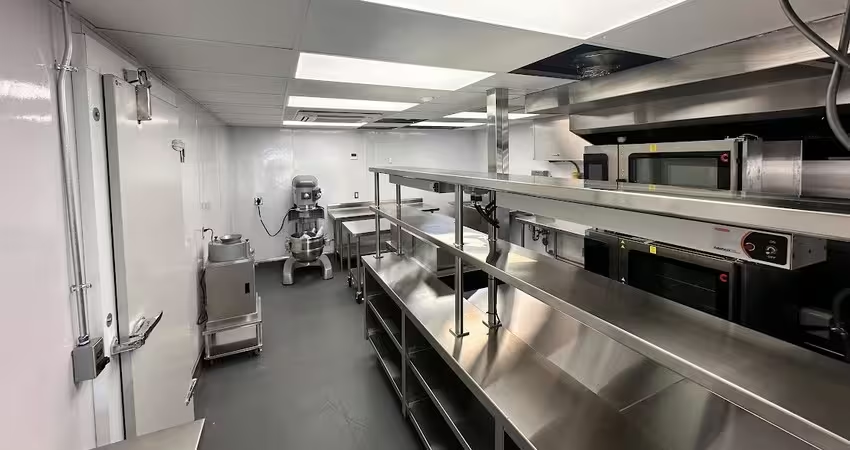
Before reviewing equipment catalogs or floor plan templates, operators must understand how food, staff, and dishes move through their operations.
Every commercial kitchen follows a similar operational cycle. Understanding these stages helps identify where bottlenecks occur:
Tip: Map these stages on paper before designing your layout. Draw arrows showing how ingredients and dishes move. If arrows cross or backtrack, you've identified a friction point.
The FDA Food Code emphasizes that food should flow in one direction (from raw to ready-to-eat) to minimize contamination risks. This regulatory requirement also happens to support operational efficiency.
For existing kitchens undergoing renovation, audit your current workflow by asking:
Document these pain points before making any design decisions. The goal of restaurant kitchen flow planning is to eliminate unnecessary movement and create logical, one-directional traffic patterns.
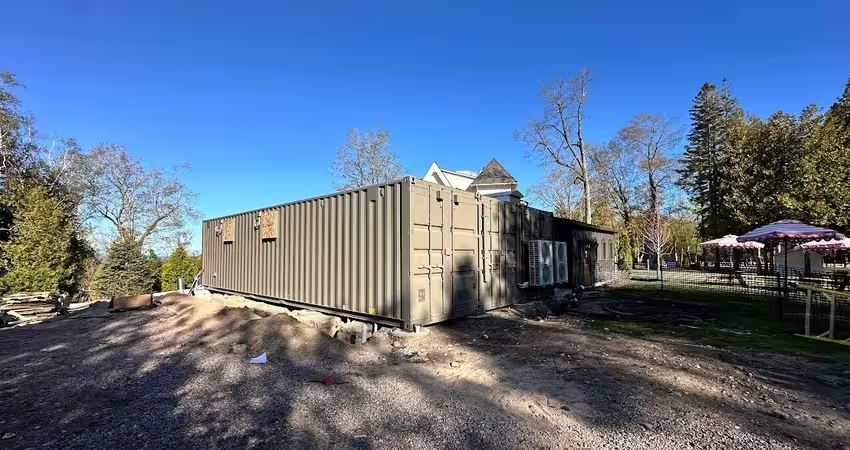
Different hospitality operations require tailored workflow approaches. The six principles of commercial kitchen design provide a framework, but application varies by context.
Hotels with multiple dining venues like main restaurant, pool bar, room service, banquet facilities face unique workflow challenges:
Note: Many resorts solve this by creating a central commissary kitchen for prep work, with smaller finishing kitchens at each outlet. This workflow-first approach reduces duplication and improves consistency.
For detailed guidance, see our hotel kitchen design guide.
Banquet kitchens prioritize batch production and precise timing over à la minute cooking. Workflow planning in these environments emphasizes:
The commercial kitchen layouts most suited to banquet operations are assembly-line or zone-style configurations, which allow multiple staff to work in parallel without interference.
Country clubs and golf courses operate multiple foodservice formats from a shared kitchen infrastructure. A single facility may support casual clubhouse dining, halfway houses, outdoor bars, and private events — often simultaneously.
Workflow-first kitchen design in these environments focuses on:
Many clubs use a hybrid approach, combining a core production kitchen with modular or auxiliary kitchens near high-traffic areas. This structure maintains consistent workflow during normal operations while supporting increased volume without overloading a single back-of-house line.
By designing kitchens around simultaneous service demands rather than peak extremes, country clubs maintain smooth operations, predictable labor needs, and consistent service quality across all dining formats.
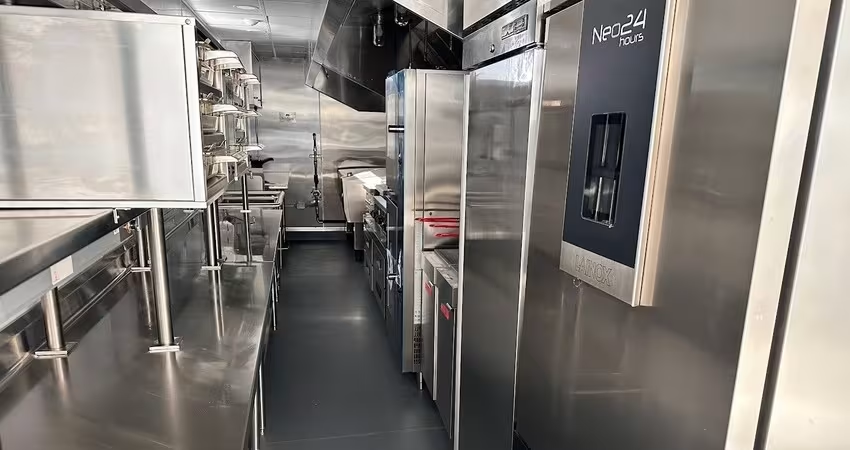
Even experienced operators make workflow errors that haunt their kitchens for years. The OSHA Kitchen Safety Guidelines highlight many hazards that stem from poor planning.
The most efficient kitchen isn't the one with the most expensive equipment — it's the one where staff can move intuitively.
Common movement mistakes include:
Tip: During the design phase, walk through a typical service mentally. Time how long a single dish takes from ticket to plate, and identify every step where a cook must wait, detour, or backtrack.
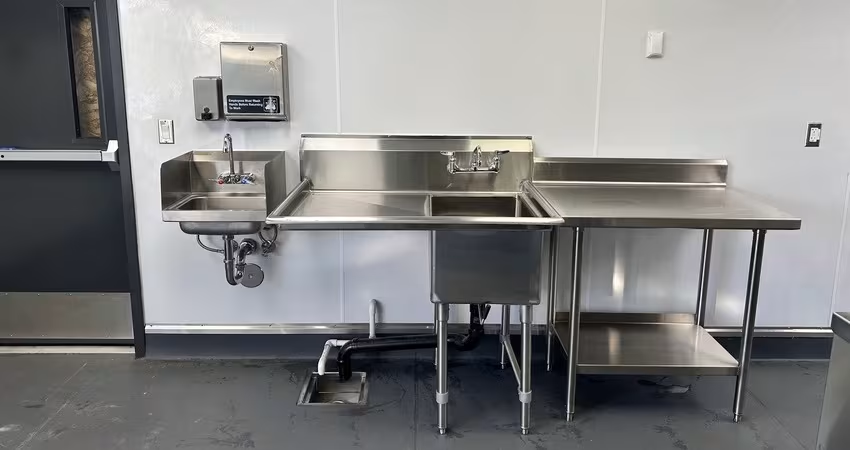
Many kitchens optimize the food-forward path but neglect the dish-return workflow. Servers entering with dirty dishes should not cross paths with food leaving for the dining room. Warewashing should be positioned near the kitchen entrance — not buried in the back. Bus tubs and dish staging need dedicated space that doesn't encroach on prep areas.
The NFPA 96 standard addresses ventilation requirements, but the same principle of separation applies to workflow: keep clean and dirty streams from crossing.
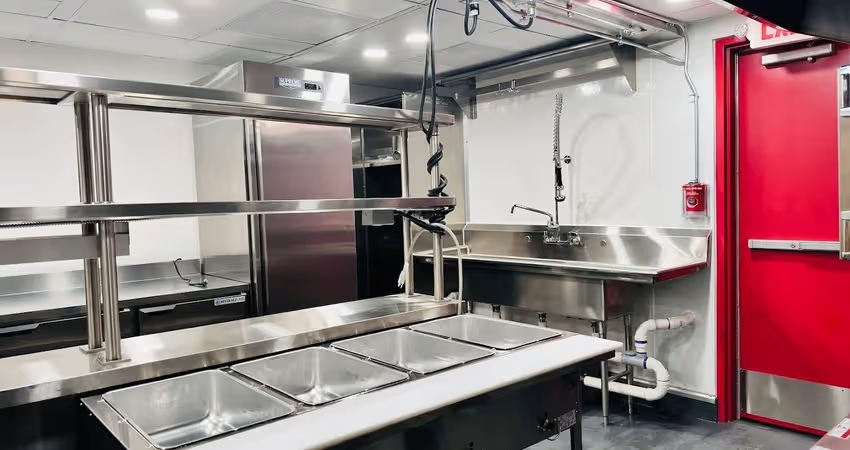
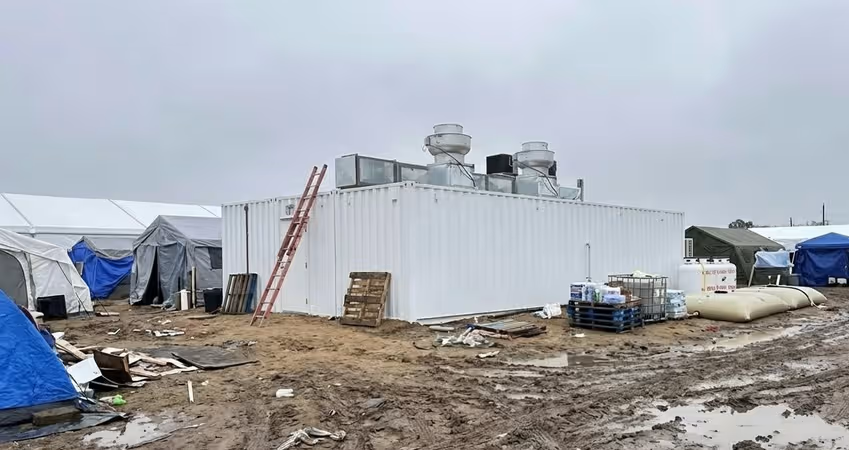
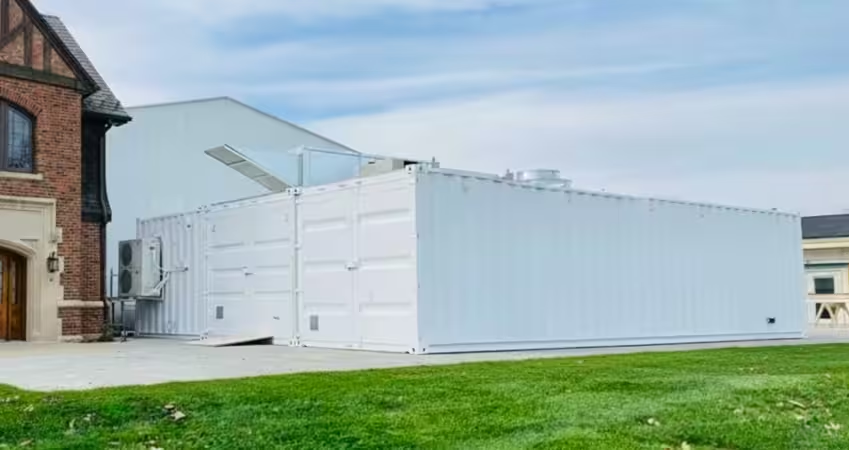
Traditional construction often forces compromises — structural columns, fixed utility locations, and building constraints dictate what's possible. Modular construction flips this equation.
Because modular kitchens are designed off-site, operators can specify workflow-optimized layouts before construction begins, choose from proven floor plans developed through real-world testing, and avoid on-site surprises that force last-minute design changes.
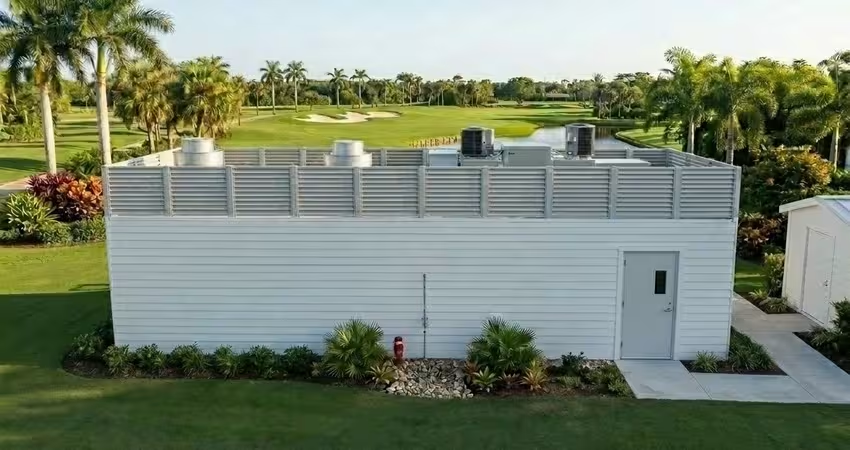
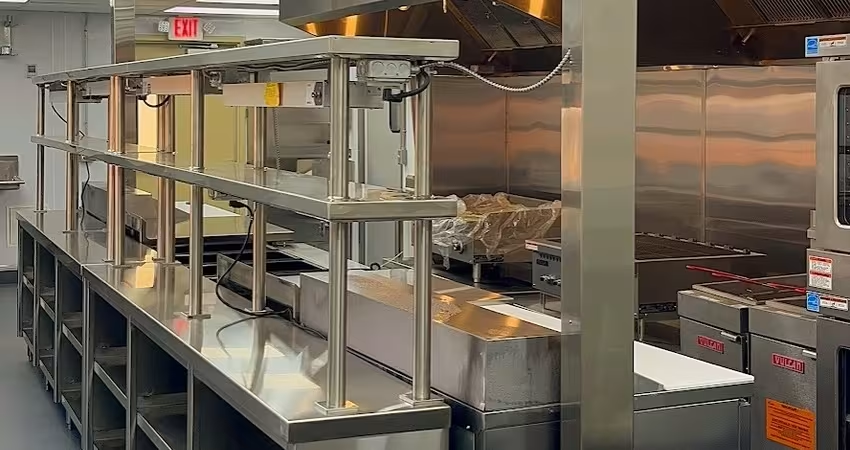
ContekPro's modular hotel kitchen solutions are engineered around the workflow principles discussed in this guide. Each unit features:
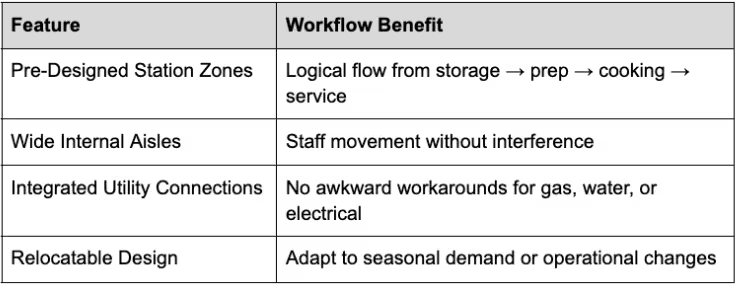
By starting with workflow and building backward to equipment selection, modular construction delivers kitchens that perform from day one.
The most successful commercial kitchens aren't defined by their equipment lists — they're defined by how smoothly food, staff, and dishes move through the space. Commercial kitchen workflow design must come first: map your operational flow, identify friction points, and only then select equipment that supports that flow.
For hospitality operators seeking a faster path to an efficient kitchen, modular construction offers a compelling advantage. With pre-engineered layouts built around proven workflow principles, you can launch operations in weeks rather than months.
Ready to build a kitchen designed around your operational workflow? Explore ContekPro's modular kitchen solutions or contact our team to discuss your project.
Workflow efficiency is the most critical factor. A kitchen's ability to move ingredients, staff, and finished dishes through logical zones from receiving to storage, prep, cooking, plating, and service determines operational success. Equipment quality matters, but even premium appliances underperform in a poorly planned layout.
Start by mapping your operational workflow: delivery → storage → prep → cooking → plating → service → dish return. Identify the menu's demands, peak service volumes, and staffing levels. Then select equipment that fits the flow — not the other way around. Ensure aisles are at least 48 inches wide to allow safe staff movement.
The five primary zones are: receiving and storage (dry, refrigerated, frozen); food preparation (washing, cutting, portioning); cooking (ranges, fryers, ovens); plating and service (pass-through, hot holding); and warewashing (dish return, cleaning, sanitizing). A well-designed kitchen positions these zones in a logical, unidirectional flow to minimize cross-traffic.