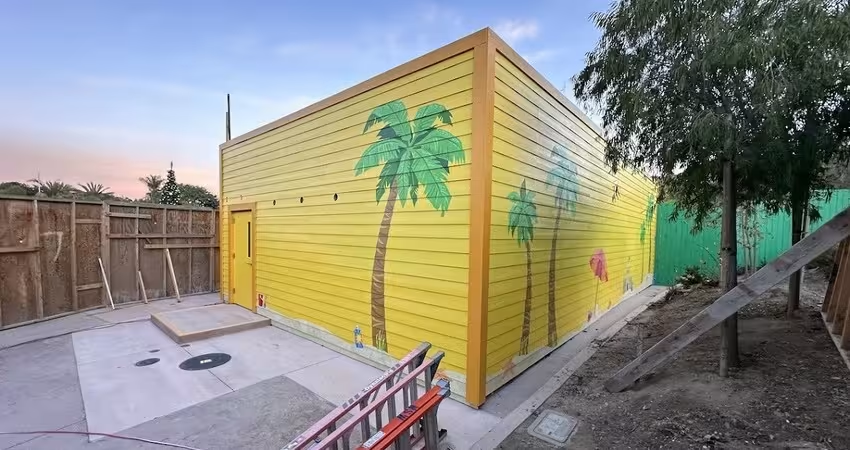
A hospitality GM breaks ground on a new commercial kitchen in January, targeting a Memorial Day opening. By March, a permit delay has pushed the timeline back six weeks. By April, an MEP conflict requires partial demolition of a completed wall. By June, the kitchen is still six weeks from opening — and the property has lost its entire peak-season revenue window.
This scenario plays out across the hospitality industry more often than operators admit. Commercial kitchen construction is one of the most technically demanding build types in any sector — and even experienced project teams repeatedly make the same avoidable mistakes. According to McKinsey & Company, large construction projects globally run an average of 80% over schedule and 20% over budget. Commercial kitchens, with their layered mechanical, electrical, and plumbing (MEP) requirements, are especially vulnerable.
This guide breaks down the 10 most common commercial kitchen construction mistakes — what causes them, what they cost, and exactly how to prevent them from derailing your next project.
Post-pandemic conditions have fundamentally reshaped the commercial construction environment. The U.S. faces a chronic labor shortage — the Associated Builders and Contractors estimates the industry needs to attract more than 500,000 additional workers annually just to meet current demand. Material costs remain elevated, and supply chains continue experiencing disruption.
For hospitality operators — hotels, resorts, private clubs, and golf courses — the stakes are especially high. A delayed kitchen opening doesn't just mean delayed revenue. It means guests facing reduced service, staff sitting idle, and reputational consequences that compound for seasons afterward.
Industry Context: According to the Dodge Construction Network, 90% of construction projects experience some form of budget overrun. For hospitality kitchen builds, inadequate planning and poor contractor coordination are the primary drivers.
Understanding where commercial kitchen construction goes wrong is the first step to ensuring your project stays on track.
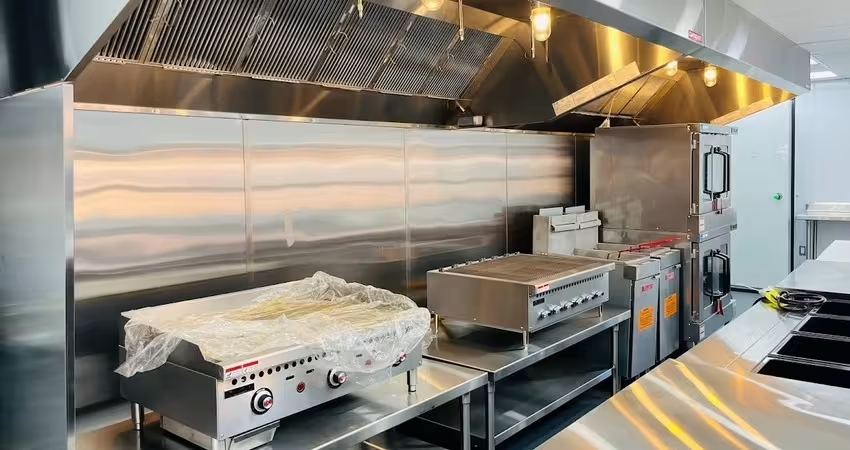
Many operators begin construction with architectural drawings finalized — but without a thorough review against local health, fire, and building codes. When violations surface mid-build, the consequences are severe: wall relocations, utility rerouting, equipment substitutions, and full inspection restarts.
Commercial kitchens must satisfy a layered stack of codes simultaneously:
Missing any one of them can stall an entire project.
Tip: Treat the AHJ meeting as part of design — not an administrative formality. Issues raised in a 30-minute pre-construction meeting cost nothing to fix. The same issues discovered during inspection can cost weeks and tens of thousands of dollars.
Permit timelines are one of the most consistently underestimated variables in commercial kitchen construction planning. Operators frequently budget 4–6 weeks for permitting. The reality is often 3–5 months — particularly for projects requiring simultaneous sign-off from the building department, health department, and fire marshal.
According to industry data, zoning and permitting issues cause roughly 25% of startup delays in new food service establishments. For hospitality builds in urban markets or jurisdictions with backlogged plan review queues, this figure is even higher.
Note: For modular or prefabricated kitchen projects, some units arrive pre-engineered to code, with signed and sealed drawings already prepared. This significantly compresses the permitting phase because plan reviewers are working from pre-approved documentation rather than custom drawings from scratch. Learn more about ContekPro's permitting support process.
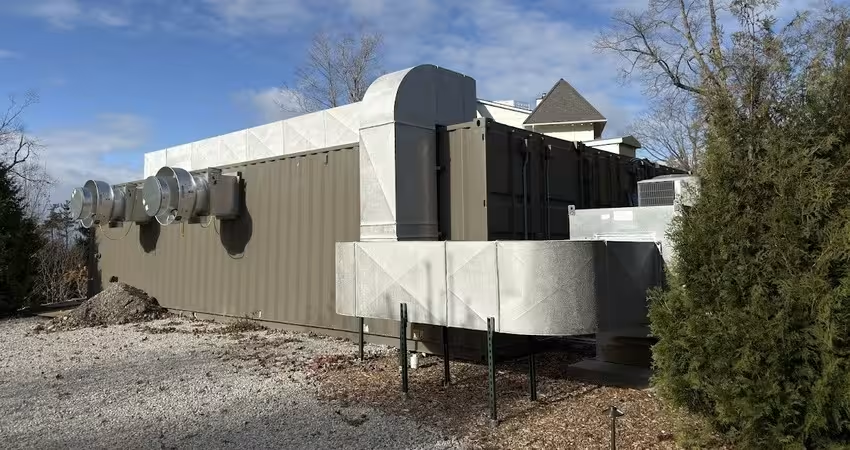
A commercial kitchen is not a standard commercial build. It requires precise coordination between cooking equipment suppliers, exhaust hood fabricators, fire suppression installers, health department inspectors, and multiple MEP trades — all following food-service-specific codes that most general contractors rarely encounter.
Common failure points with inexperienced GCs include:
Tip: If a GC cannot speak fluently about NFPA 96, NSF certification, or AHJ coordination, that is your answer. Move on.
Mechanical, electrical, and plumbing systems are the circulatory system of a commercial kitchen — and in traditional builds, they are often designed and installed by separate subcontractors working from separate drawings. When those drawings don't align, the result is clashes: ductwork that conflicts with electrical conduit, plumbing rough-ins that block equipment placement, gas lines that can't reach where the cooking line was repositioned in a design revision.
These are not minor nuisances. MEP conflicts routinely require partial demolition of finished work — at full cost, typically borne by the owner when contractual responsibility is ambiguous.
Note: Off-site manufactured kitchens eliminate MEP coordination risk almost entirely, because mechanical, electrical, and plumbing systems are integrated and inspected in a controlled factory environment before the unit ships. See how ContekPro handles this in our 6-step delivery process.
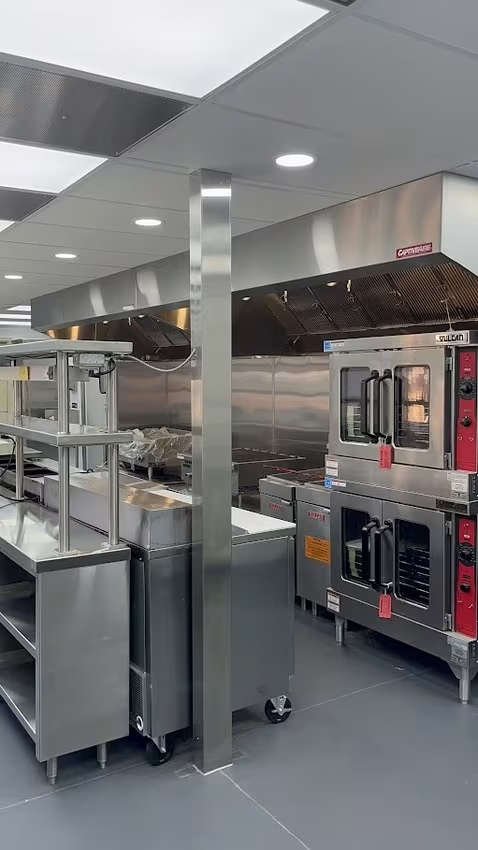
In commercial kitchen construction, equipment is not furniture — it is infrastructure. Every piece of commercial cooking equipment drives specific structural, utility, and ventilation requirements:
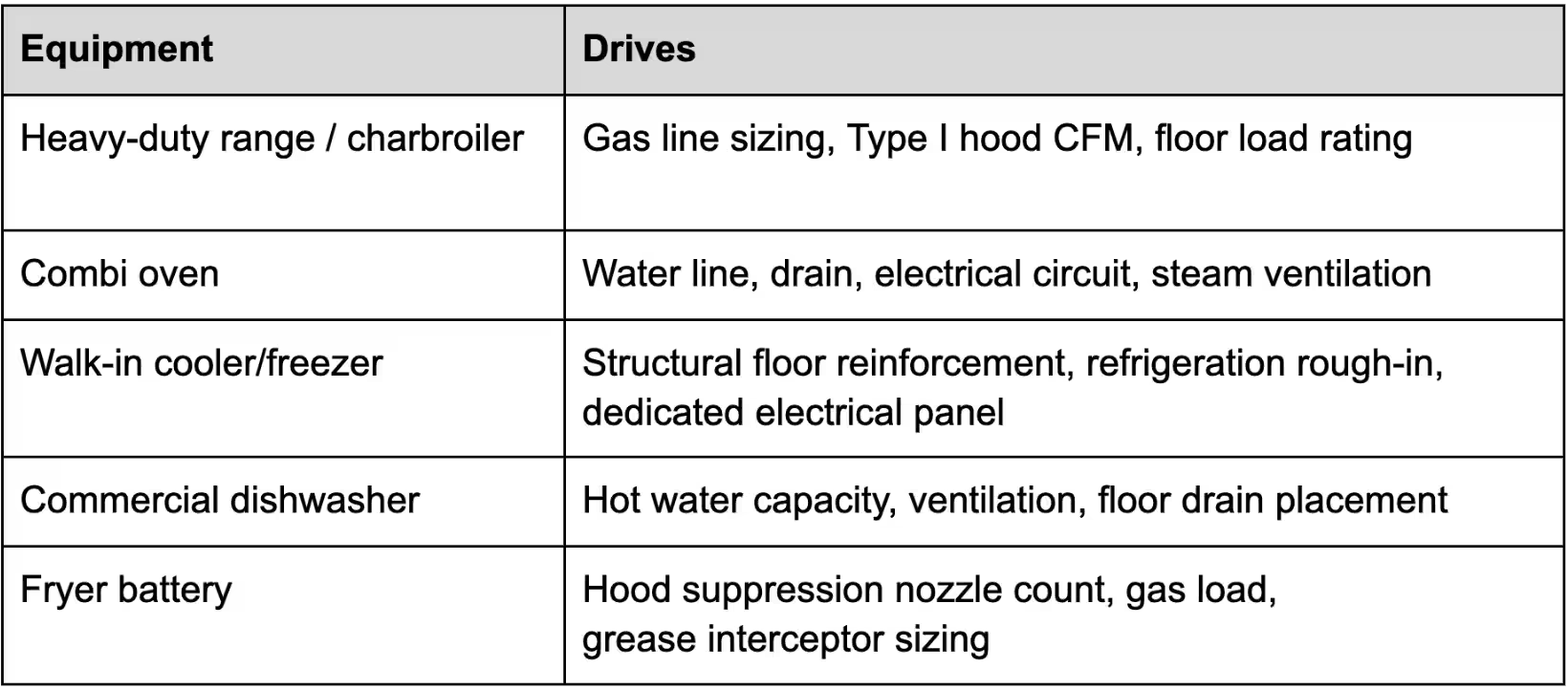
When equipment specifications change after MEP rough-ins are complete — a common scenario when operators switch suppliers mid-project — the cascading rework is expensive and time-consuming.
Tip: For guidance on right-sizing equipment to your menu and volume, see our guide on commercial kitchen design principles.
Ventilation is the most technically complex system in any commercial kitchen — and the one most frequently under-specified in early project phases. NFPA 96 sets the national standard for ventilation control and fire protection in commercial cooking operations, and it is non-negotiable.
Common ventilation mistakes include:
A single fire incident traced to inadequate grease control can result in damages exceeding $23,000 — and that figure doesn't include downtime, lost revenue, or insurance consequences.
Note: Our commercial kitchen exhaust hood guide covers Type I vs. Type II hood selection, NFPA 96 compliance requirements, and sizing best practices in detail.
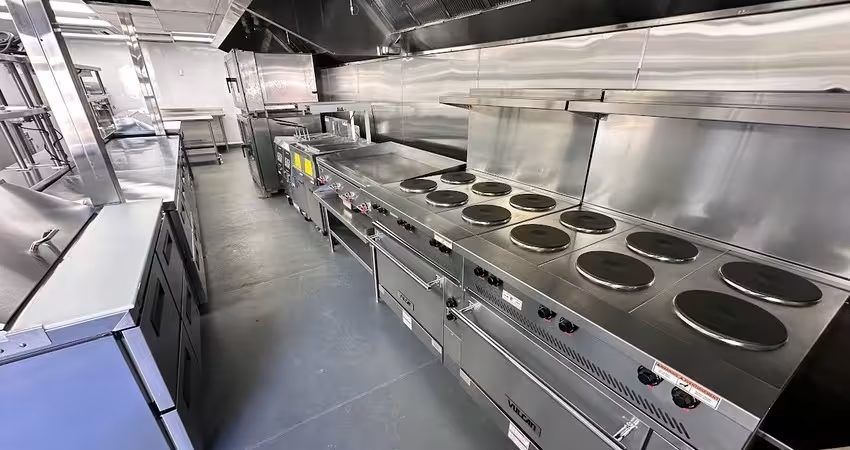
"Site ready" means different things to different contractors — and that ambiguity creates problems. Operators frequently discover mid-installation that what they assumed was a prepared site still lacks critical infrastructure.
For a commercial kitchen build, true site readiness means:
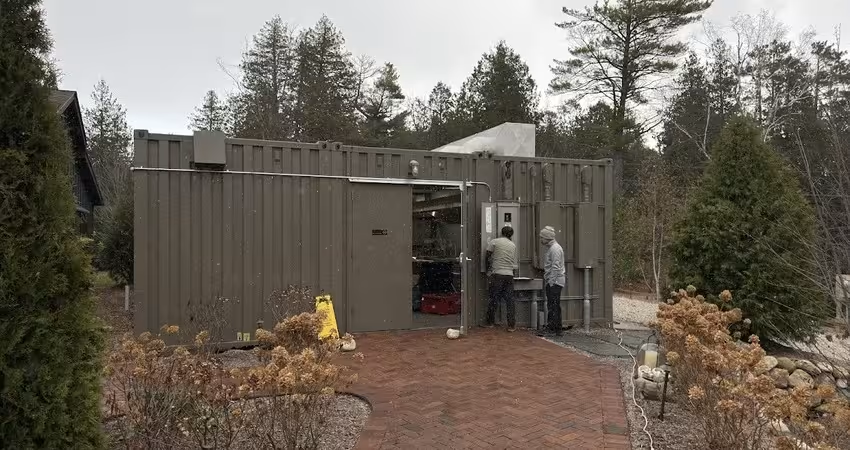
Tip: Remote and constrained sites are where prefabricated kitchens consistently outperform traditional construction. With a factory-built unit, the majority of complex utility integration is handled off-site — reducing on-site work to foundation prep and a single utility connection point.
Construction budgets without contingency reserves are optimism dressed as planning. The National Restaurant Association and most construction finance experts recommend a contingency of 10–15% of total project cost for commercial kitchen builds — higher for renovation projects where existing conditions may reveal hidden surprises.
In hospitality kitchen construction, the most frequent unbudgeted costs include:
Note: For a deeper breakdown of the hidden costs that blow up commercial kitchen construction budgets, see our guide on commercial kitchen budget traps.
A kitchen designed exclusively around current menu volume and current staffing levels is already aging before the first service. In hospitality, food and beverage programs evolve — menus expand, catering volumes grow, new revenue streams (events, poolside dining, private dining rooms) come online. A kitchen that can't scale forces expensive remodels within 3–5 years of opening.
Common scalability oversights include:
Traditional construction thinking assumes a clean sequence: design → permits → site prep → rough-in → equipment → finish. In commercial kitchen construction, that linear approach is a schedule killer. Many scopes can and should run in parallel — but only if they are coordinated from the start.
What happens when sequencing goes wrong:
Tip: For strategies that specifically address timeline compression during commercial kitchen builds, see our guide on minimizing downtime during commercial kitchen construction.
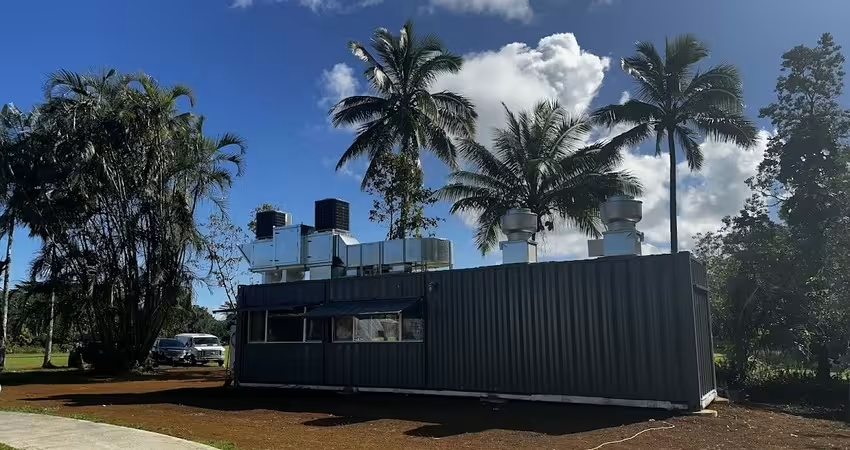
Many of the mistakes above are structural to traditional construction — they arise from coordinating multiple independent parties, working in uncontrolled site environments, and sequencing complex interdependent systems across months of field work.
ContekPro's prefabricated modular kitchens are engineered to eliminate the majority of these risks by design. MEP systems are integrated and inspected in a controlled factory environment. Equipment specifications are locked before manufacturing begins. Ventilation load calculations and fire suppression systems are pre-engineered to NFPA 96. And because units are delivered 95% complete, the on-site critical path collapses from months to days.
For hotels, resorts, and private clubs that cannot afford the cost and operational disruption of a traditional kitchen build gone wrong, prefabricated construction offers a fundamentally more predictable approach — with deployment up to 50% faster and cost savings of up to 20% compared to brick-and-mortar builds.
Commercial kitchen construction mistakes are rarely caused by negligence. They are caused by underestimating the technical complexity of the build type, entering the project without enough pre-construction groundwork, and managing too many independent parties without sufficient coordination infrastructure.
The good news: every mistake on this list is preventable. Early code engagement, realistic permit timelines, experienced contractor selection, locked equipment specifications, and parallel-path scheduling are disciplines that cost nothing extra to implement — but save significant time, money, and operational disruption.
For hospitality operators planning a new kitchen, expansion, or replacement build, the planning phase is where projects are won or lost. Invest in it accordingly.
Ready to eliminate construction risk from your next kitchen project? ContekPro delivers turnkey, code-compliant modular kitchens for hotels, resorts, and private clubs — engineered to avoid every mistake on this list, by design. Talk to our team to get started.
The most common culprits are late-stage code discoveries that require redesigns, insufficient contingency reserves (most construction finance experts recommend 10–15% of total project cost), MEP coordination failures that trigger expensive rework, and equipment specification changes made after rough-ins are complete. In hospitality specifically, operators frequently underestimate permit timelines, which delays opening dates and compounds daily revenue losses. Structural surprises revealed during demolition are another consistent budget driver, particularly in renovation projects.
Permit timelines vary significantly by jurisdiction, but most operators should plan for a minimum of 8–12 weeks for a straightforward commercial kitchen build. Complex projects in dense urban markets — or those requiring simultaneous sign-off from a building department, health department, and fire marshal — can stretch to 4–6 months. The single most effective way to compress this timeline is engaging your local AHJ before construction drawings are finalized, so code requirements are incorporated into the design rather than corrected after the fact.
Yes. A commercial kitchen involves coordinated MEP systems, NFPA 96-compliant ventilation, NSF-certified surfaces, fire suppression integration, and layered health code compliance. General contractors without food service experience routinely miss the interdependencies between these systems. Working with a kitchen-experienced design-build firm — or a prefabricated kitchen provider where these systems are factory-integrated — eliminates most coordination risks before construction begins.