A hotel general manager greenlights a $500,000 kitchen renovation. Three months in, the building official flags the layout: aisle widths are too narrow for accessible circulation, and there's no compliant path into or out of the work area. The fix adds six figures to the budget and eight weeks to the schedule.
It happens more often than it should. ADA compliance in commercial kitchen design is one of the most misunderstood areas of commercial kitchen construction — particularly the distinction between what's required in employee work areas versus fully accessible public spaces.
This guide breaks down the specific ADA commercial kitchen requirements that apply to hospitality operations: clearance dimensions, counter heights, appliance access, flooring, and the common mistakes that trigger costly rework.
The 2010 ADA Standards for Accessible Design govern accessibility in all new construction and alterations of commercial facilities. But commercial kitchens occupy a unique regulatory position.
Under Section 206.2.8 of the ADA Standards, employee work areas are not required to be fully accessible. Instead, they must allow a person with a disability to approach, enter, and exit the space. This means a commercial kitchen needs an accessible path in and out — but the internal circulation paths between equipment stations are generally exempt from full accessible route requirements.
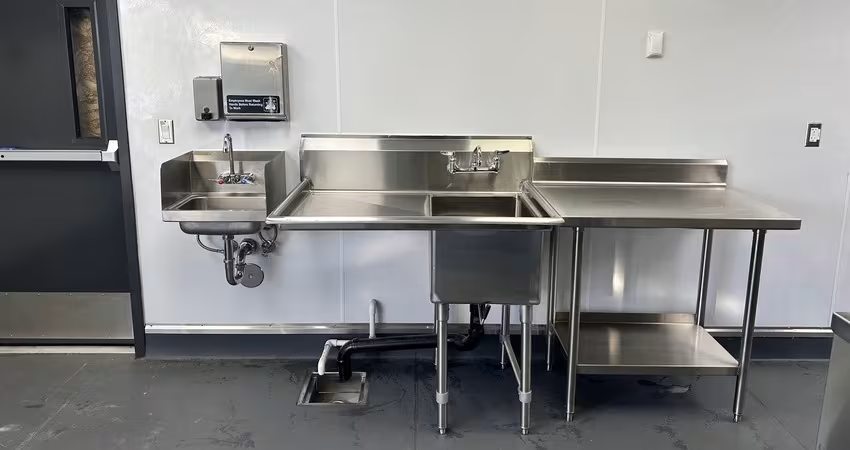
Note: This exemption is not a blanket pass. Break rooms, restrooms, locker rooms, and hand-wash sinks within or adjacent to the kitchen are NOT considered employee work areas and must comply fully with ADA standards.
Certain kitchen types must meet full Section 804 accessibility requirements, not just the approach-enter-exit standard:
For hotel operators, this is critical: guest room kitchenettes in ADA-designated rooms must comply with every provision of Section 804 of the ADA Standards, including counter heights, appliance clearances, and turning space.
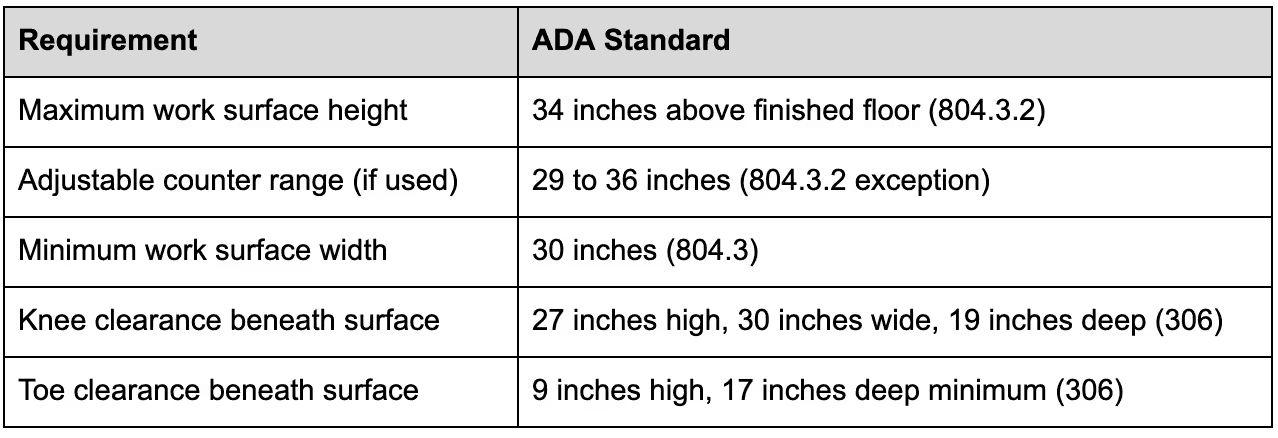
Kitchen layout directly determines ADA compliance. The U.S. Access Board's technical guidelines specify minimum clearances based on kitchen configuration.
Tip: For hospitality operators designing a new kitchen, plan the accessible entry path and turning space before locking in equipment placement. Retrofitting these clearances after equipment is positioned is where costs escalate. For more on layout planning, see this guide to commercial kitchen design principles.
Door maneuvering clearances also apply at the kitchen entry point. Depending on the door type (push, pull, or sliding), the ADA requires specific floor clearances on both sides of the door to allow wheelchair approach and operation. A sliding or folding door can simplify compliance in tight floor plans.
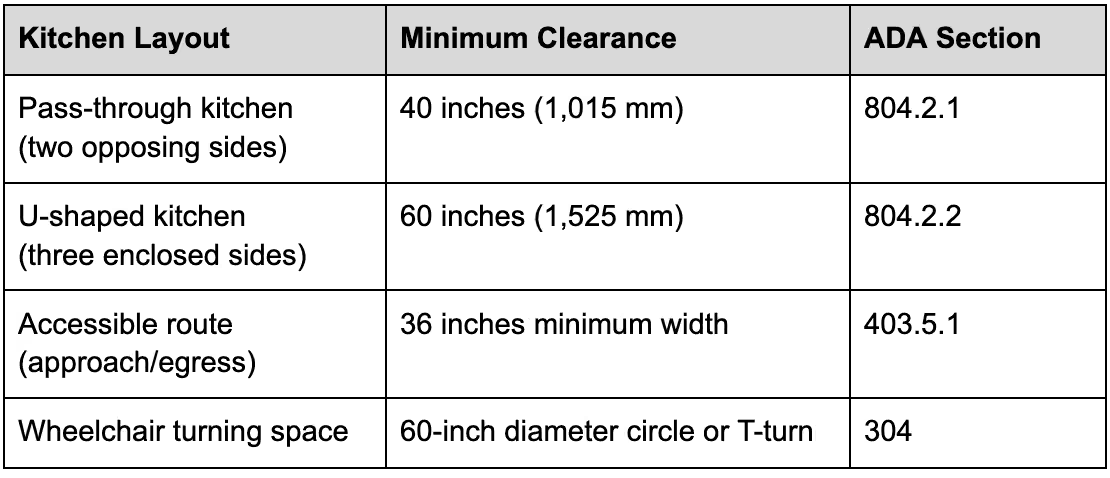
When full Section 804 compliance applies (guest room kitchens, teaching kitchens), work surface requirements are specific and measurable.
RequirementADA StandardMaximum work surface height34 inches above finished floor (804.3.2)Adjustable counter range (if used)29 to 36 inches (804.3.2 exception)Minimum work surface width30 inches (804.3)Knee clearance beneath surface27 inches high, 30 inches wide, 19 inches deep (306)Toe clearance beneath surface9 inches high, 17 inches deep minimum (306)
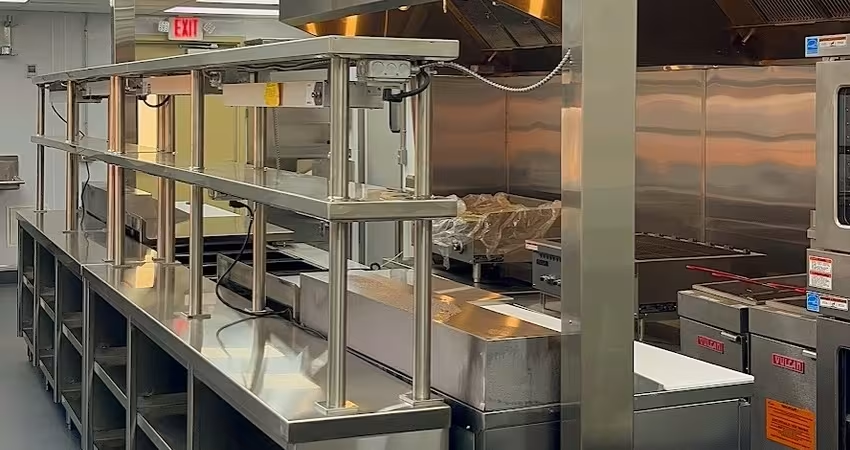
In back-of-house commercial kitchens classified as employee work areas, these counter height standards are not required by code. However, the ADA National Network and the ADA Standards Advisory 203.9 both recommend designing employee work areas with accessible elements wherever possible. Under Title I of the ADA, an employee with a disability is entitled to reasonable accommodations — and an accessible workstation built from the start is far cheaper than a retrofit.
Note: Standard commercial kitchen counter height is 36 inches. ADA-compliant surfaces are 34 inches maximum. Adjustable-height work surfaces or a dedicated accessible prep station can satisfy both operational needs and compliance without compromising the workflow for standing staff.
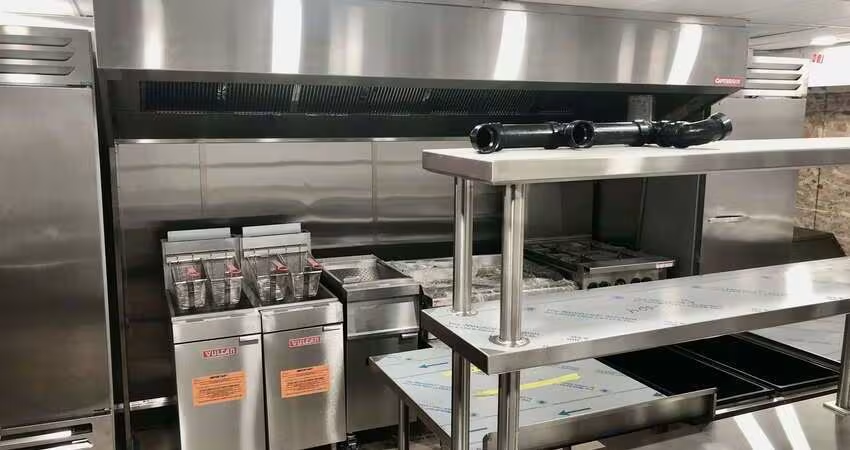
.avif)
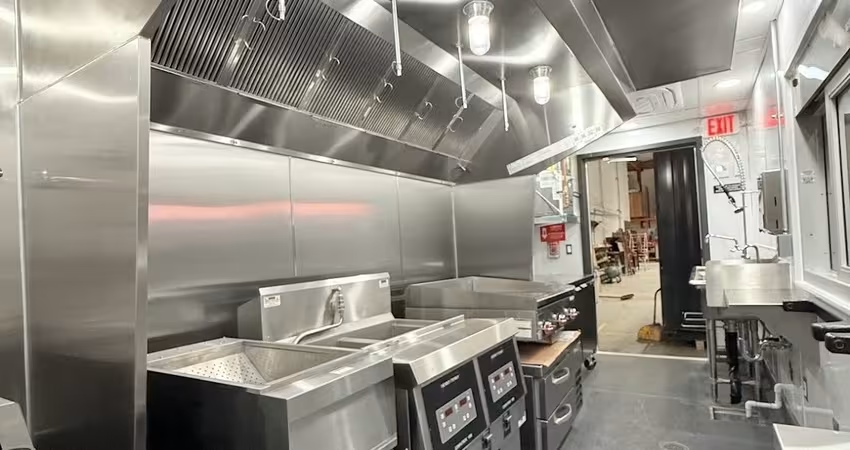
When ADA Section 804.6 applies, every kitchen appliance must have a clear floor space and controls that meet reach range and operability standards.
Tip: Front-mounted controls are not just an ADA requirement — they're a safety feature. They prevent staff from reaching over hot surfaces, reducing burn injuries. Specifying front-control equipment is a design decision that benefits every user.
ADA-compliant commercial kitchen flooring must be stable, firm, and slip-resistant (Section 302). In commercial kitchens, this overlaps with OSHA requirements for slip-resistant surfaces (a coefficient of friction of 0.5 or higher) and FDA Food Code mandates for smooth, non-absorbent, easily cleanable surfaces.
Accessible routes through or into the kitchen must be free of level changes greater than ¼ inch (or ½ inch with a beveled edge). Thresholds at kitchen entries should not exceed ½ inch in height.
For lighting and electrical controls, switches and outlets along accessible paths should fall within ADA reach ranges (15–48 inches above the floor). Emergency signage, including exit signs and alarm strobes, must comply with ADA visual alarm requirements in spaces where employees with hearing impairments may work.
ADA-related rework is among the most expensive change orders in commercial kitchen construction projects. These are the most common errors:
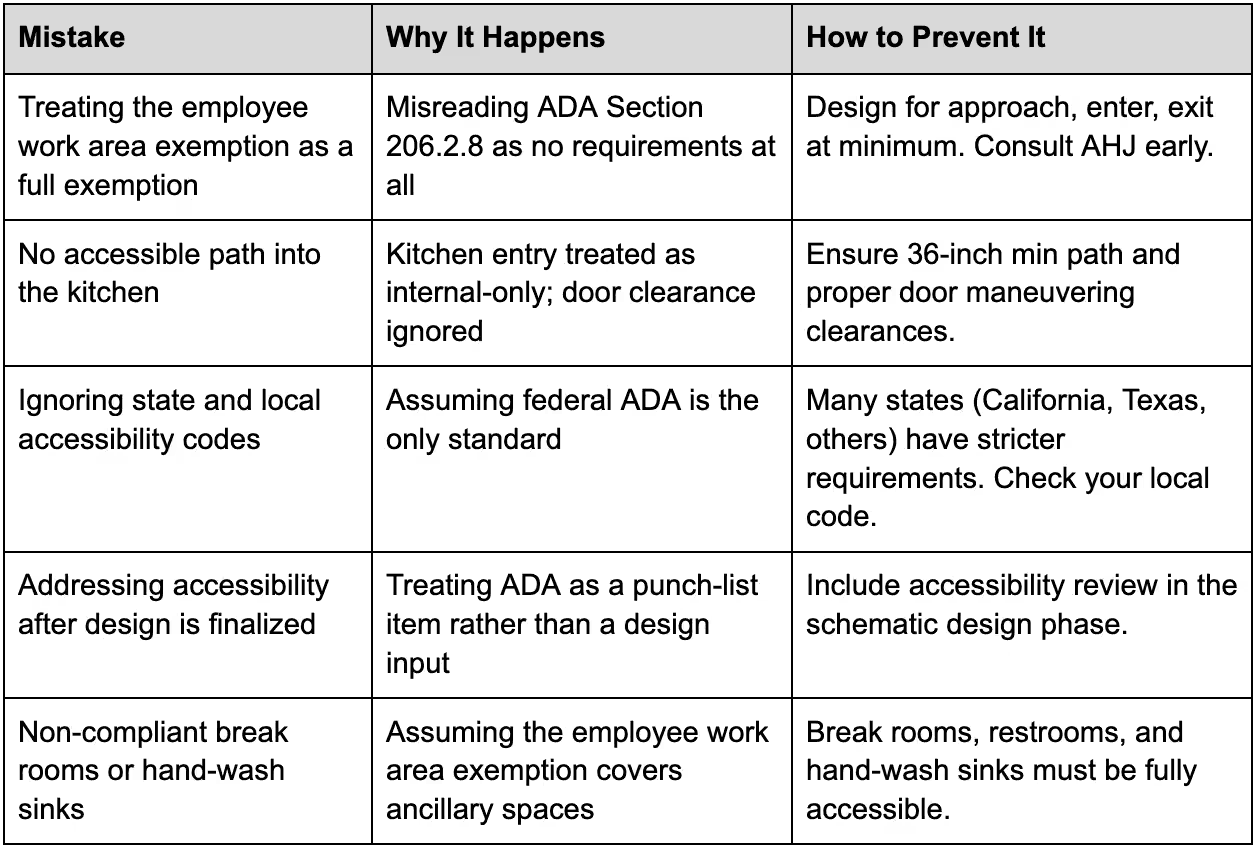
Integrating ADA requirements during schematic design adds only 1–3% to overall construction costs. Retrofitting an existing kitchen for compliance can cost $15,000 to over $100,000 depending on the scope of modifications required.
A proactive approach includes:
Your Authority Having Jurisdiction (AHJ) — typically the local building department — interprets how ADA standards and local accessibility codes apply to your project. Schedule a pre-construction meeting to confirm requirements before finalizing construction documents. For complex projects, hire a Certified Access Specialist (CASp) or ADA consultant to review plans. The codes and permitting process can move significantly faster when accessibility is addressed from the start.
Prefabricated modular kitchens offer a distinct advantage for ADA compliance. Because the entire unit is designed, engineered, and built in a factory-controlled environment, accessibility clearances, door maneuvering spaces, and compliant fixtures can be integrated during the design phase rather than coordinated across multiple trades on-site.
ContekPro's modular commercial kitchens are manufactured to International Building Code standards and delivered with complete architectural drawings signed and sealed by a licensed PE. This includes documented clearances, fixture heights, and accessible path dimensions — reducing the risk of compliance gaps discovered during on-site inspection.
Note: Under Title I of the ADA, employees with disabilities are entitled to reasonable workplace accommodations. Designing your kitchen with accessibility from the start is not just a code requirement — it's a proactive investment that avoids costly modifications later when an accommodation request arises.

ADA compliance shouldn't be an afterthought or a punch-list item. ContekPro's prefabricated hotel kitchens are engineered from the ground up with code compliance built in — from documented clearances and accessible entry paths to compliant fixture heights and pre-installed utility systems. Every unit ships with complete architectural drawings signed and sealed by a licensed PE, so there are no surprises at inspection.
Request a quote to see how a modular kitchen can simplify your next kitchen build — on time, on budget, and fully compliant.
Not entirely. Commercial kitchens classified as employee work areas must allow a person with a disability to approach, enter, and exit the space. The internal circulation paths between equipment are generally exempt from full accessible route requirements. However, ancillary spaces like break rooms, restrooms, and hand-wash sinks must comply fully. Guest room kitchenettes in ADA-designated hotel rooms must also meet full Section 804 requirements.
The ADA Standards specify 40 inches of clearance in pass-through kitchens (two opposing work sides) and 60 inches in U-shaped kitchens (three enclosed sides). The accessible route into and out of the kitchen must be at least 36 inches wide, with a 60-inch-diameter turning space or T-shaped turning area.
Kitchen work surfaces must be no higher than 34 inches above the finished floor, with knee and toe clearance of at least 27 inches high and 30 inches wide beneath the surface. Adjustable-height counters ranging from 29 to 36 inches are permitted as an alternative.
Designing for compliance from the start typically adds 1–3% to overall construction costs. Retrofitting an existing kitchen can range from $15,000 for minor modifications to over $100,000 for major layout changes, equipment relocation, and structural work.