Planning a commercial kitchen build is complex enough before fire code enters the picture. For hospitality operators considering a modular or prefabricated kitchen, fire suppression requirements raise a specific set of questions: Does a factory-built kitchen meet the same NFPA standards as a conventional build? Who inspects and certifies the system? How does factory installation affect local permitting?
The answers are straightforward, but the details matter. This guide breaks down every modular kitchen fire suppression system requirement you need to understand — from NFPA 96 and UL 300 compliance to wet chemical system components, inspection protocols, and the practical advantages of choosing a prefabricated modular kitchen with fire protection built in from the start.
Not all fires behave the same way. The National Fire Protection Association classifies fires involving cooking oils and fats as Class K — a category distinct from standard flammable liquid (Class B) fires due to the extreme temperatures and re-ignition risk involved in commercial cooking environments.
Cooking oils used in commercial kitchens can auto-ignite at temperatures above 685°F, and once ignited, they burn hot enough to resist conventional extinguishing methods. Water-based suppression makes grease fires worse, not better. That's why commercial kitchen fire suppression requirements center on wet chemical agents specifically engineered to cool, smother, and chemically neutralize burning fats through a process called saponification.
According to NFPA research, cooking equipment accounts for over 60% of fires in eating and drinking establishments, resulting in more than 100 civilian injuries and $165 million in direct property damage annually. Beyond physical damage, non-compliance with fire suppression requirements can result in:
Note: A single uncontained kitchen fire costs an average of $60,000, not including downtime or lost revenue. Prevention through proper fire suppression is far more cost-effective than recovery.
Three core standards govern fire suppression in commercial kitchens — and they apply equally to modular and brick-and-mortar builds.
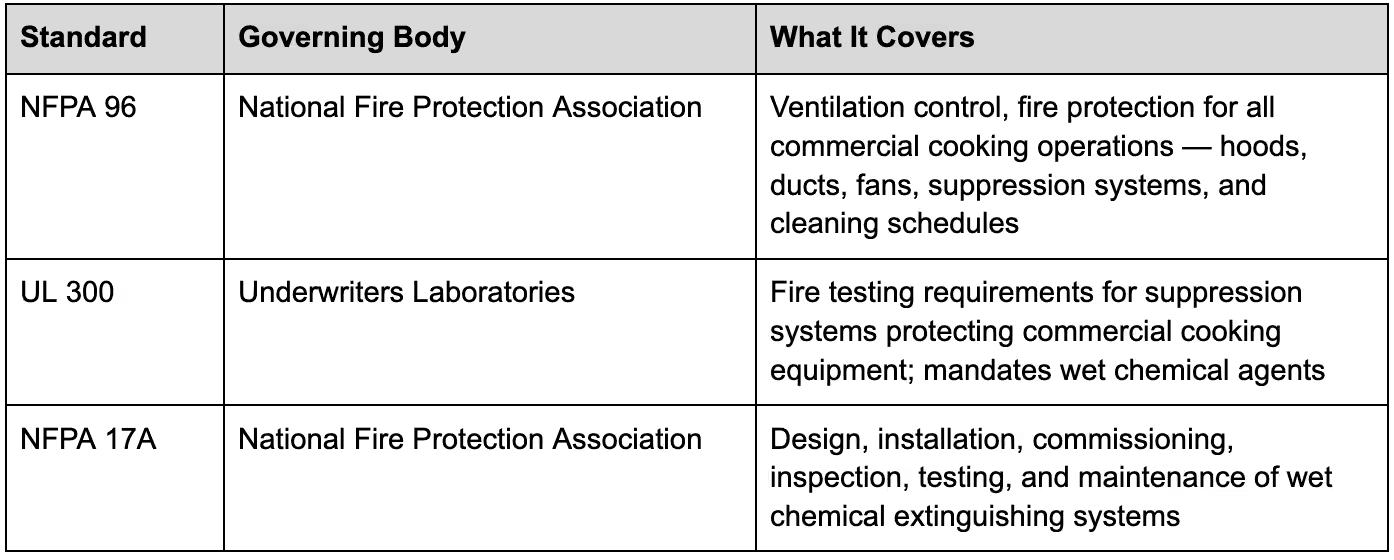
NFPA 96 is the primary standard. It requires automated fire suppression equipment for all grease removal devices, hood exhaust plenums, exhaust duct systems, and any cooking equipment that produces grease-laden vapors. The 2024 edition expanded its scope to include clearer provisions for mobile and temporary cooking operations — directly relevant to modular kitchen deployments.
UL 300 establishes the fire testing criteria that suppression systems must pass. To be compliant, a system must demonstrate its ability to suppress fires across various cooking appliance types and protect hoods and ducts from flame spread. Only wet chemical systems meet UL 300 requirements for commercial kitchens.
Tip: You can verify whether your suppression system is UL-listed by searching the UL Product iQ database using the manufacturer's name and model number.
Even with NFPA and UL compliance, the local AHJ — typically your fire marshal or building department — has the final say. The AHJ reviews plans, inspects installations, and can impose additional requirements based on local fire codes. This applies whether your kitchen is built on-site or arrives as a prefabricated module.
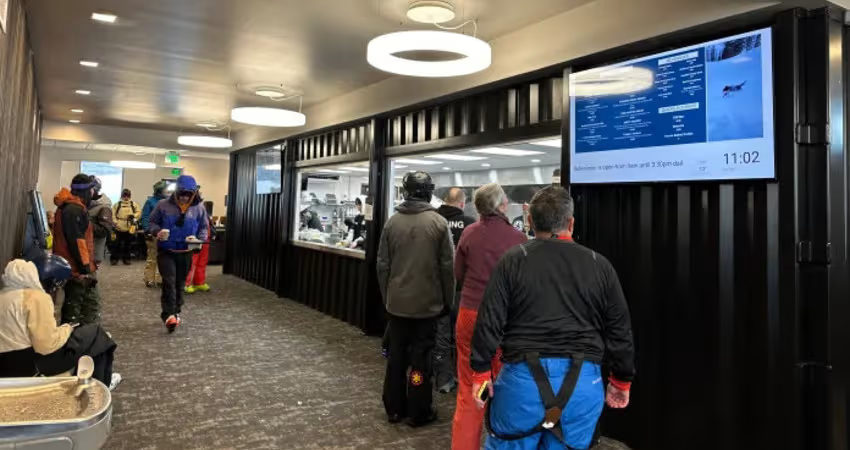
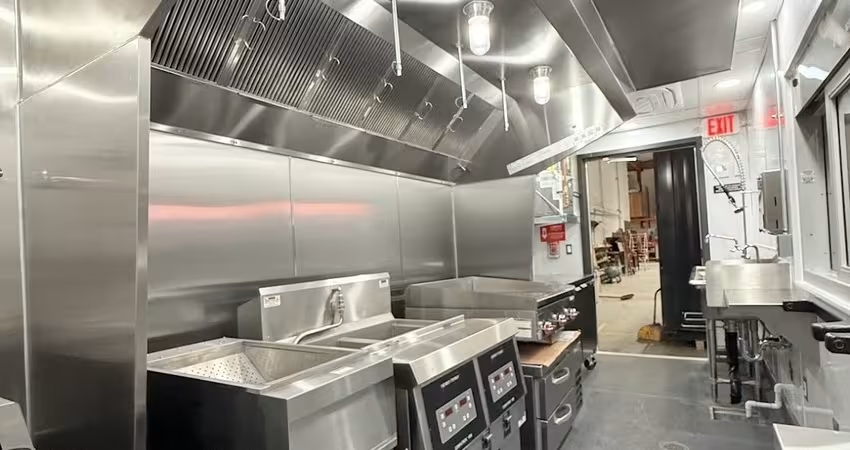
Wet chemical systems are the industry standard for commercial kitchen fire suppression, and the only type that meets UL 300 requirements.
Every compliant system includes:
When activated, the wet chemical agent reacts with burning oils to form a thick foam blanket through saponification. This simultaneously smothers the fire, interrupts oxygen supply, and cools the cooking surface below the oil's flash point.
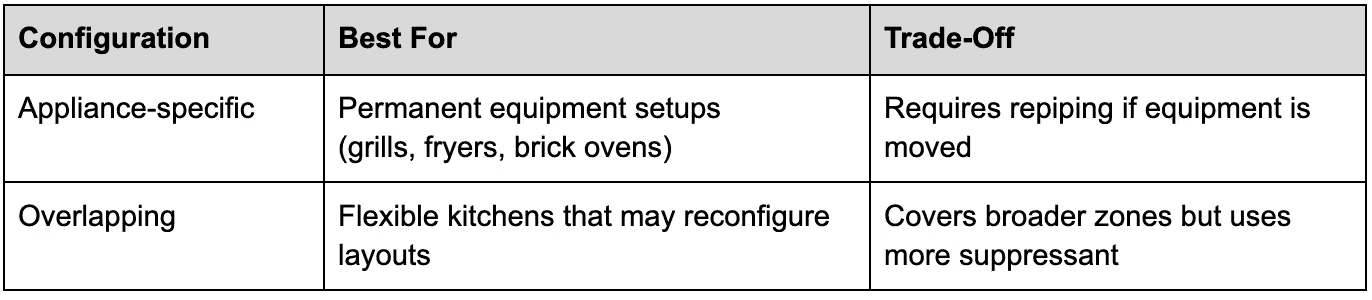
Tip: Modular kitchens with fixed, proven floor plans are well-suited to appliance-specific configurations, since the equipment layout is engineered and locked in during factory production.
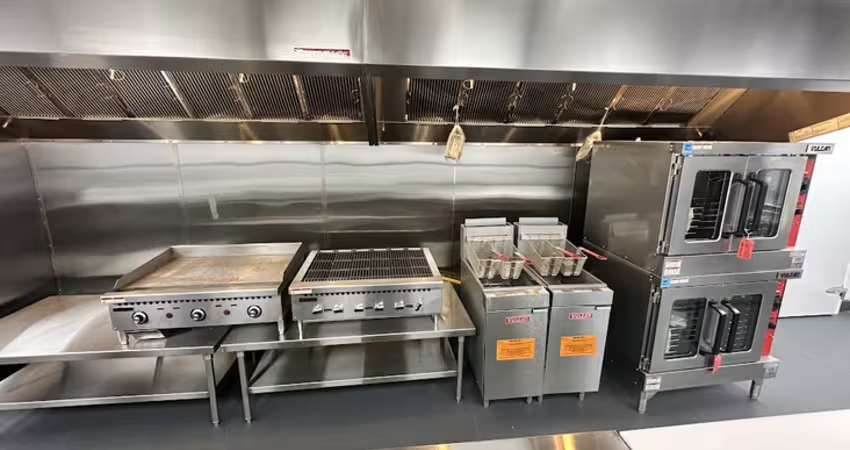
This is where modular construction offers a distinct advantage — and where operators need to understand the process clearly.
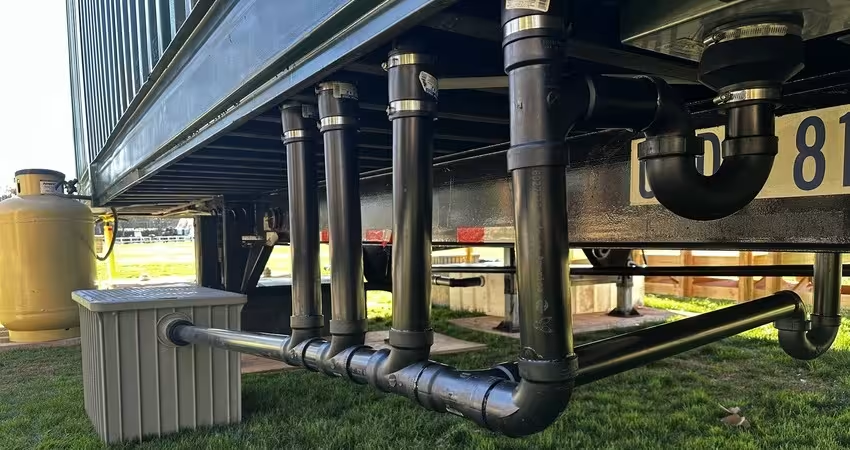
High-quality modular kitchen manufacturers integrate UL 300-compliant wet chemical suppression systems during the factory build. This means:
This factory-first approach eliminates the coordination headaches of scheduling fire suppression contractors alongside plumbers, electricians, and hood installers on a traditional job site.
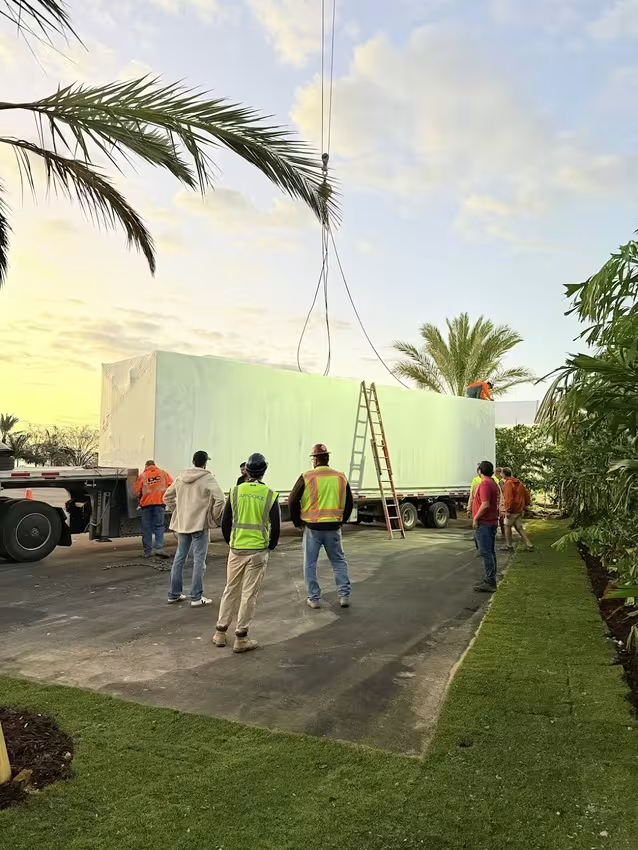
Note: ContekPro's modular kitchens are delivered with pre-installed fire suppression, HVAC, and MEP systems — arriving 95% finished and engineered to meet NFPA, OSHA, and local fire codes before installation.
Factory compliance does not replace local inspection. Here's what to expect in a modular kitchen deployment:
For a deeper walkthrough of this process, see our guide on modular kitchen permitting.
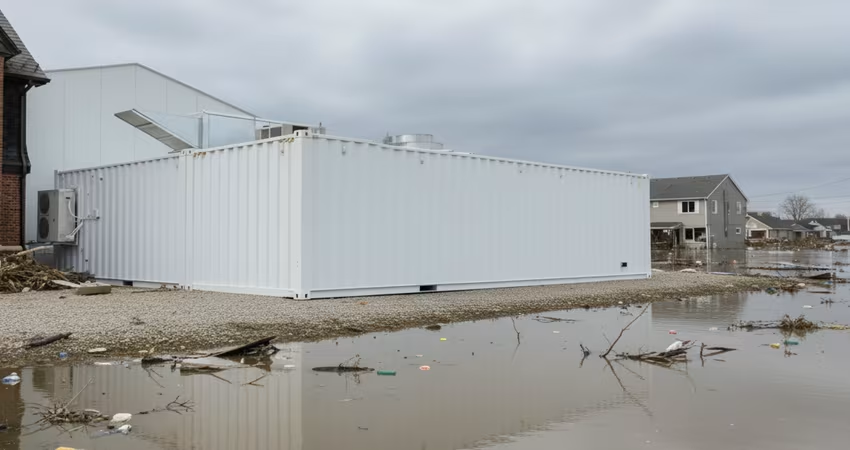
Modular kitchens built to commercial standards use fire-rated assemblies that meet or exceed International Building Code (IBC) requirements. Key elements include:
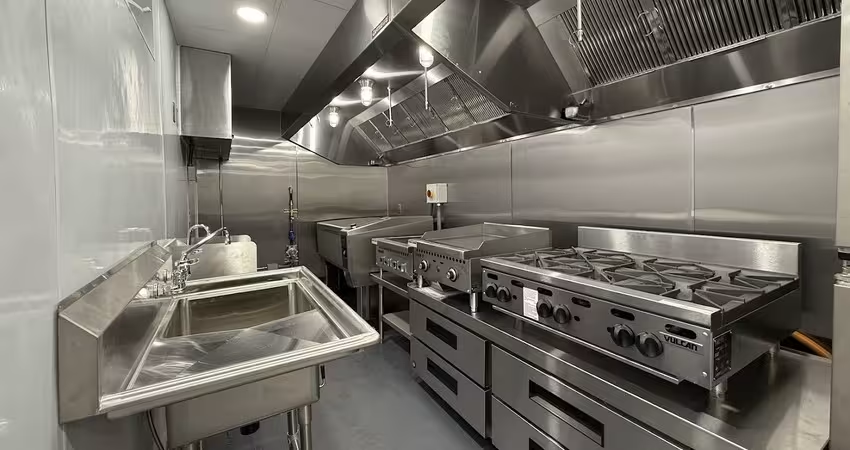
A fire suppression system is only effective if it's maintained. Compliance is not a one-time event — it's an ongoing operational responsibility.
Per NFPA 96 and NFPA 17A, a licensed fire protection firm must inspect your system every six months. During each inspection, the technician will:
Note: A copy of this report must remain on-site and is typically sent to the local fire department as well.
Between professional inspections, your team should perform monthly visual checks:
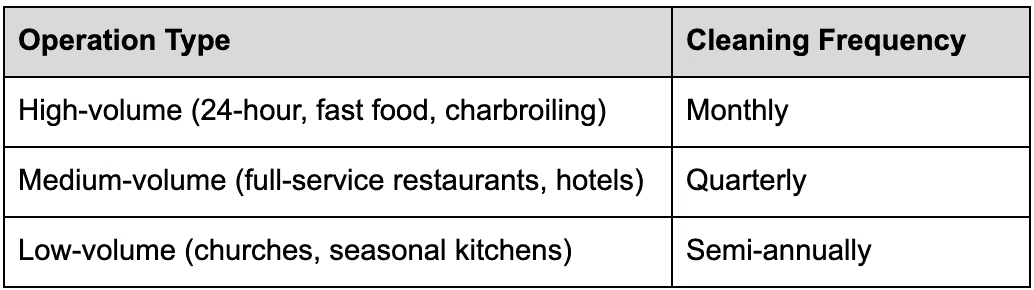
Cleaning schedules under NFPA 96 are based on cooking volume:
For more on ventilation maintenance, see our commercial kitchen exhaust hood guide.

Fire suppression compliance doesn't have to be a project bottleneck. Modular kitchens with factory-integrated suppression systems arrive pre-engineered, pre-tested, and ready for AHJ inspection — eliminating weeks of on-site coordination and reducing the risk of costly compliance failures.
ContekPro's prefabricated modular kitchens are delivered with UL 300-compliant wet chemical fire suppression, HVAC, and full MEP systems pre-installed. Whether you're building a hotel kitchen or a fast-food operation, our units are engineered to meet NFPA, OSHA, and local fire codes — so you can focus on opening, not inspecting.
Ready to plan your next kitchen project? Contact our team to discuss your requirements and request a quote.
This guide is for informational purposes and should not be considered legal or professional advice. Always consult fire safety experts and local authorities for requirements specific to your location.
NFPA 96 mandates a UL 300-compliant wet chemical fire suppression system for all commercial kitchens with grease-producing equipment. These systems use potassium-based agents that react with cooking oils to form a foam blanket, smothering flames and preventing re-ignition. Class K portable extinguishers are also required as a secondary defense. The system configuration should be designed by a manufacturer-certified contractor and approved by your local AHJ.
Yes. Modular and prefabricated commercial kitchens must comply with all applicable NFPA, UL, and local fire codes — identical to brick-and-mortar facilities. The advantage is that many modular manufacturers integrate compliant fire suppression systems during production, reducing on-site complexity and accelerating AHJ approval. However, a final on-site inspection by the local fire marshal is always required before occupancy.
Professional inspections by a licensed fire protection firm are required every six months under NFPA 96 and NFPA 17A. These cover agent levels, nozzle condition, fusible links, piping integrity, and manual pull station functionality. Monthly visual inspections by the owner or kitchen manager are also recommended.
Appliance-specific systems protect individual pieces of equipment with dedicated nozzles — ideal for fixed layouts. Overlapping systems create broader coverage zones for groups of appliances, offering flexibility for kitchens that may reconfigure equipment. Both require automatic fuel shutoff and manual pull stations.
For a broader overview of kitchen fire safety, including staff training protocols and emergency procedures, read our comprehensive fire safety guide.