The 2025 edition of NFPA 96 introduced the most significant changes to commercial kitchen ventilation standards in over a decade — tighter cleaning schedules, mandatory UL-300 fire suppression upgrades, and new digital documentation requirements. For hospitality operators running resort kitchens, hotel banquet facilities, or country club dining operations, these updates raise the stakes on how hood systems are installed, operated, and maintained.
Yet the fundamentals remain unchanged: a poorly managed commercial kitchen hood is a fire hazard, a compliance liability, and an operational risk. According to the NFPA, fire departments respond to an average of 7,410 structure fires in eating and drinking establishments annually, causing roughly $246 million in direct property damage.
This guide walks you through the full lifecycle of a commercial kitchen hood — from installation planning and daily operation to building a maintenance program that keeps your kitchen safe, efficient, and inspection-ready. For a broader overview of hood types and sizing, see our commercial kitchen hood types and code requirements guide.
Your commercial kitchen ventilation system does more than remove smoke and steam. It's the primary line of defense against grease fires, airborne contaminants, and hazardous working conditions. That's why it sits at the intersection of fire code, building code, health code, and insurance requirements.
The data makes the case clearly:
Warning: Non-compliance with hood maintenance standards can result in fines, denied insurance claims, and forced closures. Many insurers now require proof of NFPA-compliant cleanings performed by certified professionals.
NFPA 96 is the national standard governing ventilation control and fire protection for commercial cooking operations. It covers everything from hood design and installation to cleaning schedules and documentation. Key changes in the 2025 edition include:
%20(1).avif)
A successful commercial kitchen hood installation starts long before any equipment is hung. The planning phase determines whether your system will pass inspection, perform efficiently, and integrate with the rest of your kitchen infrastructure.
Before purchasing a hood, coordinate with three key parties:
Tip: Submit your MEP plans early. Permitting delays are one of the most common causes of commercial kitchen construction timeline overruns.
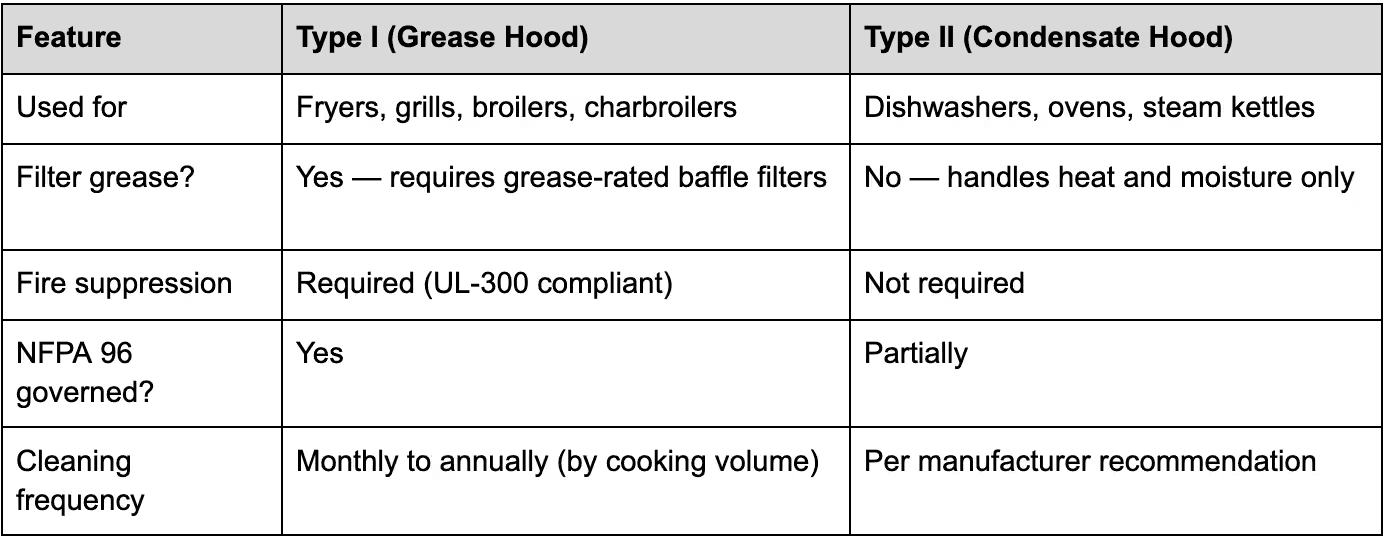
Proper sizing ensures adequate capture of smoke, grease, and heat. The hood must extend at least 6 inches beyond all sides of the cooking equipment, per IMC Section 507. CFM (cubic feet per minute) requirements depend on equipment duty rating and hood type:
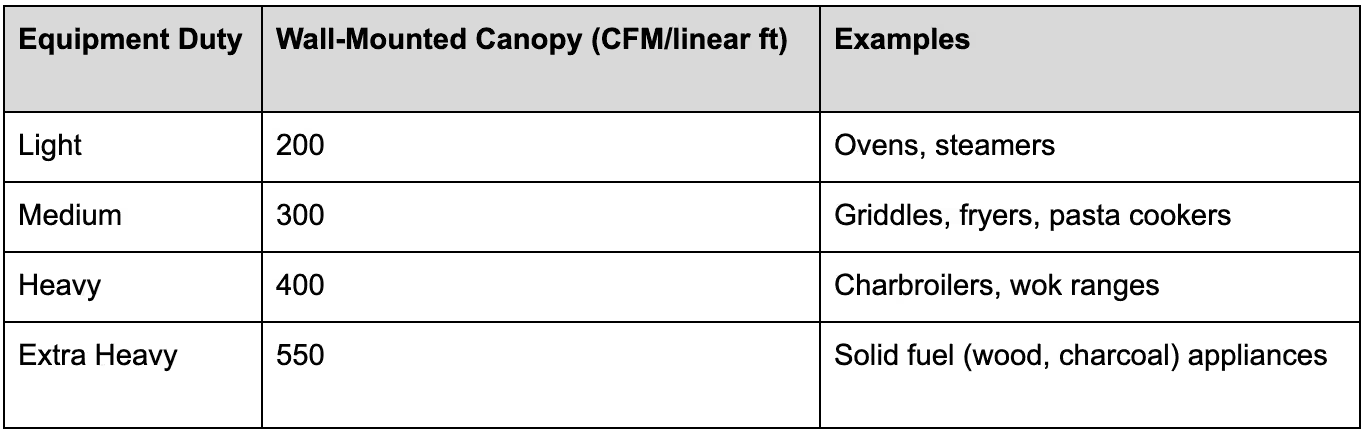
CFM values are based on IMC exhaust rates for unlisted hoods. Listed hoods may use manufacturer-specific rates validated through UL 710 testing, which can reduce airflow requirements and energy costs. Refer to ASHRAE Handbook Chapter 34 for detailed kitchen ventilation design guidance.
Note: Supply (make-up) air should be approximately 90% of exhaust CFM. The remaining 10% drawn from adjacent spaces creates slight negative pressure in the kitchen, keeping odors from migrating to dining areas.
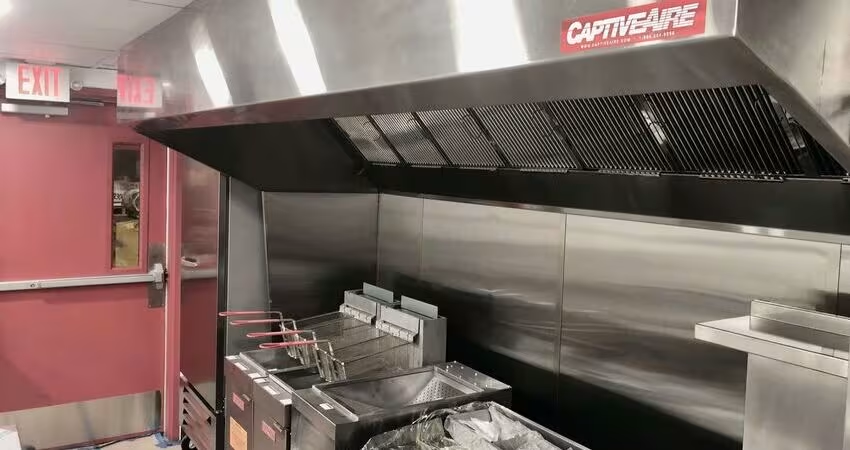
Commercial kitchen hood installation should be performed by licensed mechanical contractors familiar with NFPA 96, local fire codes, and OSHA safety standards. Here's what the process looks like:
Tip: Document everything — balancing reports, fire suppression certification, and electrical test results. You'll need this documentation for inspections, insurance, and future maintenance reference.
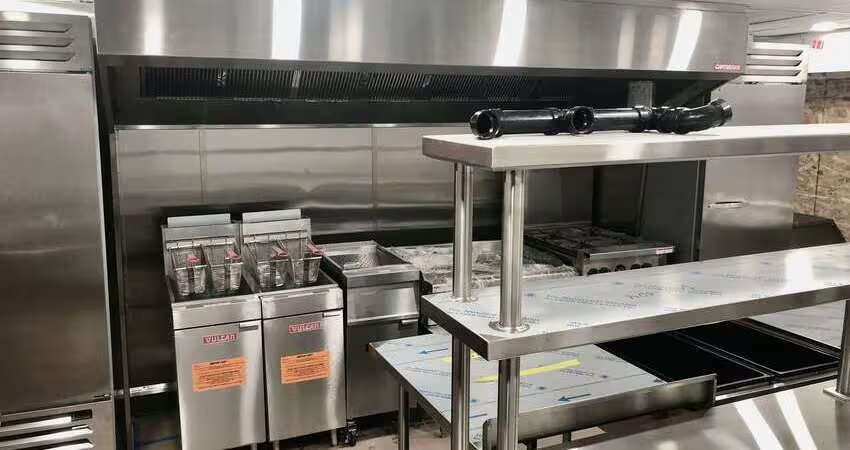
Proper daily operation extends equipment life, maintains air quality, and keeps your kitchen compliant between professional service visits.
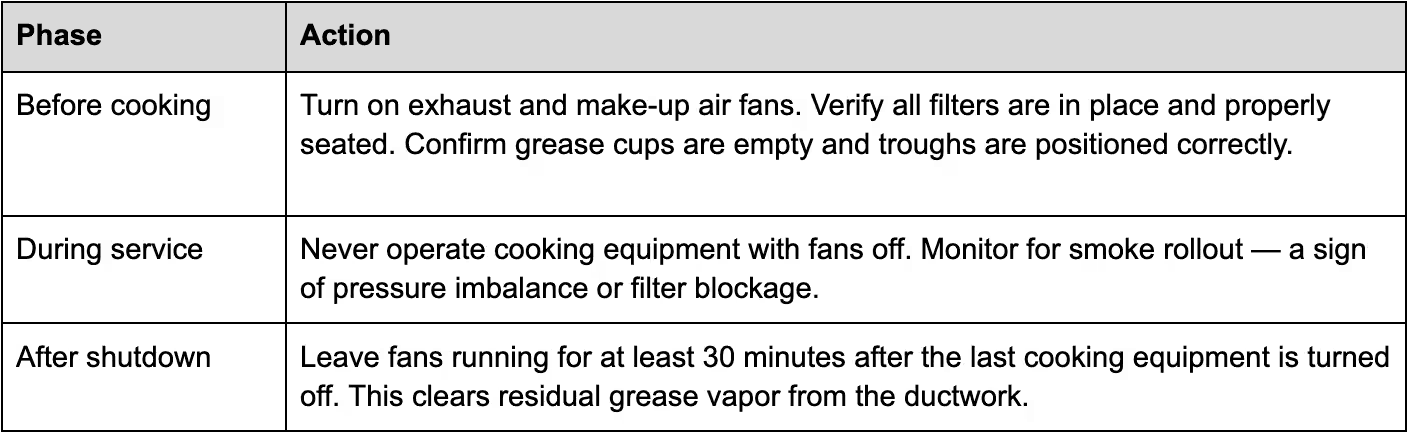
For your commercial kitchen ventilation system to perform correctly, maintain slight negative pressure in the kitchen relative to the dining room (approximately 0" to -0.02" water column). This prevents odors from reaching guest areas while keeping doors easy to open.
Warning: If you notice smoke rolling out from under the hood during cooking, it likely indicates insufficient negative pressure. Common culprits: blocked filters, malfunctioning make-up air unit, or high-velocity supply diffusers too close to the hood.
Train all kitchen staff on these essentials:
For a deeper look at staff training and kitchen supervision best practices, see our compliance guide.
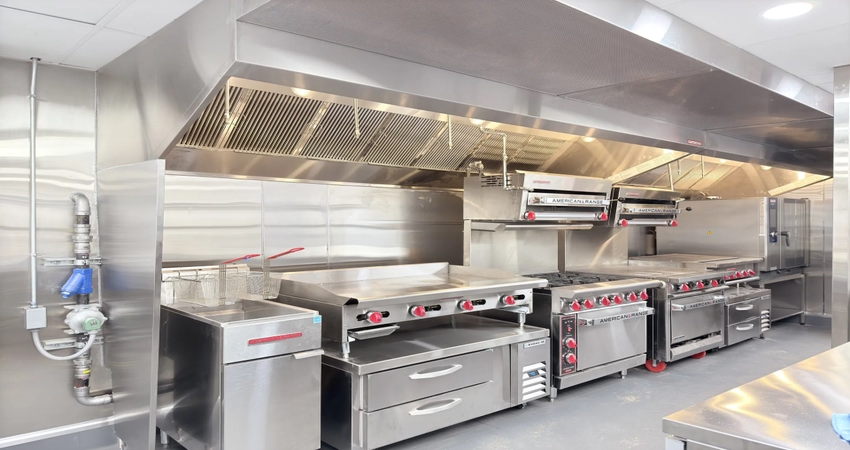
A structured commercial kitchen hood maintenance program is the single most effective way to prevent fires, pass inspections, and avoid costly equipment failures. Below is a complete framework based on NFPA 96 and FDA Food Code requirements.
.avif)
Professional duct and system cleanings must follow the NFPA 96 schedule. Under the 2025 updates, these intervals have tightened for high-volume operations:

Note: NFPA 96 Section 11.6.1 requires that only trained, qualified, and certified professionals perform exhaust system cleanings. In-house staff cleaning does not satisfy compliance requirements.
Your UL-300 wet chemical suppression system must be professionally inspected every 6 months. During each inspection, technicians should verify:
NFPA 96 mandates that all commercial kitchens maintain a cleaning and inspection log that includes:
Tip: Keep your cleaning log in a clearly visible location near the hood — either in a protective binder or a digital format accessible on a tablet. Inspectors will ask for it, and having it immediately available demonstrates a culture of compliance.
Deferred commercial kitchen hood maintenance isn't a cost-saving strategy — it's a compounding liability.
For a comprehensive look at fire prevention, suppression systems, and staff protocols, see our complete guide to commercial kitchen fire safety.
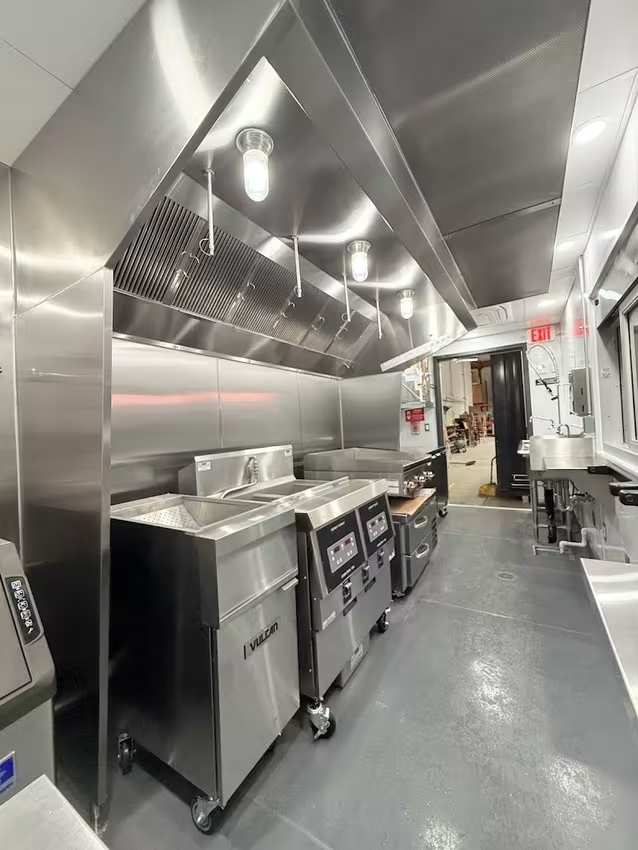
For hospitality operators building new kitchens or expanding existing operations, the hood system is one of the most complex and coordination-heavy components. Modular construction offers a fundamentally different approach.
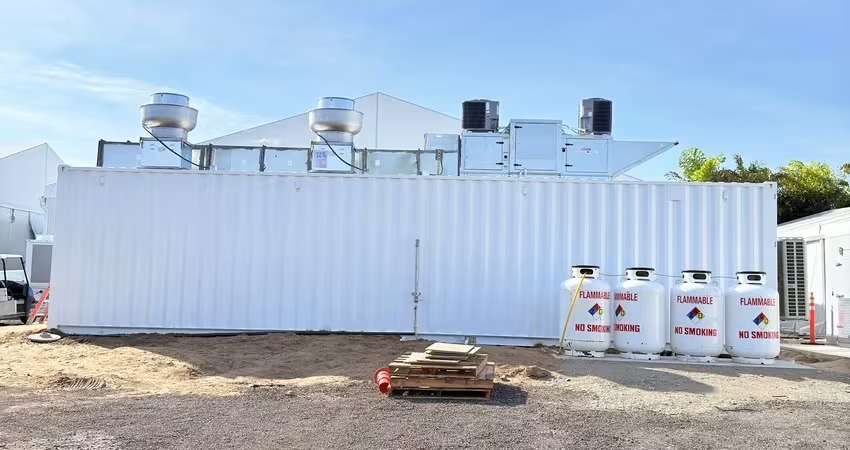
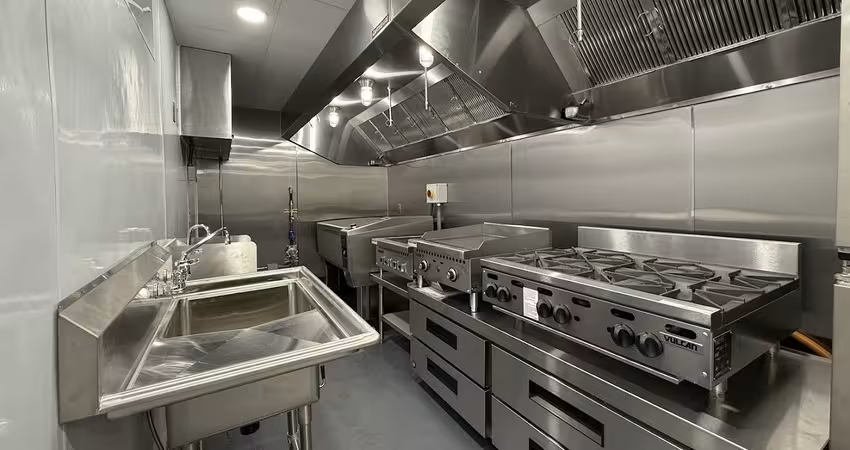
ContekPro's modular kitchens are delivered 95% complete with exhaust hoods, HVAC systems, UL-300 fire suppression, and ductwork pre-installed and factory-inspected. This eliminates the on-site coordination between mechanical contractors, electricians, fire suppression installers, and ductwork fabricators that makes traditional hood installation so time-consuming and error-prone.
Because ventilation systems are integrated during manufacturing, modular kitchens can be deployed up to 50% faster than traditional builds. On-site work is limited to utility connections and final inspections, which means:
Explore ContekPro's modular hotel kitchen solutions to see how pre-integrated hood systems accelerate deployment for hospitality operations.
%20(1).avif)
Your commercial kitchen hood is more than a piece of equipment — it's the backbone of fire safety, air quality, and regulatory compliance across your entire food service operation. Whether you're planning a new commercial kitchen hood installation or tightening your maintenance program, the principles are the same: plan thoroughly, operate consistently, and maintain rigorously.
With the NFPA 96 2025 updates raising the bar on cleaning schedules, fire suppression standards, and documentation, now is the time to audit your current system and close any compliance gaps.
Looking to simplify your kitchen build? ContekPro's modular kitchens ship with pre-installed, pre-inspected exhaust systems — hoods, HVAC, fire suppression, and ductwork included. Skip the coordination headaches and get to market faster.
Explore Kitchen Solutions | Request a Quote
Cleaning frequency is determined by your cooking volume and type, as outlined by NFPA 96. Solid fuel cooking operations require monthly cleaning. High-volume kitchens (24-hour operations, charbroiling, wok cooking) need quarterly service. Moderate-volume operations should schedule semi-annual cleanings, and low-volume kitchens can clean annually. Grease filters should be cleaned weekly by kitchen staff regardless of operation type. Always verify requirements with your local AHJ, as jurisdictions may enforce stricter schedules.
NFPA 96 is the national standard for ventilation control and fire protection of commercial cooking operations. Published by the National Fire Protection Association, it establishes requirements for hood design, installation, cleaning frequency, fire suppression systems, and documentation. Most local fire codes adopt NFPA 96 as their baseline, and non-compliance can result in fines, failed inspections, denied insurance claims, and forced closures.
Costs vary based on system size, hood type, and complexity. The hood unit itself typically ranges from $5,000 to $70,000+, while professional installation costs between $10,000 and $40,000+. Systems requiring make-up air units, fire suppression integration, and complex ductwork fall on the higher end. Factor in ongoing maintenance costs as well — quarterly to semi-annual professional cleanings typically run $300 to $1,200 per visit depending on system size and cooking volume.