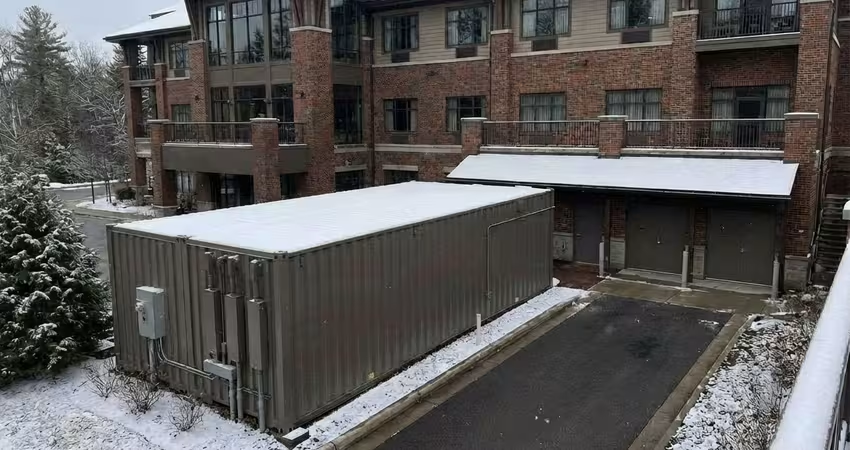
A hotel general manager approves a $400,000 budget for a new commercial kitchen. Twelve months later, the project is three months behind schedule, $120,000 over budget, and the fire marshal has just flagged the ventilation system for non-compliance.
It happens more often than it should. According to the National Restaurant Association, 90% of commercial construction projects experience budget overruns — and kitchen builds are among the most complex.
Commercial kitchen construction is unlike any other buildout in hospitality. It demands the coordination of mechanical, electrical, and plumbing (MEP) systems, fire suppression, multi-agency regulatory compliance, and an equipment procurement process that must sync perfectly with construction progress. This guide walks hospitality operators through every phase — from initial planning through commissioning — so your project opens on time, on budget, and ready for service.
For hotels, resorts, and country clubs, a kitchen construction project isn't just a capital expenditure — it's an operational disruption with direct revenue impact. Every day of construction delay translates to lost covers, catering cancellations, and diminished guest satisfaction. The financial exposure compounds quickly.
Tip: Before launching any commercial kitchen construction project, quantify your daily revenue at risk. This number should drive every schedule decision you make throughout the build.
Standard commercial construction follows a relatively predictable sequence. Kitchen builds do not. They introduce:
This complexity is precisely why a structured, phase-by-phase approach separates successful projects from expensive failures.
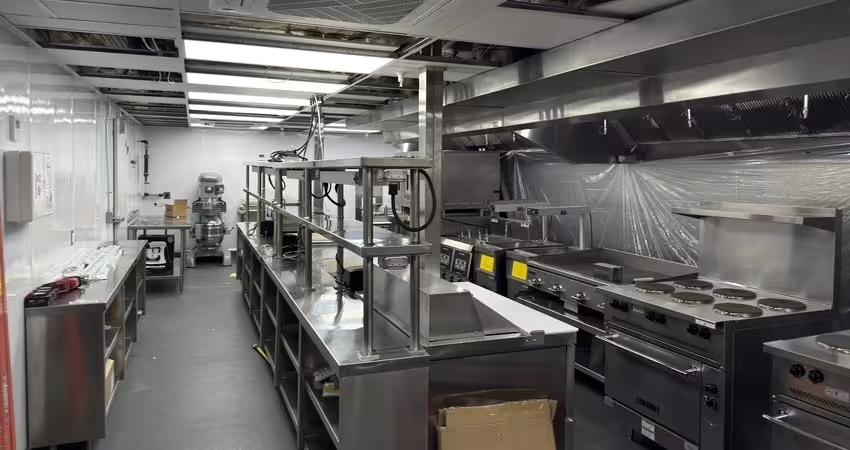
Every commercial kitchen construction project should begin with three questions: What are you cooking? How much? And for whom?
Your menu complexity, service volume, and service model (à la carte, banquet, buffet, room service) dictate every downstream decision — from equipment specifications to square footage requirements. For a deeper look at how menu drives kitchen sizing, see this guide on how menu complexity and service volume should drive kitchen design decisions.
Key inputs to define early:
The most expensive mistakes in commercial kitchen construction happen when key stakeholders join late. Your project team should be assembled before design begins:
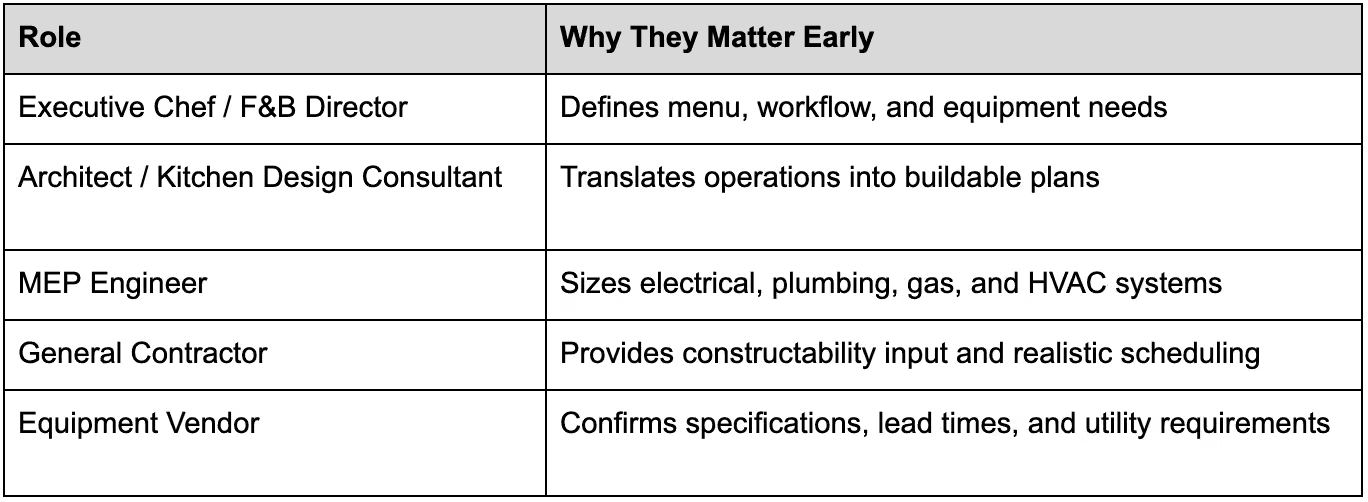
Note: According to the ASHRAE Design Guide for Commercial Kitchen Ventilation, kitchen ventilation systems can account for up to 50% of a facility's total HVAC load. Involving the mechanical engineer before design is finalized prevents costly rework during construction.
Commercial kitchen construction costs in 2026 range from approximately $250 to $500 per square foot for traditional builds, depending on location, complexity, and finish level. For a 1,500 sq ft kitchen, base construction alone typically falls between $375,000 and $750,000.
But base construction is only part of the picture. For a full breakdown of where budgets actually go, see this deep-dive on hidden costs that blow up commercial kitchen construction budgets.
The line items that derail budgets are rarely the obvious ones:
Tip: Lock in equipment specifications and place orders early. According to hospitality industry analysts, supply chain disruptions continue to extend lead times for commercial kitchen equipment — particularly walk-in refrigeration and custom fabrication.
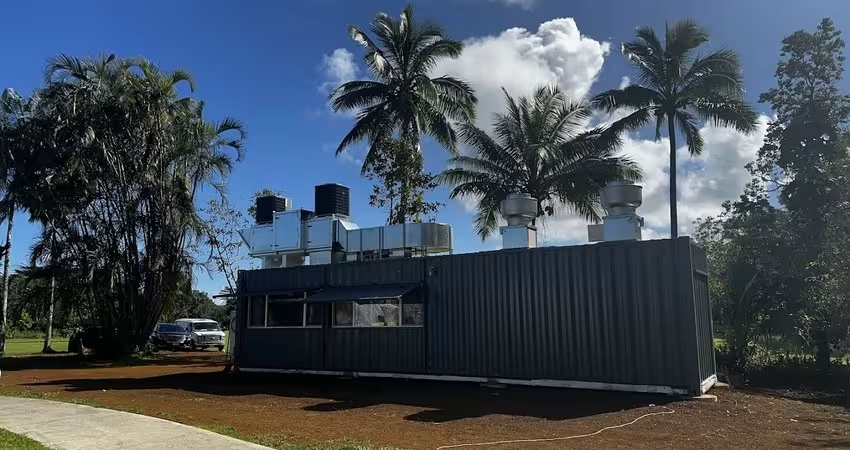
Design is where operational efficiency is either built in or permanently compromised. The critical principle: workflow must drive equipment selection, not the other way around.
Map how food, staff, and dishes move through the kitchen before selecting a single appliance. This commercial kitchen workflow design guide explains why a workflow-first approach prevents the structural bottlenecks that plague kitchens designed around equipment catalogs.
Core workflow zones to define:
The three infrastructure pillars of any commercial kitchen build — ventilation, fire suppression, and utilities — must be coordinated in parallel, not sequentially. When these systems are designed in isolation, conflicts emerge during construction that drive rework, delays, and cost overruns.
For a detailed technical breakdown, see this guide on ventilation, fire safety, and utility planning in commercial kitchen construction.
Critical MEP coordination points:
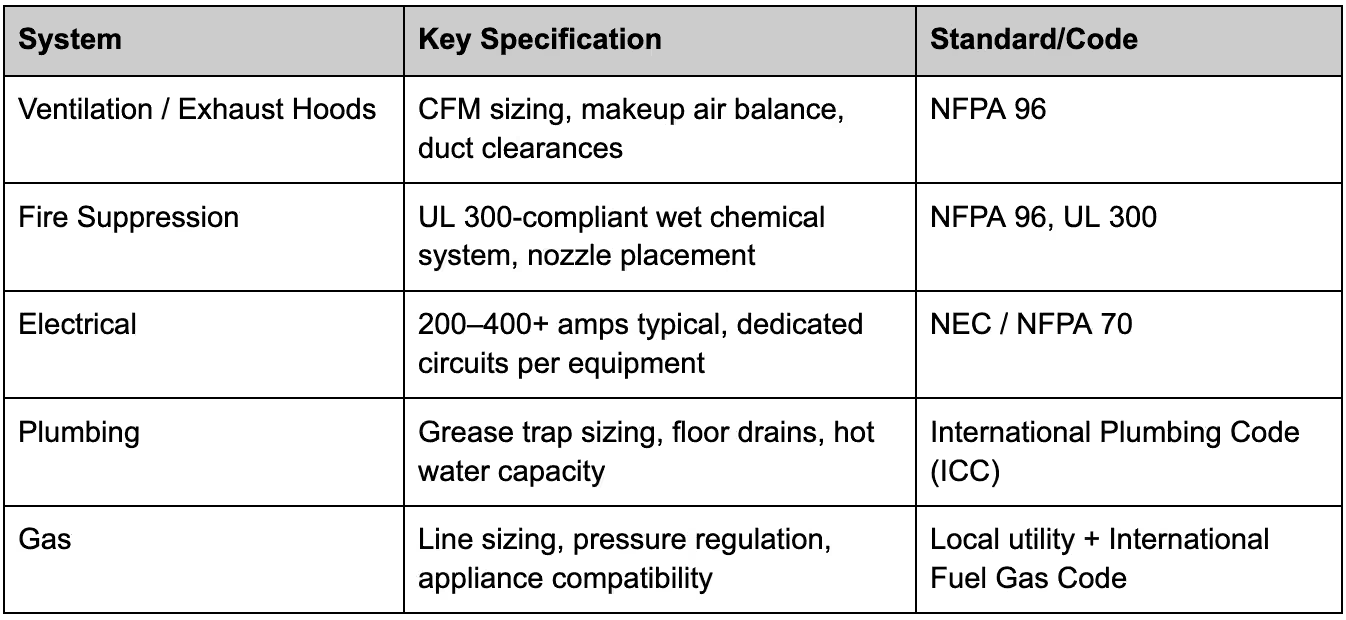
Tip: For hood-specific sizing and selection, see this commercial kitchen exhaust hood guide.
Note: Equipment selection and utility planning must happen in parallel. The specific models you choose — their voltage, BTU ratings, water consumption, and drain requirements — directly determine the size and layout of every utility connection. Finalizing equipment after utility rough-in almost always leads to costly change orders.
Commercial kitchen permits and compliance requirements span multiple agencies, each with independent review timelines and inspection schedules. Starting this process early is critical — approvals can take 4–12 weeks depending on jurisdiction.
Typical permit sequence:
For a complete walkthrough of the health permit process specifically, see this health permit guide for commercial kitchens.
.avif)
Tip: Schedule a pre-application meeting with your local building and health departments before submitting plans. This step can surface jurisdiction-specific requirements early — saving weeks of revision cycles.
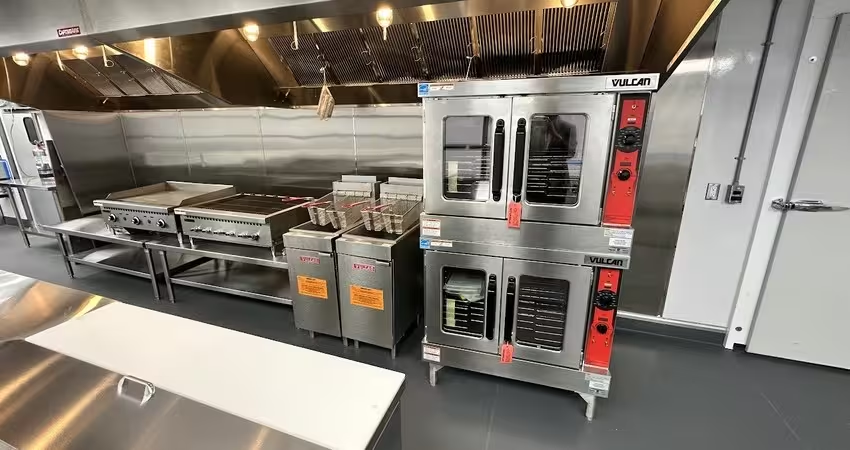
The kitchen construction timeline for traditional builds typically breaks down as follows:
Total: 6–14 months for most hospitality kitchen projects.
The most common schedule risks are equipment delivery delays, MEP trade conflicts, and change orders triggered by field conditions that differ from design assumptions. Maintaining a 2–6 week look-ahead schedule and holding weekly coordination meetings between your GC, MEP subs, and equipment vendor are the most effective tools for keeping the kitchen construction timeline on track.
For properties with existing food service operations, construction downtime is the single biggest financial risk. This guide on managing kitchen construction downtime covers eight proven strategies, but the core principles are:
Commissioning is the bridge between construction completion and opening day. Every system must be verified before the kitchen goes live:
Note: Plan the final inspection sequence so that health and fire sign-offs align with your staff training schedule and soft opening date. A staggered approach prevents bottlenecks.
A fully commissioned kitchen means nothing if the team isn't ready. Build 1–2 weeks of operational training into your construction timeline:
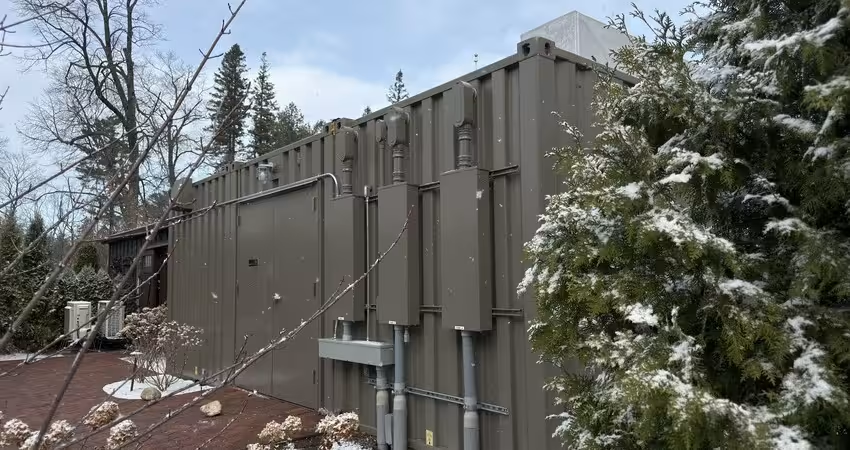
The traditional kitchen build process described above involves months of on-site coordination between dozens of contractors, inspectors, and suppliers. Modular prefabricated kitchens take a fundamentally different approach by integrating design, MEP installation, equipment mounting, and code compliance into a single controlled manufacturing environment — before the unit ever arrives on-site.
According to McKinsey & Company's research on modular construction, this approach can compress build timelines by up to 50%.
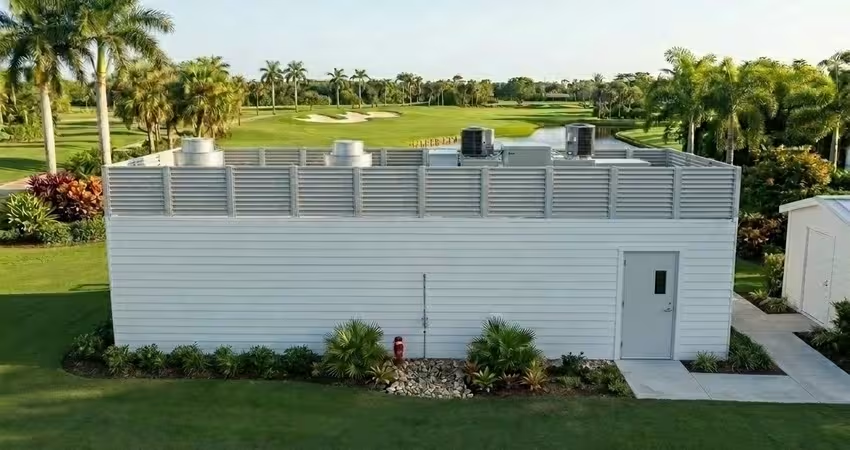
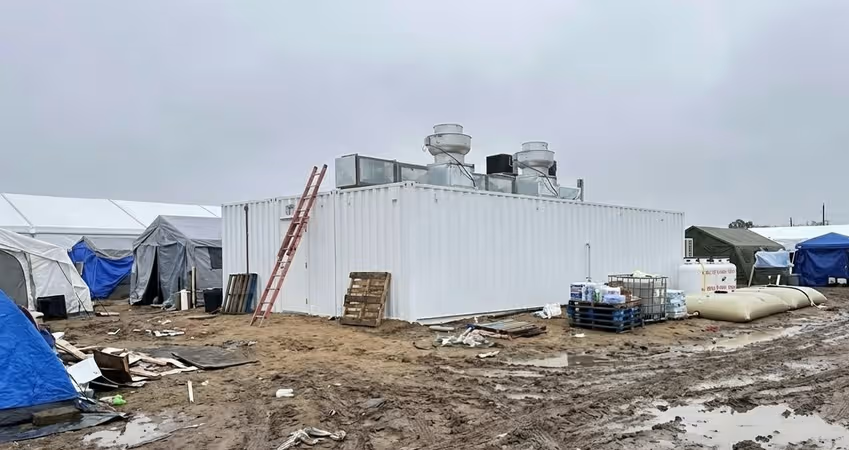
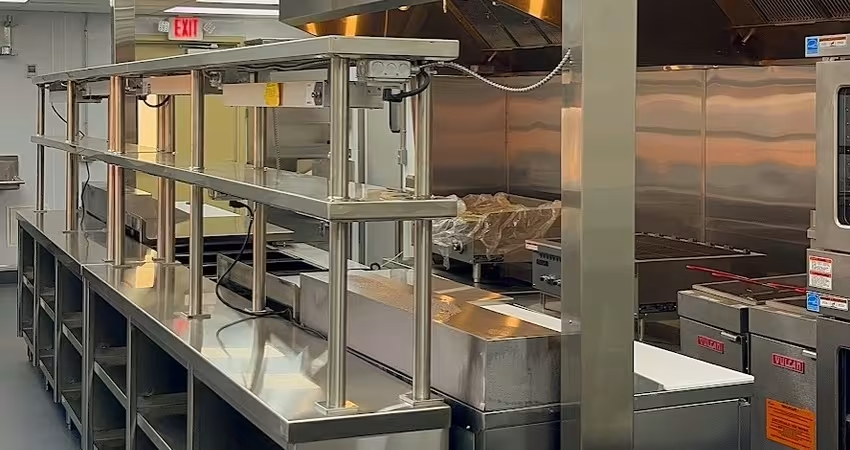
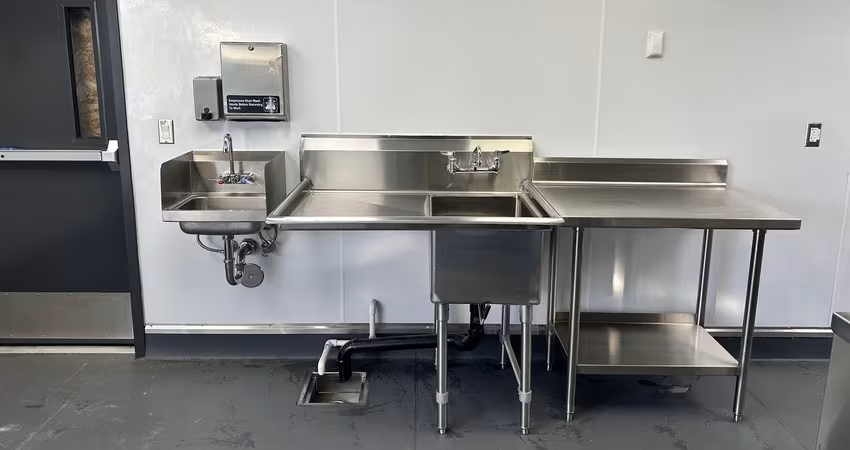
For hospitality operators evaluating their options, ContekPro specializes in turnkey prefabricated modular kitchens that arrive pre-assembled with equipment, ventilation, fire suppression, and utility connections already installed and inspected. This eliminates the multi-trade coordination that causes most project delays and budget overruns in conventional kitchen builds.
For a side-by-side comparison of traditional vs. modular approaches, see this guide on new build vs. renovation for commercial kitchens.
Planning a commercial kitchen project for your hotel, resort, or club? Whether you're building new, replacing an aging kitchen, or expanding capacity, explore how ContekPro's prefabricated modular hotel kitchens deliver a turnkey, code-compliant solution — faster, with fewer contractors, and without the on-site coordination headaches that derail traditional builds. Request a quote.
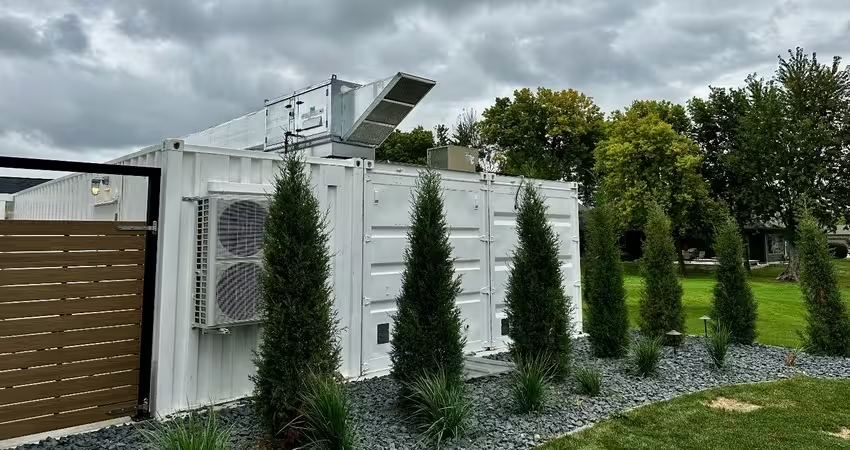
Traditional commercial kitchen construction typically takes 6–14 months from initial planning through commissioning. The biggest variables are permitting timelines (4–12 weeks), construction complexity, and equipment lead times. Modular prefabricated approaches can compress delivery to 8–16 weeks from design to operational readiness.
In 2026, expect $250–$500 per square foot for base construction. Total project costs — including design fees, equipment, permits, utility connections, and contingency — often push 30–50% beyond the base construction number. A 1,500 sq ft kitchen typically lands between $375,000 and $750,000+ when fully loaded.
At minimum: a building permit, health department plan review and approval, fire department review for hood suppression systems, and potentially separate plumbing, electrical, and mechanical permits. A Certificate of Occupancy is required before the kitchen can legally operate. Start the process early — multi-agency approvals can take 4–12 weeks.