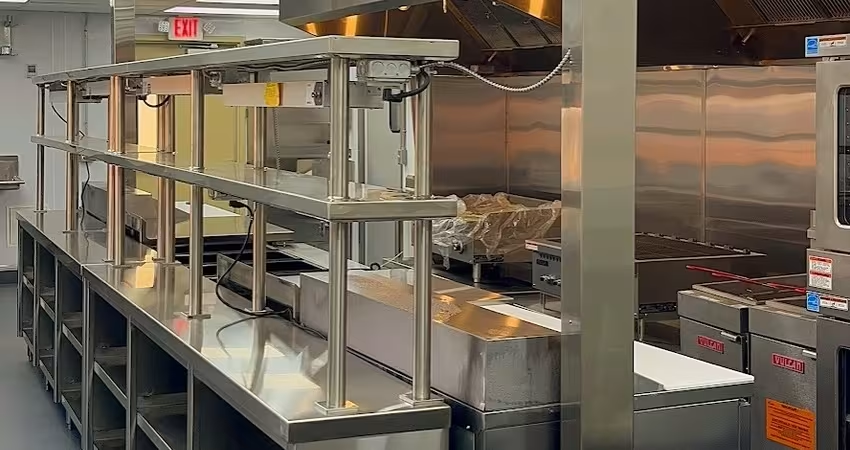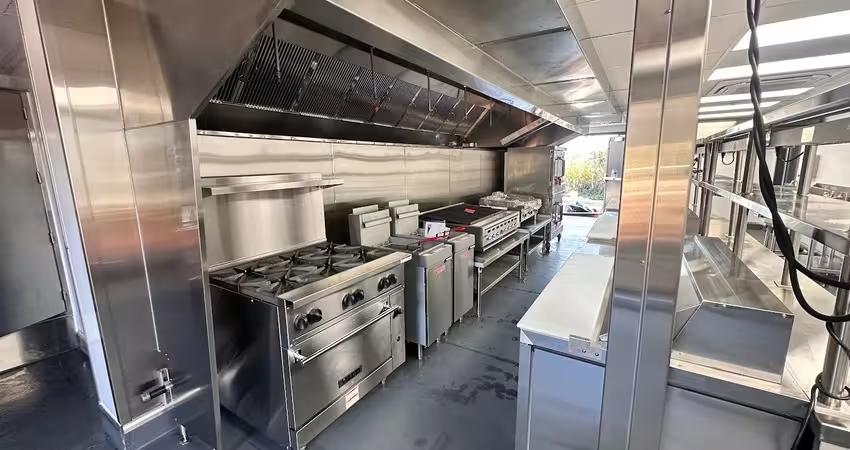
Too many commercial kitchens are designed around equipment catalogs rather than operational reality. An operator selects a range, a fryer, and a walk-in cooler then discovers that service bottlenecks every Friday night or prep staff collide during morning production.
The root cause is almost always the same: the design process skipped the two most fundamental inputs: the menu and the expected service volume. These two variables shape every major decision in commercial kitchen design — from layout type and equipment specifications to cold storage ratios and ventilation capacity.
According to the Certified Food Service Professionals (CFSP) handbook, flexibility and workflow are among the six foundational design principles — and both begin with understanding what you're cooking and how much of it.
This guide walks hospitality operators through a structured, menu-and-volume-first approach to commercial kitchen design with practical frameworks for hotels, resorts, and private clubs.
Designing around available square footage or preferred equipment instead of operational requirements creates predictable problems: service bottlenecks, staff collisions, and storage shortages within months of opening.
Inefficient layouts can cost restaurants up to 20% in lost revenue due to slower service and higher labor costs. In hospitality environments — where banquets, seasonal peaks, and room service add complexity — a poorly sized kitchen becomes an operational liability.
Regulatory requirements reinforce this logic. The FDA Food Code requires food to flow in one direction (raw to ready-to-eat) to minimize contamination risk. That flow cannot be achieved without first understanding what you're cooking and how much of it you're producing.
Menu defines what you need. Volume defines how much you need. Every design decision flows from those two inputs.
Menu-driven design treats your menu as the operational blueprint. Every item creates downstream technical requirements that shape the kitchen:
Before reviewing common commercial kitchen layouts or browsing equipment catalogs, the operator's first task is to document these five inputs for every menu item — then aggregate them into station-level requirements.
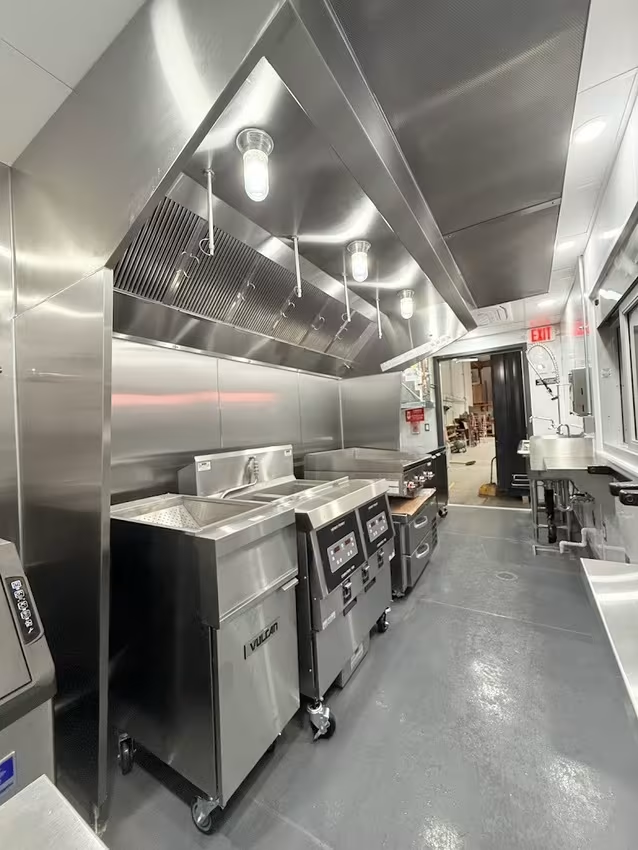
The number and diversity of menu items is one of the strongest determinants of commercial kitchen design layout. A focused menu and a diverse menu produce fundamentally different spatial requirements.
Operations with streamlined menus — poolside grills, snack bars, grab-and-go stations — benefit from assembly-line or galley-style layouts. Food flows from prep to cooking to service in a single direction with minimal station handoffs.

These kitchens prioritize speed and throughput over versatility. Equipment is arranged sequentially, and staff often work fixed positions which simplifies training and reduces motion waste.
Full-service hotel restaurants, country club dining rooms, and resort kitchens with multi-course menus require zone-based layouts. Each zone operates semi-independently — hot line, cold prep, pastry, garde manger, banquet plating — with its own equipment, storage, and workflow.
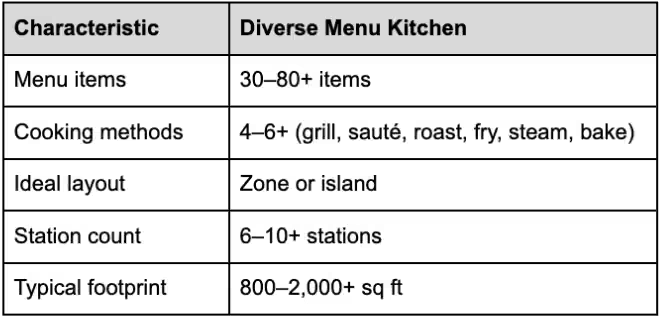
Understanding the six core principles of commercial kitchen design — flexibility, simplicity, flow, sanitation, space efficiency, and energy sustainability — becomes especially critical in zone-based kitchens where competing workflows must coexist without creating bottlenecks.
Hotels and resorts with multiple F&B outlets — main restaurant, pool bar, banquet facility, room service — face a unique design challenge. Each outlet may have a different menu profile, but they often share a central production kitchen.
The most effective approach is a hub-and-satellite model:
Tip: Map ingredient flow between your central kitchen and each satellite outlet before finalizing any layout. If paths cross or require staff to backtrack through active cooking zones, you've identified a friction point that needs resolution before construction begins.
For operators exploring this model, workflow-first design principles provide a detailed methodology for mapping staff and food movement before committing to a floor plan.
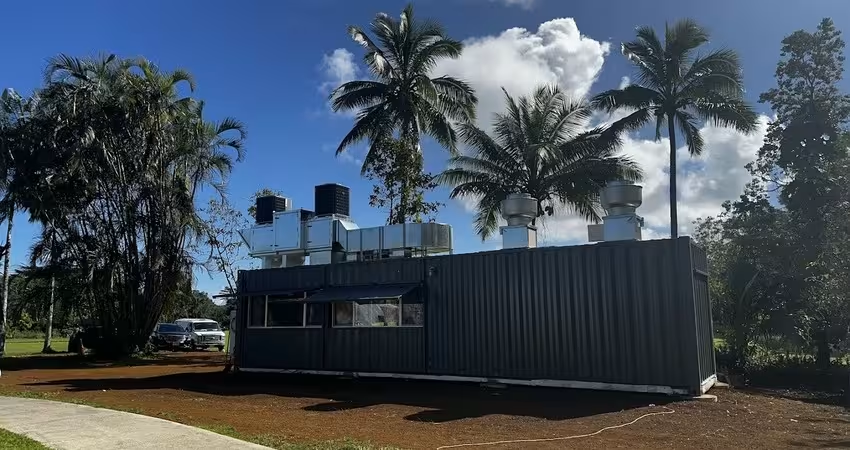
Menu type tells you what to build. Volume tells you how big to build it. Two kitchens with identical menus can require radically different equipment, storage, and square footage depending on how many covers they serve per shift.
The critical metric isn't average daily covers — it's peak simultaneous demand. A resort restaurant serving 150 covers at a steady pace across a 4-hour dinner service needs less raw capacity than a banquet kitchen plating 300 meals within a 20-minute window.
To calculate peak throughput requirements:
Note: The National Restaurant Association consistently identifies labor as one of the largest operational expenses for foodservice businesses. A kitchen undersized for its volume forces operators to compensate with additional labor — an expensive and unsustainable workaround.
Commercial kitchen equipment selection should be driven by throughput math, not catalog browsing. Key sizing considerations include:
For a deep dive into matching equipment categories to operational needs, ContekPro's commercial kitchen equipment guide covers planning, layout integration, and compliance considerations.
The industry standard for kitchen design for hotels and restaurants is approximately 5 square feet of kitchen space per dining seat. A 200-seat restaurant requires roughly 1,000 square feet of kitchen area.
However, this rule assumes a standard full-service restaurant. Several hospitality scenarios call for exceeding it:
Tip: When planning a hotel kitchen, consult your executive chef and F&B director early. Their firsthand knowledge of menu execution, peak service patterns, and staffing constraints will surface requirements that generic space formulas miss.
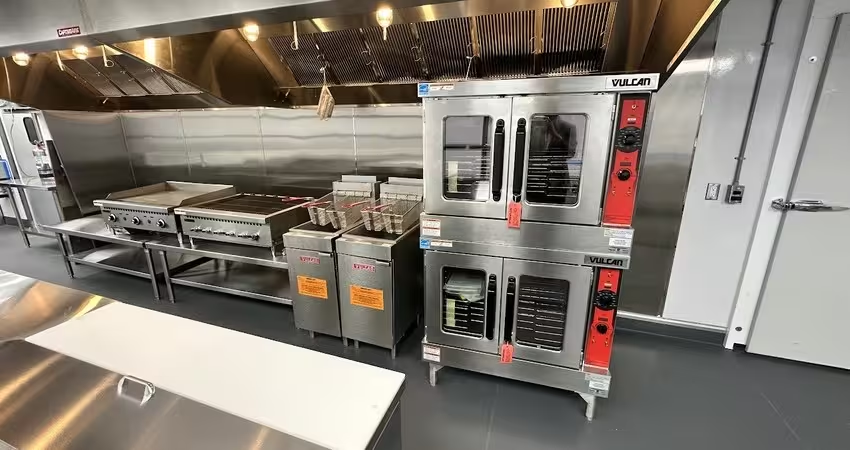
Menu type and volume don't just determine the cooking line — they cascade into every support system in the kitchen.
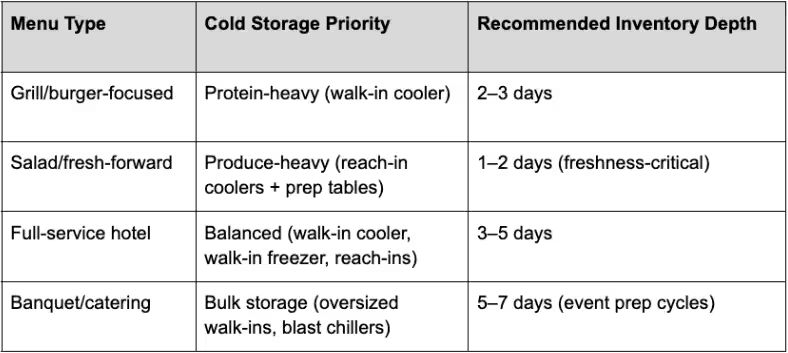
Storage requirements vary dramatically based on menu composition:
Ventilation is not optional — it's a code requirement governed by NFPA 96 and enforced by local fire authorities. The size of your exhaust system is a direct function of your equipment load, which is a direct function of your menu and volume.
The standard calculation:
A kitchen with a grill-heavy menu producing 200,000+ BTUs on the hot line will need substantially more exhaust capacity than a cold-prep-focused operation. Under-sizing ventilation leads to grease buildup, fire risk, failed inspections, and an uncomfortable working environment. According to ENERGY STAR, commercial kitchens can account for 6–35% of a building's total energy consumption, and ventilation is one of the largest contributors.
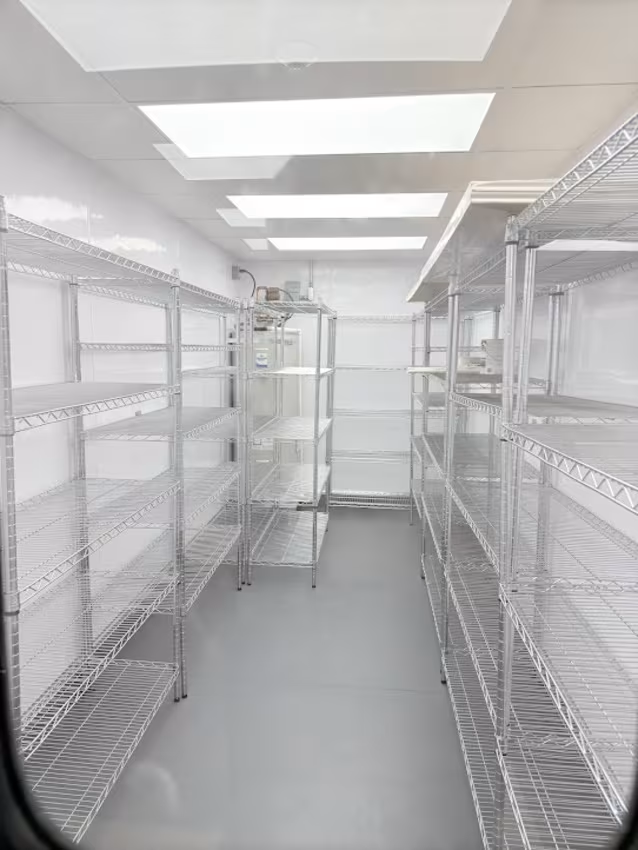
Dry storage is often the most under-planned area in commercial kitchen design. The rule of thumb is to maintain at least one week of non-perishable inventory. But high-volume operations, remote locations (island resorts, mountain lodges), or operations with limited delivery frequency need deeper reserves.
The receiving area should be adjacent to both dry and cold storage, with clear separation from prep and cooking zones — a principle reinforced by the FDA Food Code to prevent cross-contamination during delivery.
Profile: 8-item menu (burgers, wraps, fries, smoothies).
Peak Volume: 200 covers/day during summer season. Outdoor placement.
Design implications:
Profile: 40-item dinner menu with seasonal rotations.
Peak Volume: 150 covers on Saturday evenings, plus private event buffets for 200.
Design implications:
Profile: Four outlets — main restaurant (200 seats), pool bar, rooftop lounge, room service. Banquet Capacity: 400.
Total Daily Covers: 800+.
Design implications:
Based on industry patterns and common project post-mortems, these errors recur when operators skip the menu-and-volume analysis:
Most food spends more time being prepped than cooked. A kitchen with a world-class cooking line but cramped prep stations will bottleneck before service even begins.
Open kitchens and island layouts look impressive but demand more space and stricter organization. If the menu and volume don't support the overhead, a simpler layout will outperform.
Installing "standard" hoods without calculating actual BTU loads leads to either under-ventilated kitchens (compliance risk) or over-ventilated ones (energy waste).
A resort kitchen sized only for average occupancy will be overwhelmed during peak season. Design for the 90th percentile, not the mean.
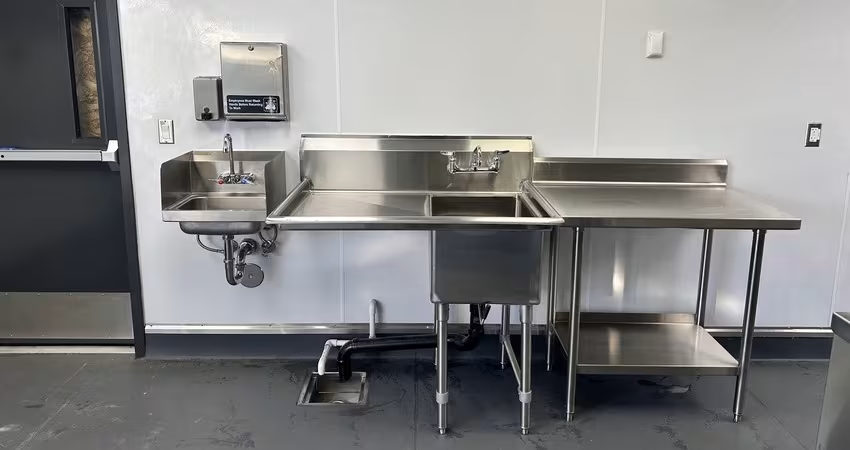
The dish pit is the most neglected zone in commercial kitchen design. If dish return queues spill into the cooking line during peak service, the entire operation stalls.
Before engaging an architect, equipment dealer, or kitchen manufacturer, complete this menu-driven kitchen planning sequence:
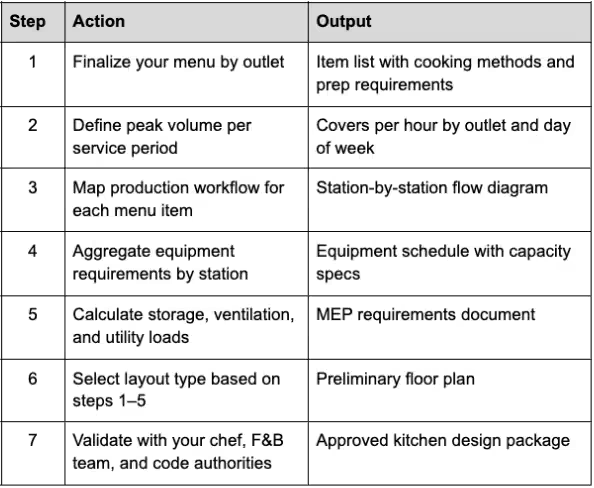
Tip: This sequence works whether you're building a traditional brick-and-mortar kitchen or deploying a prefabricated modular unit. The design inputs are the same — the delivery method is what changes.
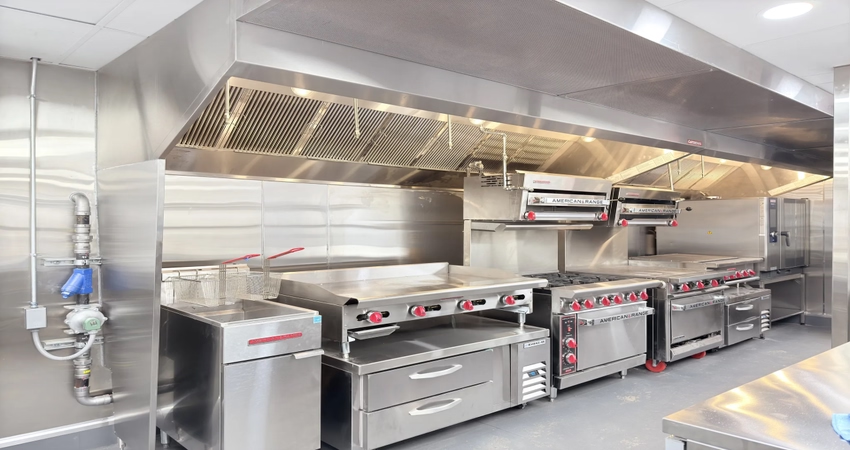
Once you’ve defined your menu complexity and peak volume requirements, the next challenge is executing that design without compromise. Traditional construction often forces layout adjustments based on building constraints, utility access, or phased timelines.
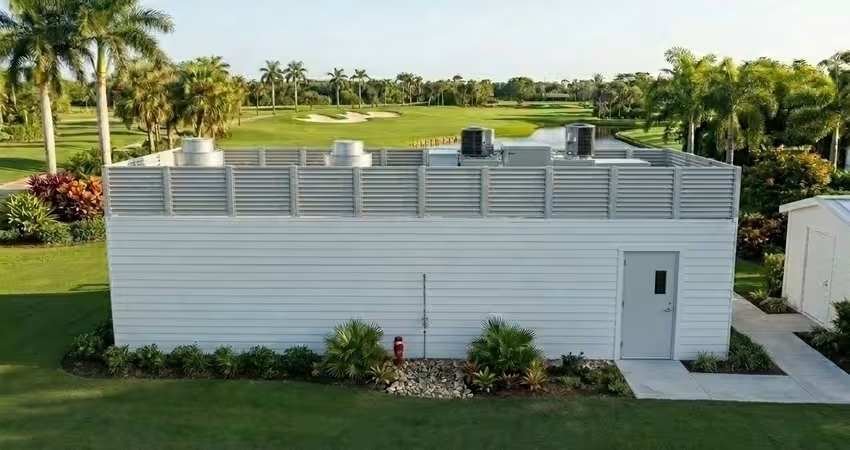
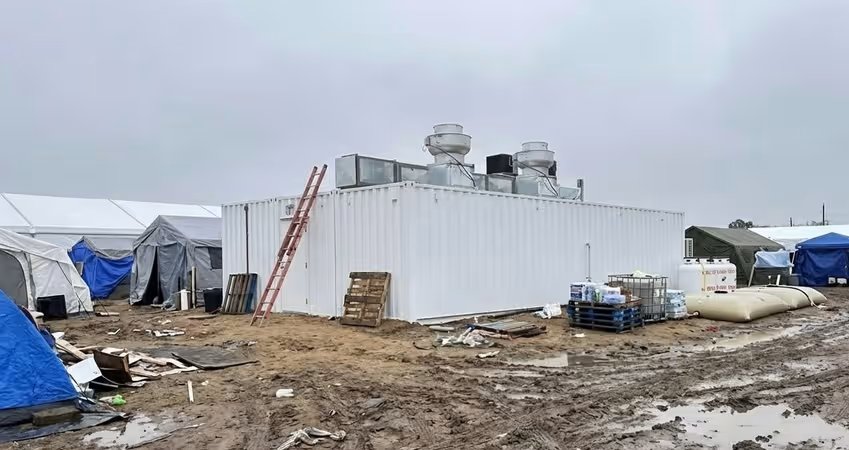
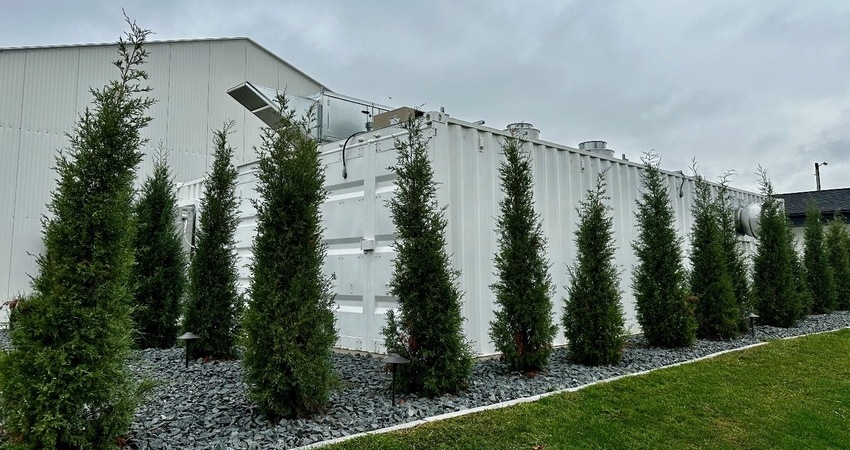
Modular commercial kitchens provide a more controlled solution. Because they’re engineered as complete kitchen environments — including structure, ventilation, fire suppression, and utilities — they can be configured around your exact production needs from the start. This makes them particularly effective for:
ContekPro’s modular hotel kitchen solutions are designed around menu requirements and throughput targets — ensuring the kitchen you deploy matches the operation you plan.
Commercial kitchen design is not an equipment problem — it's an operations problem. The menu defines what you need. The volume defines how much of it. Every other decision — layout, equipment, storage, ventilation, staffing — flows from those two inputs.
Whether you're planning a poolside grill, a full-service resort kitchen, or a multi-concept F&B expansion, the right design starts with understanding your operational reality. ContekPro's modular kitchens for hotels and resorts are engineered around your specific menu, volume, and service model — from layout to equipment packages to pre-installed ventilation and fire suppression. Contact our team to discuss your project.
Your menu dictates every design decision downstream. A focused menu (e.g., grill-only poolside operation) supports a linear assembly-line layout where food flows from prep to service in a single direction. A diverse, multi-course menu (e.g., full-service hotel restaurant) demands a zone-based layout with separate stations for hot line, cold prep, pastry, and garde manger. The menu determines equipment type, station quantity, storage ratios, and hood coverage — all of which directly shape the floor plan.
The industry standard is approximately 5 square feet of kitchen space per dining seat. A 200-seat hotel restaurant would need roughly 1,000 square feet. However, this baseline should be adjusted upward for high-volume operations, diverse menus requiring more stations, or facilities with banquet and room service requirements. Multi-outlet hospitality properties may benefit from a central commissary plus satellite finishing kitchens at each venue.
A kitchen layout for high volume requires heavy-duty cooking equipment rated for continuous use — commercial ranges with high BTU output, convection ovens for consistent batch cooking, high-capacity fryers with built-in oil filtration, and blast chillers for rapid cooling. Ventilation must be sized to match total BTU output (typically 100 CFM per 10,000 BTUs for gas equipment per NFPA 96). Cold storage should cover at least 2–3 days of inventory, and warewashing capacity must match peak dish volume.