%2520(1).avif)
Imagine this: a resort general manager is three months into a commercial kitchen construction project when the fire marshal flags the ventilation system for non-compliance. The exhaust ductwork was installed too close to combustible materials, the makeup air unit was undersized, and the fire suppression nozzles don't align with the revised equipment layout. The fix requires tearing out completed work, delaying the opening by eight weeks, and adding six figures to the budget.
It's a scenario that plays out more often than it should — and it's almost always preventable. Ventilation, fire safety, and utility infrastructure are the three pillars of commercial kitchen construction and when they're planned in isolation, the consequences are severe. According to the National Fire Protection Association, cooking equipment is the leading cause of fires in eating and drinking establishments, making integrated infrastructure planning not just a best practice but a safety imperative.
This guide breaks down what hospitality operators need to know about each system, the codes that govern them, and how to coordinate ventilation, fire protection, and utilities from day one of your commercial kitchen construction project.
In traditional commercial kitchen construction, ventilation, fire suppression, and utility rough-ins are often handled by separate contractors on independent timelines. This siloed approach is one of the most common causes of budget overruns and schedule delays. When the HVAC contractor installs ductwork without coordinating with the electrician, or when gas line routing conflicts with fire suppression piping, rework becomes inevitable.
The ASHRAE Design Guide for Commercial Kitchen Ventilation emphasizes that early collaboration between mechanical, electrical, and plumbing (MEP) disciplines is essential. Kitchen ventilation systems can account for up to 50% of a facility's total HVAC load. When that system isn't coordinated with electrical service, gas supply, or fire suppression layout, the result is costly rework.
Tip: Bring your mechanical, electrical, plumbing, and fire protection contractors together during the design phase — not after architectural plans are finalized. Issues that cost hundreds to fix on paper can cost tens of thousands to fix in the field.
In a commercial kitchen, every infrastructure system is interconnected. The exhaust hood determines the makeup air requirement, which drives HVAC sizing. The fire suppression system must integrate with the hood and ductwork. Electrical panels must be sized for cooking equipment, refrigeration, and ventilation motors simultaneously. Gas lines must be routed to avoid interference with ductwork while maintaining code-required clearances.
The table below shows how ventilation, fire safety, and utilities directly affect one another:

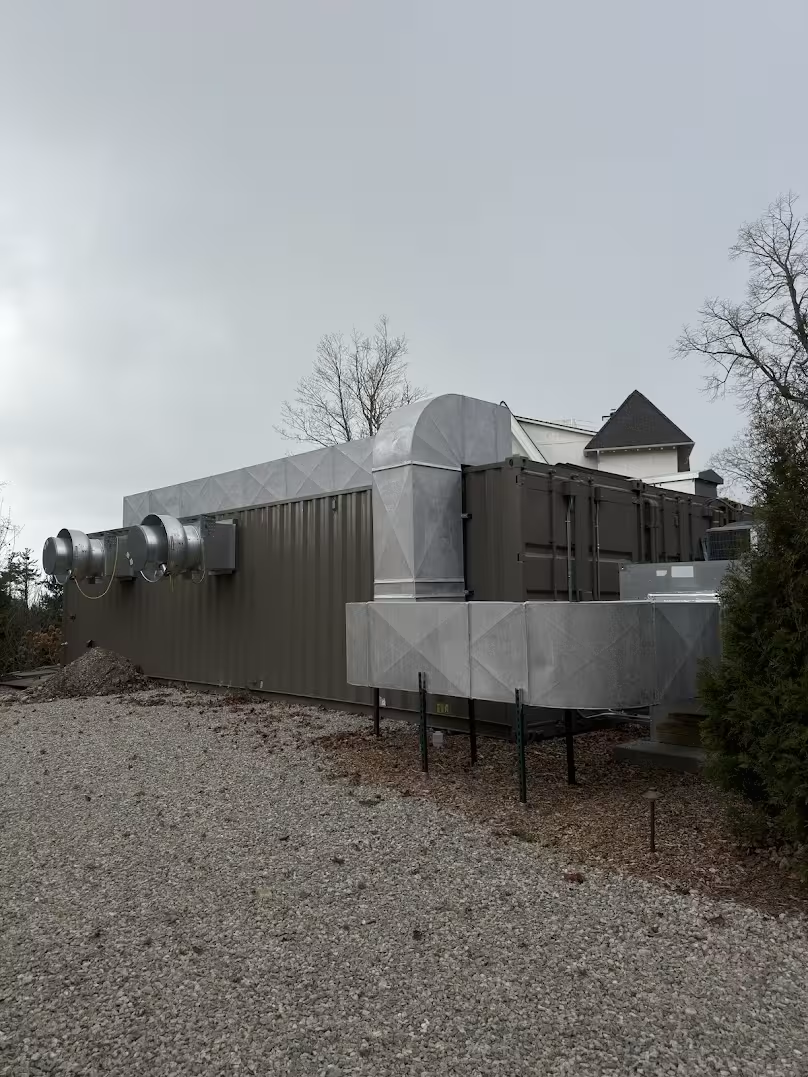
The ventilation system is the single most critical infrastructure component in commercial kitchen construction. It serves three non-negotiable functions: removing grease-laden vapors to prevent fires, maintaining air quality for staff safety, and balancing air pressure throughout the facility. For a deeper dive into hood systems specifically, see our commercial kitchen exhaust hood guide.
Two primary standards govern commercial kitchen ventilation in the United States. NFPA 96, Standard for Ventilation Control and Fire Protection of Commercial Cooking Operations, is the authoritative standard for fire safety in commercial kitchens. It covers the design, installation, inspection, testing, and maintenance of exhaust hood systems, ductwork, and fire suppression equipment.
The International Mechanical Code (IMC), published by the International Code Council, governs the broader mechanical system design, including airflow rates, duct construction, and system balancing.
Note: Local codes often adopt NFPA 96 and the IMC with amendments. Always verify requirements with your local Authority Having Jurisdiction (AHJ) before finalizing designs.
Hood selection is dictated by the type of cooking your equipment produces — not by preference or budget:
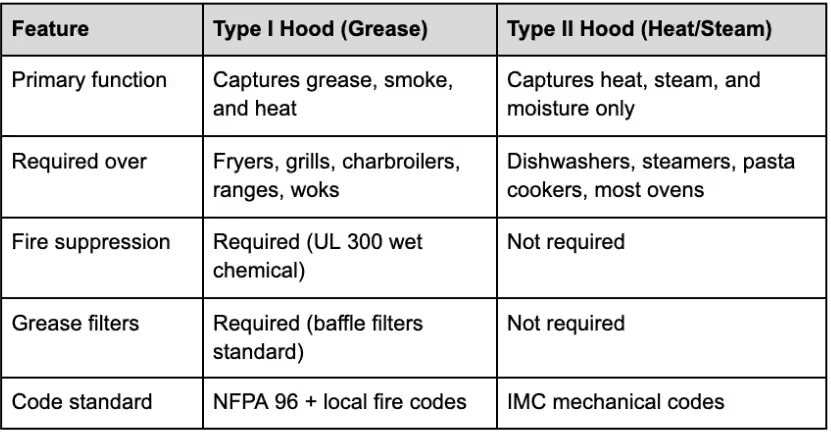
Tip: Never install a Type II hood over grease-producing equipment. It's a serious fire code violation that will fail inspection and create a genuine safety hazard.
For every cubic foot of air your exhaust system removes, an equal volume must be returned through the makeup air (MUA) system. Without balanced airflow, the kitchen can develop negative pressure — causing issues like difficult-to-open doors and carbon monoxide backdrafting from gas-fired appliances.
Exhaust rates are measured in cubic feet per minute (CFM) and are calculated based on the type and quantity of cooking equipment, hood dimensions, and cooking duty level. Heavy-duty equipment like charbroilers requires significantly higher CFM than light-duty appliances.
According to the Uniform Mechanical Code (UMC), a minimum general exhaust rate of 0.70 CFM per square foot is required for commercial kitchens, though actual rates will typically be much higher based on equipment load.
Industry best practice recommends that supply air be approximately 90% of the determined exhaust CFM. The remaining 10% is drawn from adjacent spaces, which helps prevent cooking odors from migrating into dining areas or guest rooms — a critical consideration for hotel and resort kitchens.
Traditional ventilation systems run at full speed whenever they're on, regardless of actual cooking activity. Demand-Controlled Kitchen Ventilation (DCKV) uses optical and temperature sensors to modulate fan speed in real time, reducing airflow during non-peak periods by as much as 50% or more.
According to the U.S. Department of Energy's Better Buildings Initiative, DCKV systems deliver the best return on investment in kitchens with exhaust flow rates of 5,000 CFM or higher. Many utility companies offer rebates for DCKV installation, further offsetting the initial cost. For hospitality operations running multiple meal periods, this technology can cut ventilation energy costs substantially while maintaining full NFPA 96 compliance.
%20(1)%20(1).avif)
Fire protection is not a standalone system — it's woven into ventilation, electrical, and gas infrastructure. Designing it in parallel with other MEP systems ensures code compliance and operational safety from day one. For a complete overview of permitting and fire code considerations, refer to our shipping container kitchen permits and codes guide.
All cooking equipment under a Type I hood must be protected by an automatic fire suppression system that meets the UL 300 standard. These wet chemical systems are specifically engineered for grease fires, which burn at higher temperatures than standard combustible materials.
When activated by heat sensors or manual pull stations, the system discharges a wet chemical agent that suppresses the fire through saponification — converting burning grease into a non-combustible foam. The system simultaneously shuts off gas and electrical supply to the cooking equipment, preventing re-ignition.
Key requirements:
Grease-laden ductwork is one of the most significant fire risks in any commercial kitchen. NFPA 96 mandates that grease ducts be constructed from welded stainless steel or carbon steel, creating a completely sealed, fire-resistant conduit. Key ductwork requirements include:
A comprehensive fire safety system extends beyond the hood. Commercial kitchen construction must include emergency gas shutoff valves accessible to staff, electrical disconnect switches for cooking equipment, integration between the kitchen suppression system and the building's fire alarm system, and code-compliant sprinkler coverage in areas not protected by the hood suppression system.
According to OSHA kitchen safety guidelines, employers must ensure that all staff are trained on the location and operation of emergency shutoffs, fire extinguishers, and evacuation procedures.
NFPA 96 prescribes a clear cleaning and inspection schedule based on cooking volume and type:
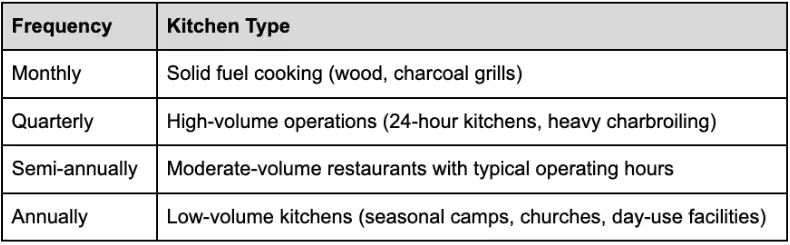
Tip: Maintain a detailed service logbook recording inspection dates, work performed, and technician credentials. Fire marshals and insurance auditors will ask for this documentation during inspections — it's your primary proof of compliance.
.avif)
The third pillar of commercial kitchen construction is utility infrastructure — the electrical, plumbing, and gas systems that power, supply, and drain every piece of equipment. Poor utility planning is one of the most expensive mistakes in kitchen construction because it's buried behind walls and under floors, making post-construction corrections extremely disruptive. For a step-by-step overview of kitchen project planning, see our shipping container kitchen planning and design guide.
Commercial kitchens are among the most electrically demanding spaces in any building. Between cooking equipment, refrigeration, ventilation motors, lighting, and point-of-sale systems, a mid-size kitchen typically requires 200–400+ amps of electrical service. Undersizing the electrical panel is a common — and costly — mistake.
Key considerations:
Note: ENERGY STAR-certified equipment not only reduces ongoing utility costs but may qualify for utility company rebates that help offset the cost of higher-capacity electrical service.
Water supply and drainage must be sized for peak demand across all fixtures: prep sinks, 3-compartment sinks, handwash stations, dishwashers, ice machines, and steam equipment. Commercial kitchens also require grease interceptors (grease traps) to prevent fats, oils, and grease (FOG) from entering the municipal sewer system.
Critical plumbing requirements include:
Gas-powered cooking equipment remains standard in most high-volume commercial kitchens due to its responsiveness and high BTU output. Gas line routing must account for:
Equipment selection and utility planning must happen in parallel. The specific models you choose — their voltage, BTU ratings, water consumption, and drain requirements — directly determine the size and layout of every utility connection. Finalizing equipment after utility rough-in almost always leads to costly change orders.
For guidance on selecting and planning equipment, refer to our commercial kitchen design principles article, which covers the interplay between layout, equipment, and infrastructure in detail.
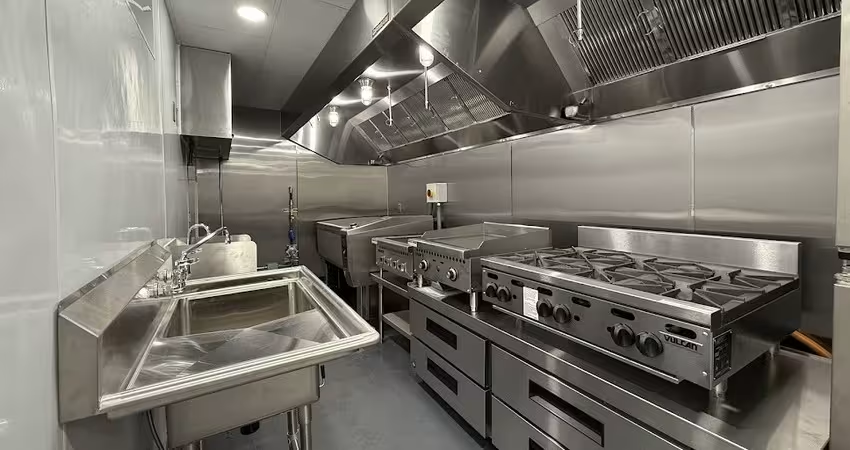
The complexity of coordinating ventilation, fire safety, and utilities is one of the primary reasons commercial kitchen construction projects go over budget and behind schedule. Modular construction offers a fundamentally different approach by integrating all three systems in a controlled factory environment — before the unit ever arrives on site.
Prefabricated modular kitchens are delivered with ventilation hoods, fire suppression systems, HVAC, electrical wiring, plumbing, and gas connections pre-installed and pre-tested. This eliminates the on-site coordination challenges that plague traditional commercial kitchen construction: no waiting for multiple trades to sequence their work, no field conflicts between ductwork and electrical conduit, and no last-minute design changes when systems don't fit.
ContekPro's modular kitchens, for instance, are delivered 95% complete with NFPA 96-compliant exhaust hoods, UL 300 fire suppression systems, and fully integrated MEP — all inspected before leaving the factory. On-site work is limited to connecting the utility stub-outs, installing rooftop exhaust fans, and running the final ductwork. This pre-integration approach is one of the reasons modular kitchen builds can be completed up to 50% faster than traditional construction. Learn more about ContekPro's hotel kitchen solutions.
Because modular kitchens are built to International Building Code (IBC) standards in a controlled environment, they undergo third-party inspection during manufacturing. This pre-approval documentation streamlines the local permitting and inspection process considerably. Our commercial kitchen workflow design guide explores how pre-engineered layouts further accelerate deployment.
For hospitality operators facing tight construction windows — such as opening before peak season or minimizing disruption during a renovation — modular construction provides both schedule certainty and code confidence. Every ventilation, fire safety, and utility system is documented, tested, and ready for the Authority Having Jurisdiction (AHJ) to review. Our modular construction and sustainability article details the broader environmental and operational advantages of this approach.
Ventilation, fire safety, and utility infrastructure are the backbone of every successful commercial kitchen — and getting them right starts with integrated planning. Whether you're building a new hotel kitchen, expanding a resort's culinary footprint, or replacing an aging club kitchen, the right approach saves time, budget, and operational headaches.
ContekPro's prefabricated modular kitchens are delivered with fully integrated MEP systems — including NFPA 96-compliant ventilation, UL 300 fire suppression, and pre-installed electrical, plumbing, and gas connections — all factory-tested and inspection-ready. It's commercial kitchen construction without the coordination chaos.
Explore our modular kitchen solutions or contact our team to discuss your project.
.avif)
While this blog references nationally recognized standards such as NFPA 96, the International Mechanical Code (IMC), and the International Building Code (IBC), final requirements are determined by your local Authority Having Jurisdiction (AHJ). Many municipalities adopt these codes with amendments. Always verify design details with your fire marshal and building department before finalizing construction documents.
Commercial kitchens require a code-compliant exhaust system per NFPA 96 and the International Mechanical Code. This includes Type I hoods over grease-producing appliances (equipped with fire suppression and baffle filters), Type II hoods for heat and steam, properly sized ductwork, and a balanced makeup air system. Exhaust rates are calculated based on equipment type, hood dimensions, and cooking duty level. A licensed HVAC engineer should design and certify the system to ensure compliance with both fire and mechanical codes.
Most commercial kitchens require a UL 300-compliant wet chemical suppression system installed above all cooking equipment under a Type I hood. The system automatically activates when heat sensors detect extreme temperatures, discharging an agent that suppresses grease fires through saponification. Class K fire extinguishers must also be placed within 30 feet of cooking equipment per NFPA 10. Systems must be professionally inspected every six months to maintain compliance and insurance coverage.
Commercial kitchen ventilation installation typically ranges from $5,000 to $30,000+ depending on kitchen size, hood type, ductwork complexity, and local code requirements. Type I hood systems with fire suppression are significantly more expensive than Type II systems. Costs increase when ductwork must route through multiple building stories or when structural modifications are required. Investing in the correct design during the planning phase prevents costly rework during construction.
A commercial kitchen requires robust electrical service (typically 200–400+ amps for mid-size operations), gas lines for cooking equipment, water supply and drainage for sinks and dishwashers, and a dedicated HVAC system. All utility infrastructure must be planned around the equipment layout and coordinated with ventilation and fire suppression systems to avoid conflicts. Early coordination between all trades is the most effective way to keep a commercial kitchen construction project on schedule and on budget.