The hurricane makes landfall on a Friday night. By Monday morning, your resort's walk-in coolers are full of standing water, the hood system is destroyed, and the health inspector won't issue a re-opening permit for at least eight weeks. Your guests are already booked for the holiday weekend three weeks out. Every day the kitchen sits dark costs revenue, damages your brand, and tests your team's continuity plan.
This is the moment disaster relief kitchens were built for. Whether your property is recovering from a hurricane, flood, wildfire, or an ice storm that took out the gas line, a well-chosen emergency kitchen can restore commercial-grade food service in days instead of months. This guide breaks down the four main types of disaster relief kitchens, how to match each one to the disaster you're facing, and how to build a continuity plan that pays for itself the first time you need it.
A disaster relief kitchen is any commercial-grade food production facility designed or deployed to maintain meal service when a property's permanent kitchen has been damaged, destroyed, or rendered inaccessible by a natural or man-made event. Unlike a residential setup or a casual food truck, a true disaster relief kitchen meets full health, fire, and building code requirements — even when the surrounding infrastructure is compromised.
These kitchens fall on a spectrum from temporary tent-based field setups used by humanitarian responders to permanent prefabricated modular units designed for hospitality properties in storm-prone regions. The right choice depends on three variables: how fast you need to be operational, how long you'll need the kitchen, and whether you're feeding evacuees, paying guests, or both.
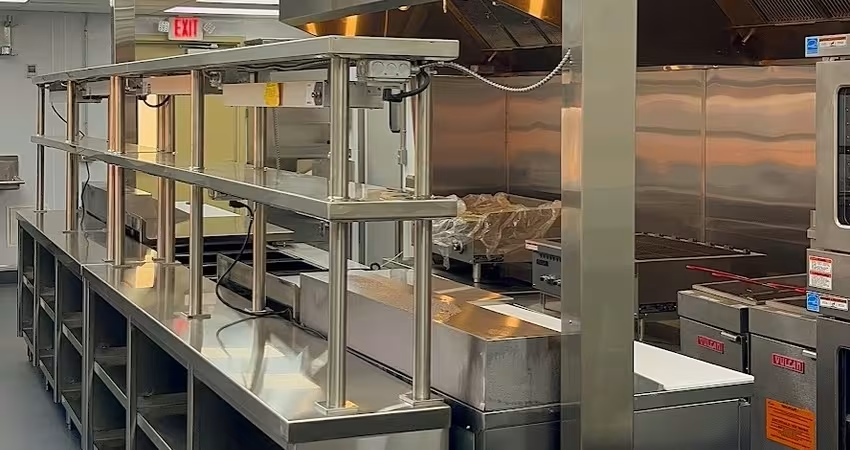
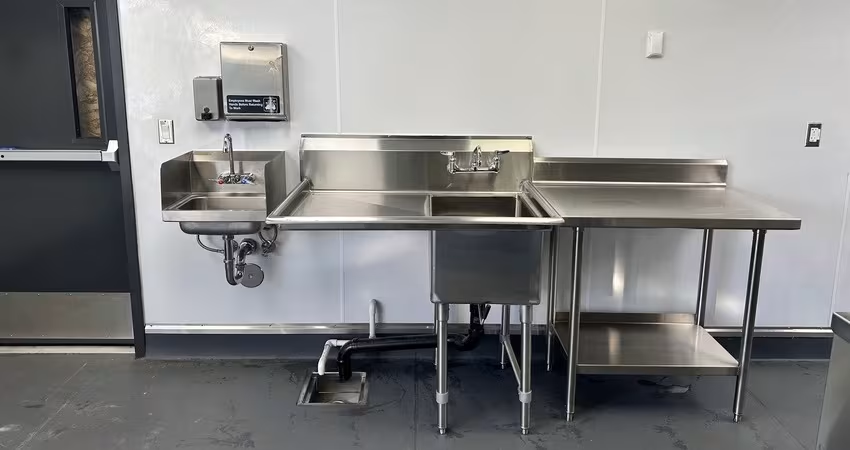
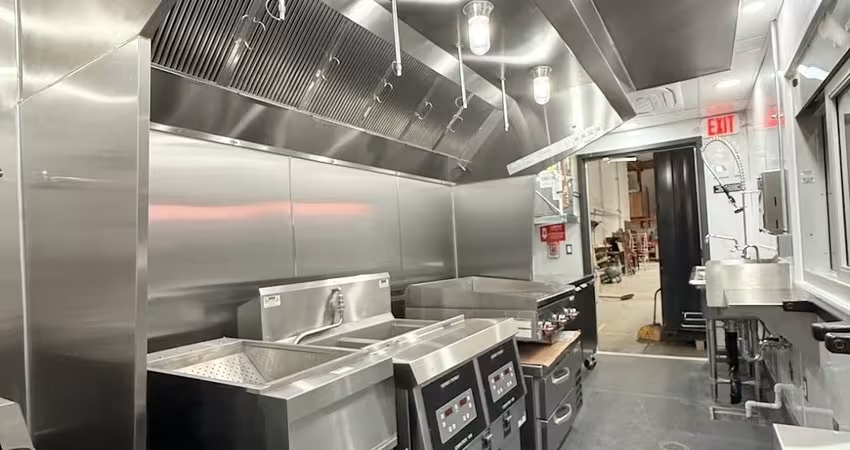
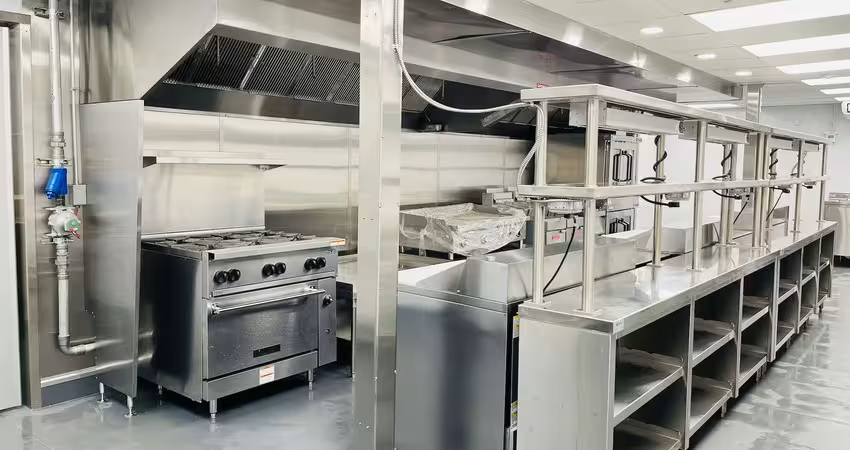
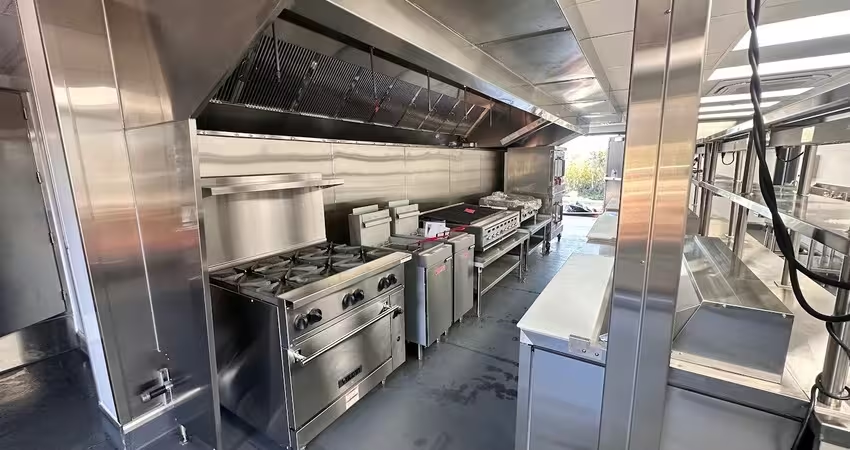
A standard commercial kitchen assumes reliable utilities, predictable supply chains, and an intact building. Disaster relief kitchens assume the opposite. Purpose-built units include:
This is what separates a disaster relief kitchen from a "tent with a stove." The former passes a health inspection on day one. The latter doesn't.
The user base for disaster relief kitchens is broader than most operators realize. It spans federal agencies coordinating mass care, healthcare facilities maintaining therapeutic diets, and luxury resorts protecting their season. Typical users include:
For hospitality operators specifically, disaster relief kitchens overlap heavily with the broader category of shipping container kitchen use cases — temporary capacity solutions that happen to also be the right answer when disaster strikes.
Climate volatility has turned disaster preparedness from a coastal-only concern into a national one. According to NOAA's National Centers for Environmental Information, the United States has averaged more than 18 billion-dollar weather and climate disasters per year over the last five years — roughly triple the long-term average. Floods, severe storms, wildfires, and winter events now strike regions that were once considered low-risk.
For hospitality operators, the financial exposure is direct and immediate.
When a hotel kitchen goes dark, the loss isn't limited to F&B revenue. Banquets cancel, weddings relocate, group bookings evaporate, and online reviews suffer for years afterward. A 200-room resort with an average daily rate of $400 and a 60% F&B attachment rate can hemorrhage $30,000–$50,000 per day in combined revenue while the kitchen is offline.
Tip: Before any disaster season begins, calculate your daily revenue at risk per day of kitchen downtime. This single number justifies almost any continuity investment you'll consider.
The math gets worse when you factor in displaced staff, spoiled inventory, and the cost of catered meals brought in from distant providers. Operators who treat disaster relief kitchens as an emergency expense miss the point — they're a continuity asset.
Most commercial property insurance includes business interruption coverage that can offset the cost of a temporary kitchen rental or modular replacement during covered events. The catch: most policies require operators to demonstrate they took reasonable steps to minimize downtime. Sitting in line for a contractor while your kitchen sits dark for six months is not "reasonable mitigation."
For federally declared disasters, the FEMA Mass Care and emergency feeding planning factors outline how public assistance funds can flow to feeding operations. Private hotels generally aren't directly eligible, but properties operating under contract with state emergency management — for instance, hosting evacuees under non-congregate sheltering agreements — often are. Document everything, and coordinate with your state emergency management office before deploying.
Note: This guide is not legal or insurance advice. Eligibility for FEMA reimbursement, insurance coverage, and tax treatment varies by jurisdiction and policy. Consult your insurance broker and emergency management coordinator before assuming costs will be covered.
Not every disaster relief kitchen is the same. Choosing the wrong format can leave you under-equipped, non-compliant, or paying for capacity you don't need. Here's how the four main types compare.
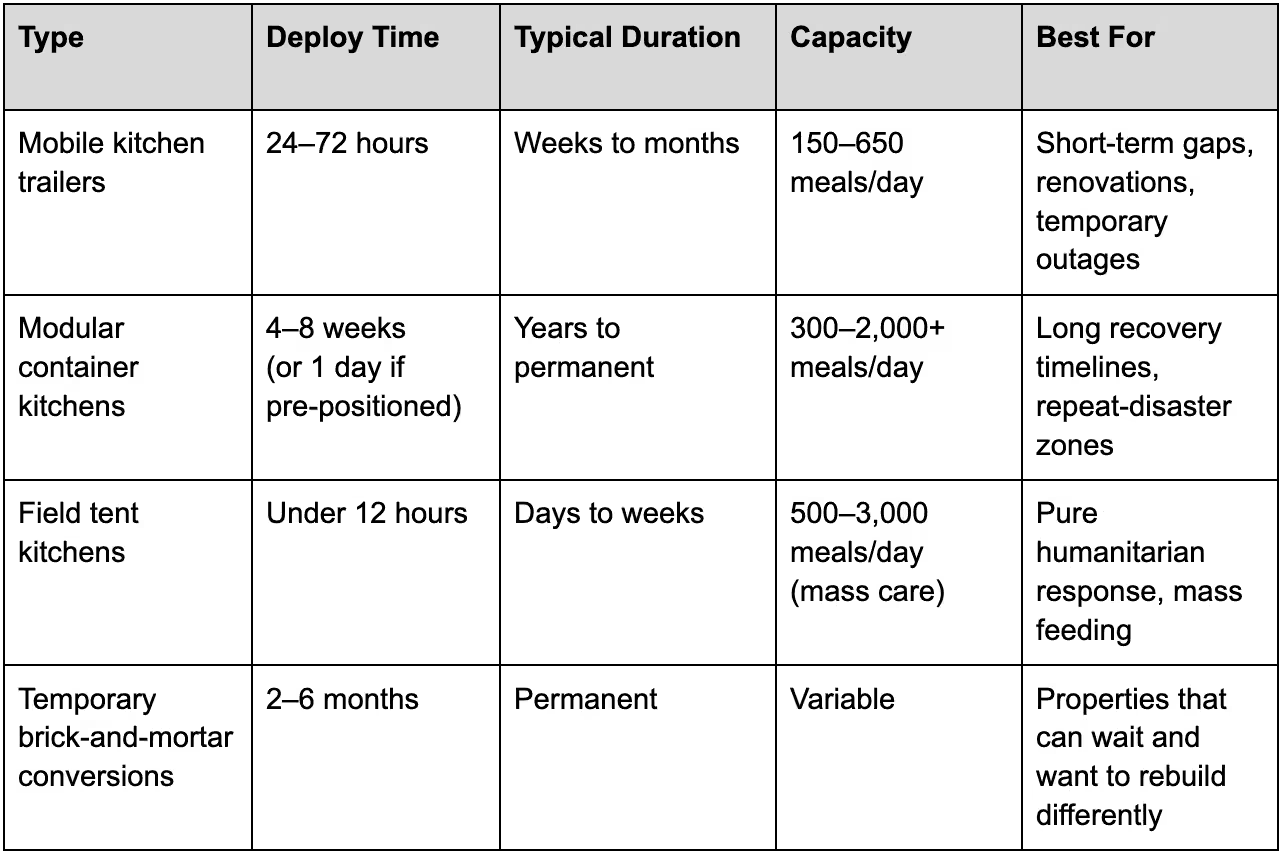
Wheeled, towable units that arrive on a flatbed or as self-contained semi-trailers. Mobile kitchen trailers are the fastest commercial-grade option for short-term needs and have become the default for renovation gaps and weeks-long disaster events. Their strength is speed and flexibility; their weakness is capacity ceiling and cost-per-month for extended deployments.
For a deeper comparison of trailer-based formats versus other options, see this guide on shipping container kitchens vs. food trucks — the trade-offs apply directly to disaster scenarios.
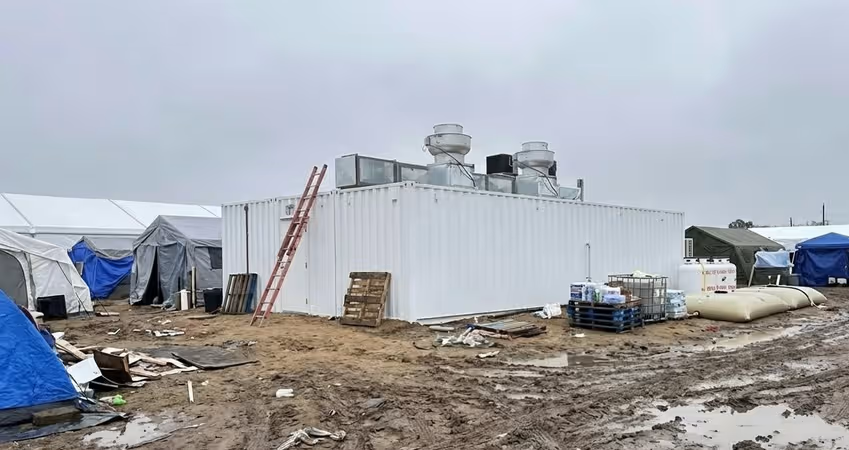
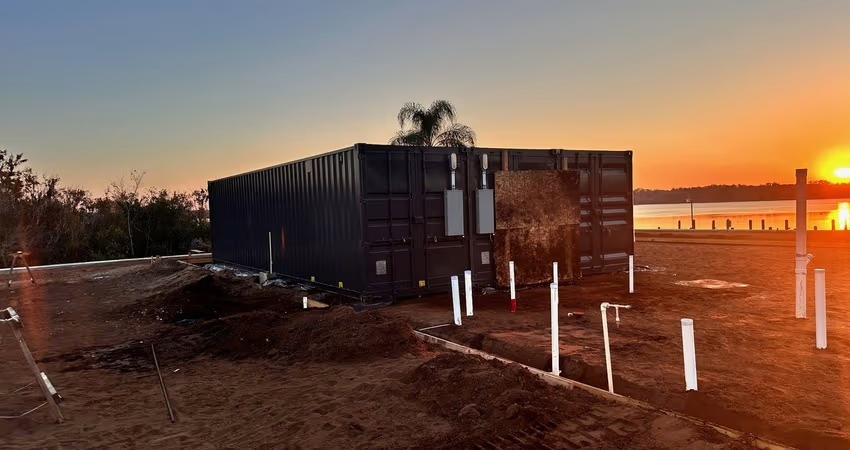
Built off-site from modified ISO shipping containers, these units arrive 95% finished with MEP, HVAC, fire suppression, and commercial equipment pre-installed. They sit on a foundation, connect to utilities in a single day, and meet the same building codes as a brick-and-mortar kitchen. Their structural durability — Corten steel rated for high winds and impact — makes them uniquely suited to repeat-disaster regions.
If you're new to the format, this primer on what a shipping container kitchen actually is covers the technical fundamentals.
The format most people picture when they hear "disaster relief kitchen": tents with field stoves, propane burners, and folding prep tables, deployed by humanitarian agencies in the immediate aftermath of a disaster. These setups can produce thousands of meals per day for mass feeding, but they're not designed to meet permanent health code standards or serve paying hotel guests. Their role is the first 72 hours of mass care, not commercial recovery.
Some operators convert ballrooms, garages, or adjacent buildings into temporary kitchens during reconstruction. This works in narrow circumstances but typically takes months of permitting and contractor coordination — eliminating the speed advantage that makes disaster relief kitchens valuable in the first place.
Different disasters destroy kitchens in different ways. The right format depends on what's coming.
Hurricanes combine high winds, storm surge, and prolonged power outages. Properties in Atlantic and Gulf Coast regions face damage profiles that often require multi-month recovery — far beyond what a rental trailer makes economic sense for. Container-based modular kitchens, anchored to reinforced foundations, have become the preferred long-term answer in these zones. For the deep technical breakdown on wind ratings, anchoring, and code compliance, see ContekPro's dedicated guide on shipping container kitchens for hurricane relief and recovery.
Wildfire damage is binary: properties either survive intact or suffer catastrophic loss. For surviving properties in evacuation zones, the immediate need is feeding evacuees and first responders — a mass-care role. For destroyed properties, the recovery timeline runs years, and a permanent modular replacement often arrives faster than a traditional rebuild.
These events tend to create localized damage that disrupts utilities more than structures. Mobile kitchen trailers are usually the right fit: deployment in days, operation for weeks or a few months, removal once permanent service is restored. The exception is earthquake zones with seismic-rated permanent installations, where modular construction's lighter footprint and engineered connections offer real advantages.
Floods are uniquely destructive to commercial kitchens because they contaminate everything below the waterline — drywall, electrical, refrigeration compressors, and even concrete substrates that absorbed contaminated water. Recovery requires full demolition and remediation, not just cleanup. The speed and unpredictability of flash flooding makes the exposure even worse: during the July 2025 Texas Hill Country floods, the Guadalupe River rose 26 feet in 45 minutes, shutting down every kitchen in its path before operators could react.
Disaster relief kitchens deployed on raised pads above the historic flood elevation can keep service running while remediation contractors do their work. For a deep dive on flood-specific deployment — including FEMA Special Flood Hazard Area considerations and Base Flood Elevation siting — see ContekPro's companion guide on shipping container kitchens for flood zone relief.
Tip: When siting a temporary or permanent disaster relief kitchen, always check FEMA flood maps and place the unit above the 500-year flood elevation, not just the 100-year line. The cost difference is minimal; the protection is enormous.
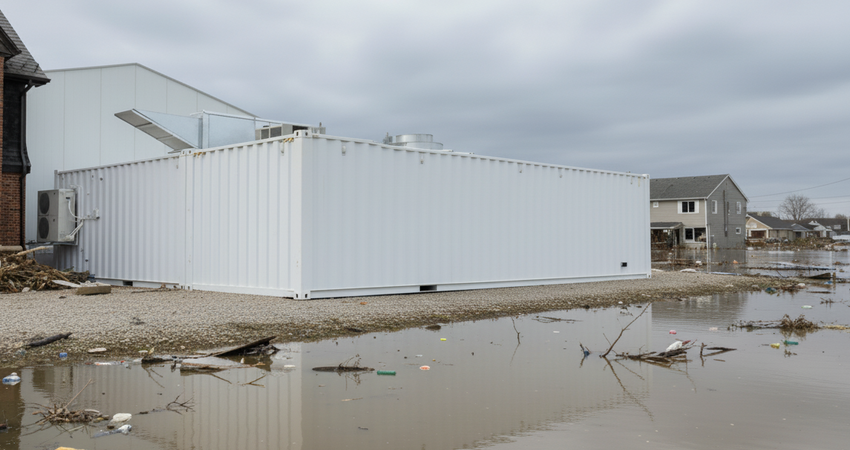
Understanding the phases of disaster response helps operators match kitchen format to need.
This is the humanitarian response window, and it belongs to organizations like the Red Cross, World Central Kitchen, and FEMA-coordinated mass care providers. Per CDC food safety guidance for emergencies, basic meal access becomes a public health emergency within 72 hours when normal food infrastructure is disrupted. Field tent kitchens, mobile units pre-positioned by relief agencies, and shelf-stable meal distribution dominate this phase.
Hospitality operators are usually focused on guest evacuation and damage assessment during this window — not on standing up commercial service. But sanitation infrastructure also matters here. Shelter operations frequently need not just food capacity but shipping container restrooms and hygiene units for evacuees and responders.
This is when most commercial operators face their hardest decision: wait for the permanent kitchen, or deploy a temporary one. Mobile kitchen trailers can be on-site within days if pre-positioned agreements exist; otherwise availability becomes the bottleneck because every property in the disaster zone is competing for the same trailers.
Note: The single biggest lesson from recent hurricane and wildfire seasons is that rental inventory runs out fast. Properties with pre-positioned contracts get served first. Reactive procurement leaves operators waiting weeks for equipment that should have arrived in days.
Once the immediate crisis stabilizes, the question becomes economic: how long will reconstruction actually take, and what's the total cost of bridging that gap? When the answer exceeds 6–12 months, the math typically favors a permanent modular installation over continued rental. The container kitchen that bridged the recovery period can then become the new permanent kitchen, or relocate to another property.
A disaster relief kitchen that can't pass inspection isn't a kitchen — it's a liability.
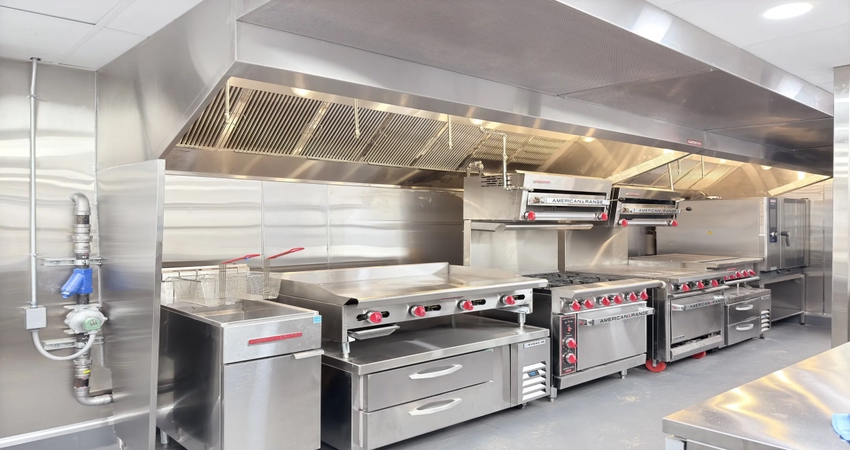
Commercial cooking equipment requires fire suppression that meets NFPA 96 standards for ventilation control of cooking operations, regardless of whether the kitchen is permanent or temporary. Purpose-built modular and trailer kitchens arrive with UL 300 wet chemical suppression already installed, tagged, and inspected. Improvised setups often miss this entirely and fail their first inspection.
The FDA Food Code is adopted in some form by nearly every state health department and sets baseline requirements for handwashing stations, three-compartment warewashing, refrigeration temperatures, and surface sanitation. Most state health departments will issue temporary operating variances during declared disasters, but only for kitchens that already meet baseline Food Code requirements. The variances cover things like signage and setback distances — not missing handwashing sinks.
Operators serving evacuees or partnering with public agencies need to understand the Incident Command System (ICS) structure that governs disaster response. Healthcare facilities have additional layers via the HHS Administration for Strategic Preparedness and Response (ASPR), which coordinates medical and dietary continuity during emergencies. Knowing where your kitchen fits in the command structure is as important as knowing it's running.
The single best predictor of how fast a property recovers from a disaster is how thoroughly it planned before the disaster.
Start with three questions:
Resources from the American Hotel & Lodging Association provide industry-specific frameworks for hospitality risk assessment that go beyond generic continuity planning.
There are two ways to procure a disaster relief kitchen: before you need it, or after. The cost difference is staggering.
Properties that complete pre-event site preparation can deploy emergency kitchens in a fraction of the time. Pre-event work includes:
Tip: A pre-prepped pad with utility stub-outs can convert a 6-week deployment timeline into a 1-day deployment. This is the single highest-leverage continuity investment most properties never make.
For hospitality properties in repeat-disaster zones — Atlantic and Gulf Coast hurricanes, California wildfires, Tornado Alley, ice storm corridors — the calculus often favors replacing the permanent kitchen with a modular one rather than rebuilding traditionally. The reasons compound: faster delivery, lower lifecycle cost, structural durability, and the ability to relocate or expand the kitchen in the future. The full economic case is laid out in this overview of shipping container kitchen benefits for hospitality operators.
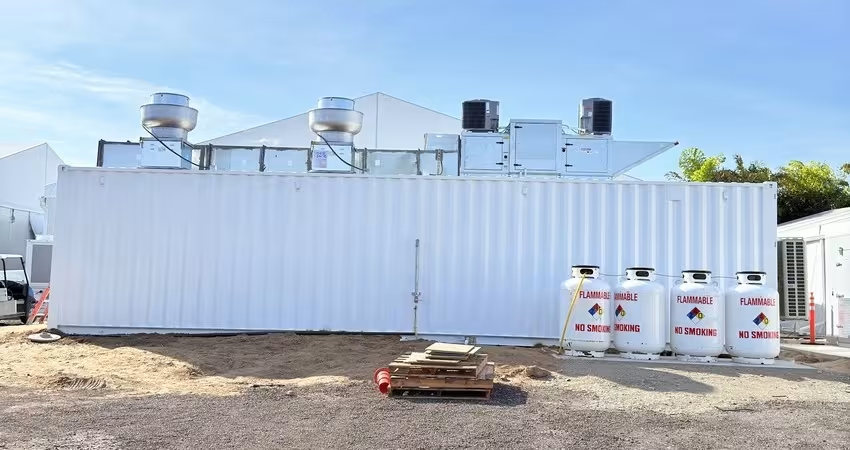
When the next storm, flood, or wildfire hits your region, the kitchens that come back online fastest are the ones that were planned for in advance. ContekPro engineers permanent modular kitchens built to IBC standards, third-party inspected, and ready to deploy where traditional construction can't keep up. From hotel and resort kitchen solutions to country clubs and remote properties, our units are designed for the operators who can't afford to be offline.
Contact ContekPro to discuss a continuity plan for your property — before you need it.
Deployment speed depends on the format. Pre-positioned mobile kitchen trailers can be operational within 24–48 hours of road access being restored. Permanent modular container kitchens take 4–8 weeks for fabrication and installation when ordered after a disaster, but can be deployed within a single day if a hospitality property has a pre-positioned base contract with a manufacturer. Field tent kitchens deploy fastest (under 12 hours) but offer the lowest capacity and shortest operational lifespan.
In some cases, yes. Under the Stafford Act, FEMA's Public Assistance program reimburses eligible costs for emergency feeding operations that serve evacuees, first responders, or vulnerable populations during a federally declared disaster. Private hotels are generally not directly eligible, but properties operating under contract with state or local emergency management agencies — for instance, hosting evacuees under a non-congregate sheltering agreement — may qualify. Document everything and coordinate with your state emergency management office before deploying.
Mobile kitchen trailers are wheeled, towable units designed for short-term rental and rapid relocation — ideal for emergencies lasting weeks to a few months. Modular container kitchens are built from steel ISO containers, delivered on a flatbed, and placed on a foundation for semi-permanent or permanent use. Container kitchens offer greater capacity, hurricane-rated structural durability, full code compliance, and better long-term economics when the recovery timeline exceeds 6–12 months.
Compliance hinges on three factors: self-contained utilities, documented food safety procedures, and pre-arranged health department coordination. Purpose-built relief kitchens include onboard potable water tanks, greywater storage, generator-ready electrical, and NSF-certified surfaces and equipment — meaning they can pass inspection even when municipal water and power are out. Most state health departments will issue temporary operating variances during declared disasters, but only if the kitchen meets baseline FDA Food Code requirements.