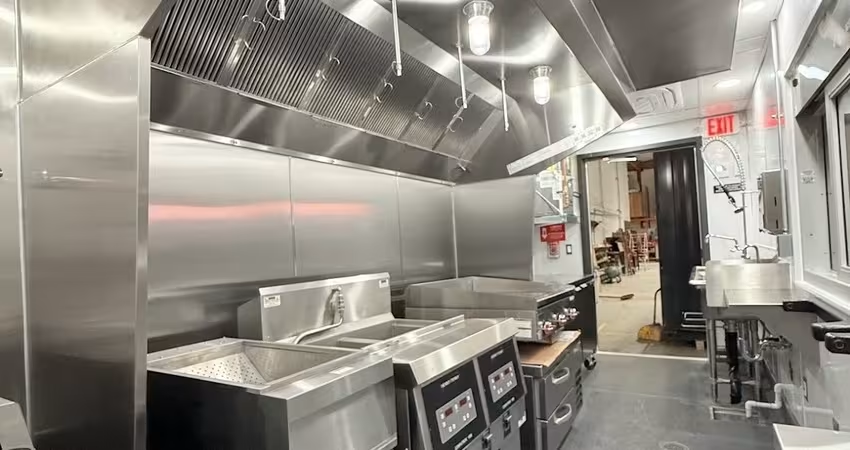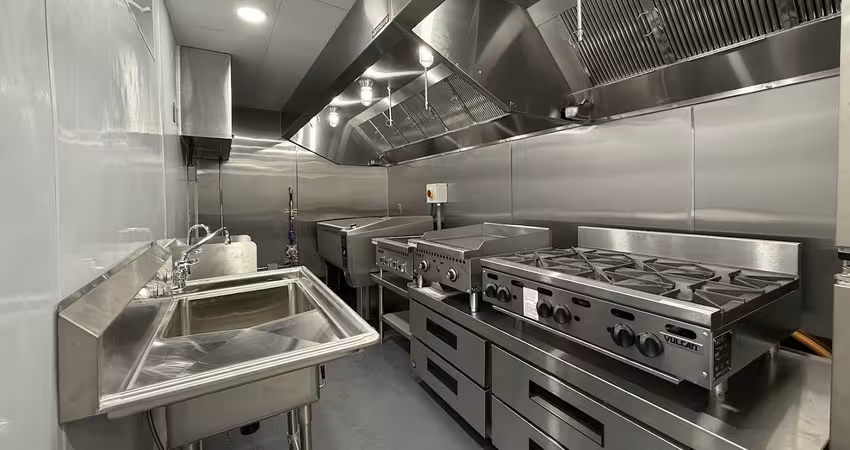
A commercial kitchen plumbing rough-in is the point where a project either sets itself up for a smooth opening — or a six-figure delay. Ask any foodservice GC: the calls that derail container kitchen installations rarely come from the structural or electrical trades. They come from plumbing. A missed vent, an undersized grease line, a stub-up that lands two feet from where it should — these errors push Day One back by weeks.
Container-built kitchens change the calculus. Because most of the plumbing is installed in a factory, decisions that traditional projects make on-site get made on a drawing board months earlier. This article walks through the commercial kitchen plumbing rough-in requirements specific to container builds — codes, sizing math, scope split, and the mistakes that still trip up experienced operators.
Traditional commercial kitchen construction plumbs from the slab up. Crews pour concrete, chase drains, stub risers, and hope the food service consultant's equipment layout doesn't change between design development and final shop drawings. It often does.
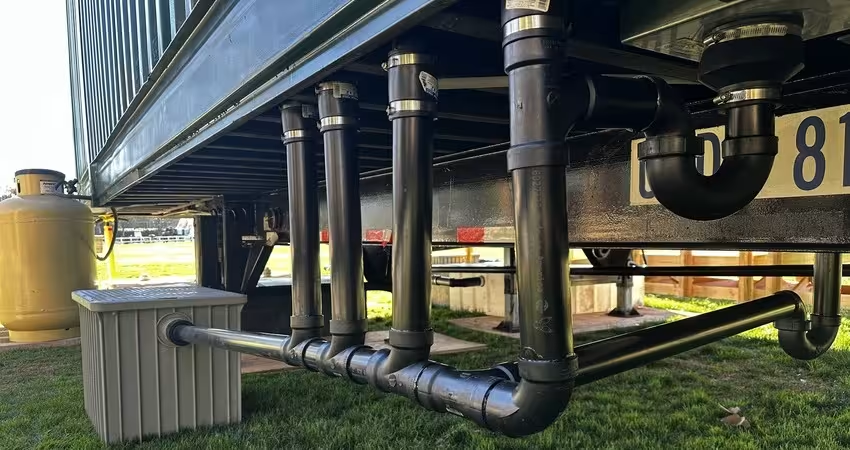
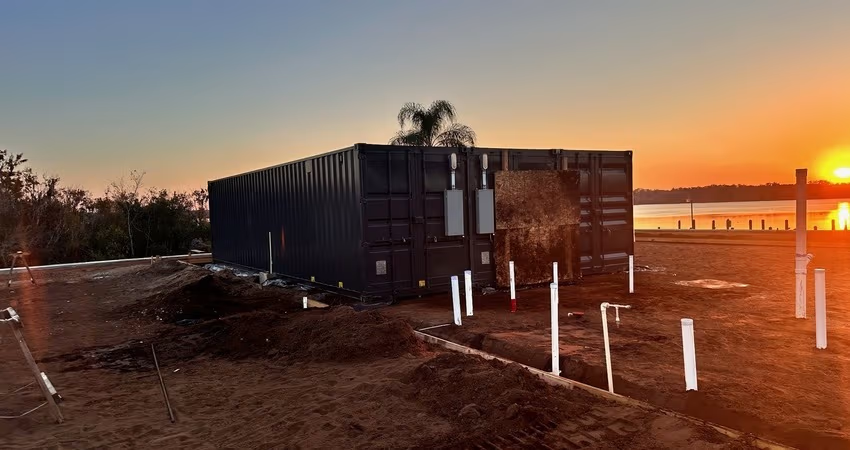
A shipping container kitchen flips the sequence. Drain-waste-vent (DWV) lines, supply risers, insulated chases, and fixture stub-outs are fabricated inside the module on the factory floor. By shipping day, the only plumbing work left is connecting the module to the sewer lateral, water main, and — in most jurisdictions — an exterior grease interceptor.
In a site-built project, drain locations are sometimes finalized after the slab is poured. In a container build, every drain has to be resolved before the module is sheathed. That's the point: it forces the equipment schedule, fixture layout, and utility cut sheet to lock early — which is why modular builds routinely run up to 50% faster than traditional construction.
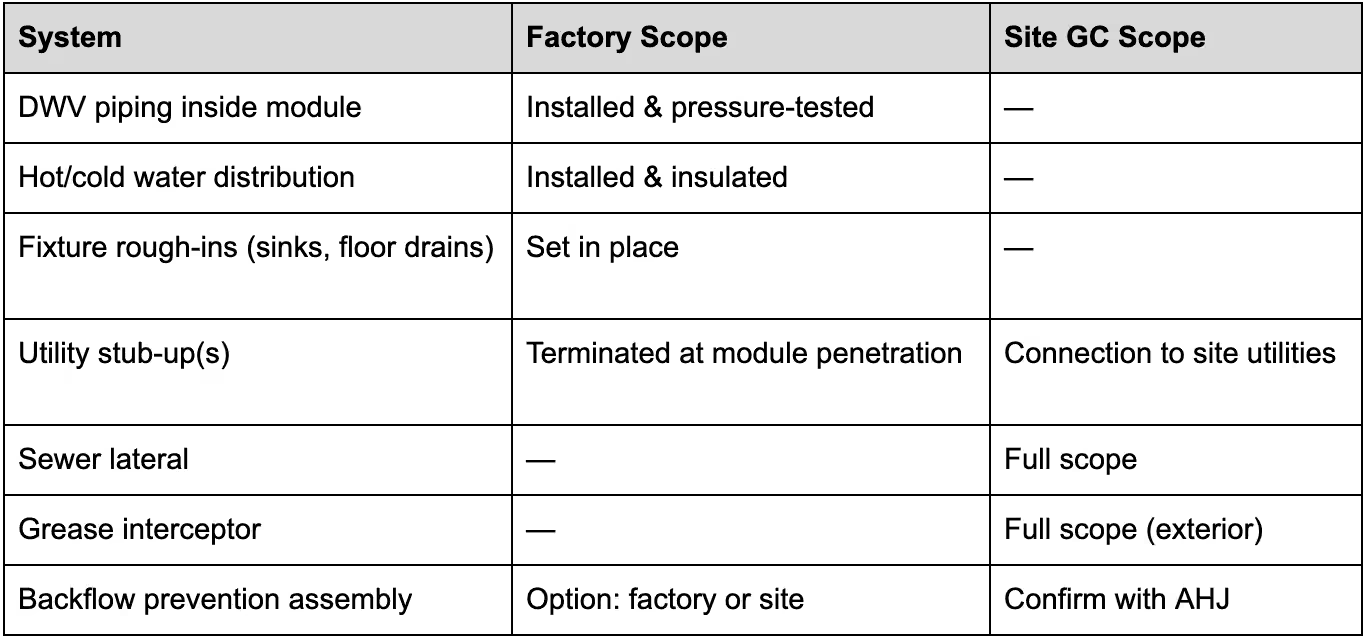
Note: ContekPro's Bolt series modules ship with a single-point utility connection, meaning the site GC lands one water, one drain, and one electrical tie-in per module — dramatically reducing installation day risk.
Every commercial kitchen plumbing rough-in decision should tie back to a code citation. Two model codes dominate in the U.S., plus a federal food-safety overlay.
The International Plumbing Code, published by the International Code Council, is adopted by 37 states plus Washington D.C. The Uniform Plumbing Code, published by IAPMO, dominates the western U.S. — Los Angeles, Seattle, Portland, Minneapolis — and is the only plumbing code designated an American National Standard by ANSI.
The UPC generally carries more stringent trap, vent, and grease interceptor provisions than the IPC, so a module designed to UPC ships compliant almost anywhere. A module designed only to IPC may need field modifications before installation in a UPC jurisdiction.
The 2022 FDA Food Code, Chapter 5, sets baseline public-health requirements for water, plumbing, and waste in any food establishment. Provisions that directly shape the commercial kitchen plumbing rough-in:
Tip: The Food Code is a model — your Authority Having Jurisdiction (AHJ) may still enforce the previous version. Confirm which edition your local health department has adopted before finalizing the rough-in set.
A common misconception is that modular commercial kitchens fall under HUD code. They don't — HUD's Manufactured Home Program applies only to residential dwellings. Commercial container kitchens are regulated under state-level industrialized/modular building programs, often using the same HUD-approved third-party inspection agencies that handle residential modular work. Factory inspection is what streamlines local permitting once the module lands on site.
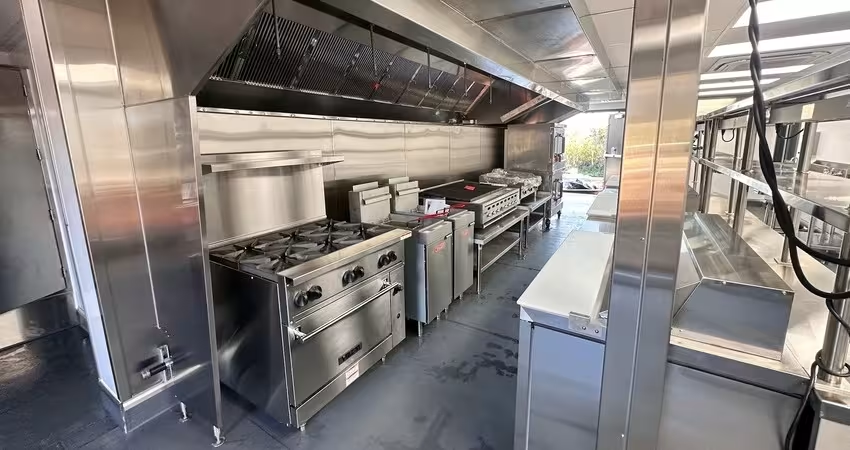
Commercial kitchens consume far more water than retail or office buildings, with demand concentrated in short peaks — lunch rush, dishwashing cycles, hood wash-down. The commercial kitchen plumbing rough-in has to carry that peak flow without pressure loss.
Supply sizing starts with water supply fixture units (WSFUs) per IPC Table 604.3. Each fixture — 3-compartment sink, handwash sink, dishwasher, prep sink, mop sink — gets a WSFU value, and the total converts to GPM demand via Hunter's probability curve.
For a 320 sq ft container kitchen serving a QSR menu, cold water rough-in is commonly 1¼" at the stub-up, reducing to ¾" branches. Larger prep kitchens and commissaries run 1½" to 2" mains.
Three demands drive hot water sizing:
Water heaters are sized by connected BTU load and recovery rate, not tank volume alone. Smaller container kitchens get a factory-installed unit inside the module; larger projects specify a site-connected water heater in a mechanical chase.
Any connection between the potable water system and potential contamination — hood wash-down with detergent injection, a mop sink hose bibb, a dishwasher — requires a backflow prevention assembly. Hood wash-down typically calls for a Reduced Pressure Zone (RPZ) assembly.
Note: RPZ assemblies require annual testing in most jurisdictions. Design the rough-in with testable access from the start.
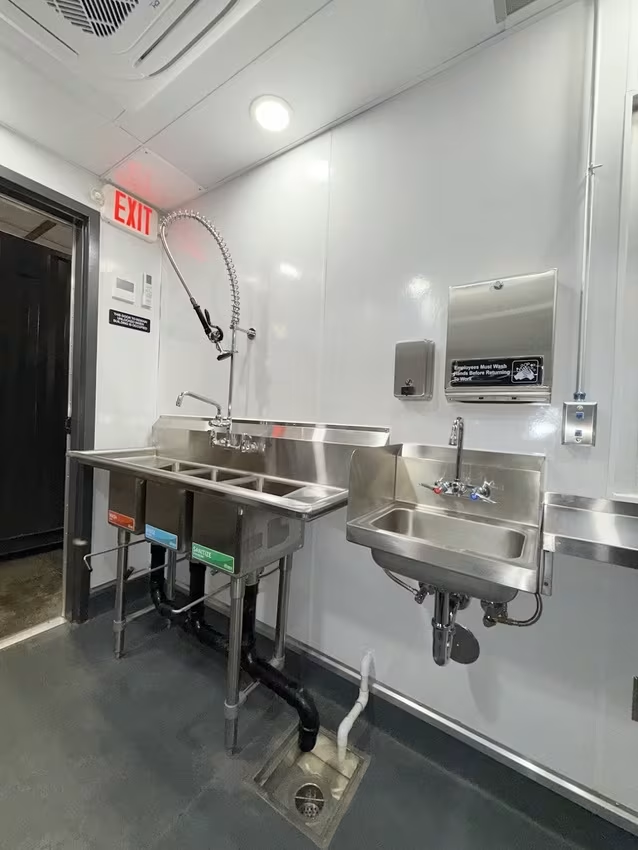
DWV is where most commercial kitchen plumbing rough-in failures happen. The math is exacting and the consequences of getting it wrong — sewer gas in the kitchen, slow drains, failed inspection — are immediate.
DFU values per IPC Table 709.1 quantify how much hydraulic load each fixture contributes. Commercial fixtures carry higher DFU values than residential counterparts:
The sum determines branch and stack sizing. A small container kitchen typically totals 15–30 DFU, requiring a 3" branch. A large commissary can push past 100 DFU, requiring 4" or larger.
Every trap needs a vent, and the distance from trap weir to vent — the trap arm — is limited by pipe size. Max length is 8 feet for a 2" trap arm, 6 feet for 1½". Miss this, and the trap siphons under heavy drainage, pulling sewer gas into the kitchen.
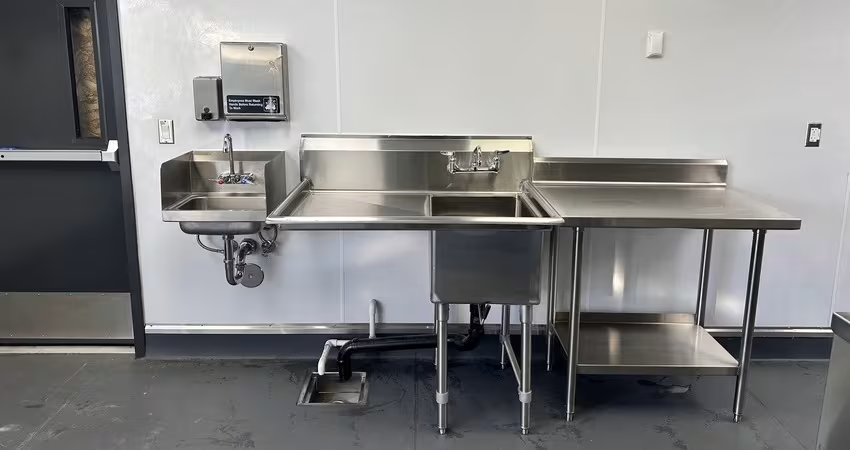
Ice machines, prep sinks, dipper wells, combi-oven condensate drains, and dishwasher discharge must connect to drainage indirectly via a floor sink with an air gap at least twice the diameter of the supply outlet (never less than 1").
FOG — fats, oils, and grease — is the single largest cause of sanitary sewer blockages in commercial districts. The EPA regulates grease discharge under the National Pretreatment Program (40 CFR 403), and virtually every U.S. municipality layers a local FOG ordinance on top.
Plumbing & Drainage Institute Standard PDI-G101 defines two types:
Gravity interceptors dominate container kitchen projects — they live outside the module, tied into the sewer lateral before it reaches the main.
Two methods dominate:
Tip: Undersized interceptors are a top-three cause of post-opening shutdowns. Oversize when in doubt — but not excessively, since oversized gravity interceptors generate hydrogen sulfide gas that corrodes the concrete structure from within.

The defining feature of a well-designed container kitchen plumbing rough-in is consolidated utility penetration. Rather than scattering penetrations across the module — each a potential freeze, leak, and coordination headache — all supply and drain lines terminate at a single pre-engineered stub-up. The site GC makes one set of connections, not twelve.
Container modules in cold climates require heat-traced supply lines and insulated drain chases at exterior penetrations. The factory handles the install; the site GC verifies heat trace circuits are energized before first freeze.
The scope split is the coordination document that prevents disputes on install day. It should ship with the architectural submittal — not get improvised on site.
Note: A good scope split defines who installs what, who tests, who inspects, and who signs off. Gaps in ownership are where projects lose days.
Even experienced operators repeat the same errors. The top offenders from field experience:
These overlap with our guide to the top 10 mistakes made during commercial kitchen construction and the hidden costs that blow up commercial kitchen construction budgets.
Every commercial kitchen plumbing rough-in must pass pressure testing before it can be concealed — a 10-foot head of water test or a 5 psi air test held for 15 minutes with no pressure drop. For container builds, this test happens twice: once in the factory before the module is sheathed, and again on site after utility connections.
The post-connection inspection sequence typically runs:
These inspections fold into the broader MEP sign-off process covered in our companion piece on ventilation, fire safety, and utilities.
.jpg)
A successful commercial kitchen plumbing rough-in succeeds or fails on decisions made months before installation day. ContekPro engineers deliver code-compliant modular kitchens with factory-tested DWV systems, pre-sized supply lines, and single-point utility stub-ups — ready for the site GC to connect and the AHJ to sign off. Every module ships with complete architectural drawings signed and sealed by a licensed PE.
Request a quote to scope your container kitchen project with an engineer who has done this before.
Yes. Even though the module is factory-inspected under a state modular building program, the site connections — stub-up-to-main, grease interceptor, sewer lateral — require a local plumbing permit pulled by the site GC before installation.
Two accepted methods: the GPM flow method per PDI-G101 (sum connected fixture flow rates and round up to the next certified interceptor size) or the seating-capacity method under the UPC (seats × meals per hour × waste factor × retention time). Most AHJs accept either, but many require the more conservative result.
Undersized drain lines, missed venting, direct waste connections where indirect is required, missing cleanouts, and grease interceptors placed too far from the source. The full list of seven is in the mistakes section above.