Every commercial kitchen that produces fats, oils, and grease must have a properly sized and maintained grease trap — and shipping container kitchens are no exception. Yet many hospitality operators planning a modular kitchen build overlook grease management until late in the permitting process, when an inspector flags it. The result: costly design revisions, project delays, and in some cases, fines that can reach $2,000 per violation per day.
Whether you are deploying a container kitchen at a hotel, resort, country club, or standalone foodservice location, understanding grease trap requirements upfront is critical to staying compliant and on schedule. This guide breaks down the regulations, sizing methods, installation options, and maintenance protocols you need to know before your shipping container kitchen hits the ground.
Fats, oils, and grease (FOG) are a byproduct of virtually every commercial cooking operation. When FOG enters drain lines without being intercepted, it cools, solidifies, and adheres to pipe walls. Over time, these accumulations restrict flow, cause backups, and contribute to what municipalities call sanitary sewer overflows (SSOs) — a significant public health and environmental risk.
In a shipping container kitchen, the plumbing system is compact and operates within a tightly engineered footprint. This makes FOG management even more critical, because blockages within a modular system can be more disruptive and harder to access than in a traditional build. For a deeper look at plumbing considerations in modular kitchens, see our commercial kitchen plumbing requirements guide.
Failing to install, size, or maintain a grease trap properly can trigger a cascade of penalties and operational disruptions:
Note: Container kitchens are held to the same grease management standards as traditional brick-and-mortar kitchens. The modular classification of the structure does not exempt operators from local FOG regulations.
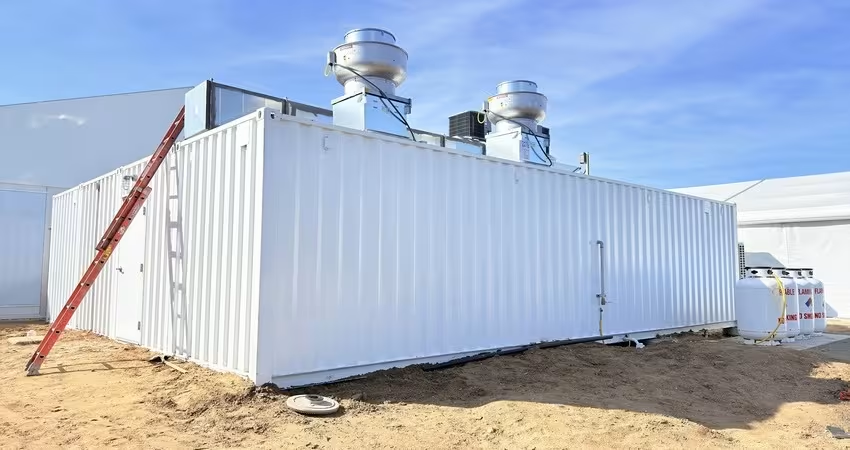
Grease trap requirements in the United States are governed primarily by two model plumbing codes, adopted and amended at the state or local level:
%20vs.%20Uniform%20Plumbing%20Code%20(UPC).avif)
Tip: Always verify which code your jurisdiction follows before specifying a grease trap. Many cities amend the model code with stricter local requirements.
Beyond the model codes, your local Authority Having Jurisdiction (AHJ) — typically the health department, building department, or water utility — sets the final rules. These local authorities determine whether you need an interior trap, an exterior interceptor, or both; what cleaning frequency is required; and what documentation you must maintain. Early engagement with your AHJ is the single most effective way to prevent permitting delays. For more on navigating the permit process for modular kitchens, see our shipping container kitchen permits guide.
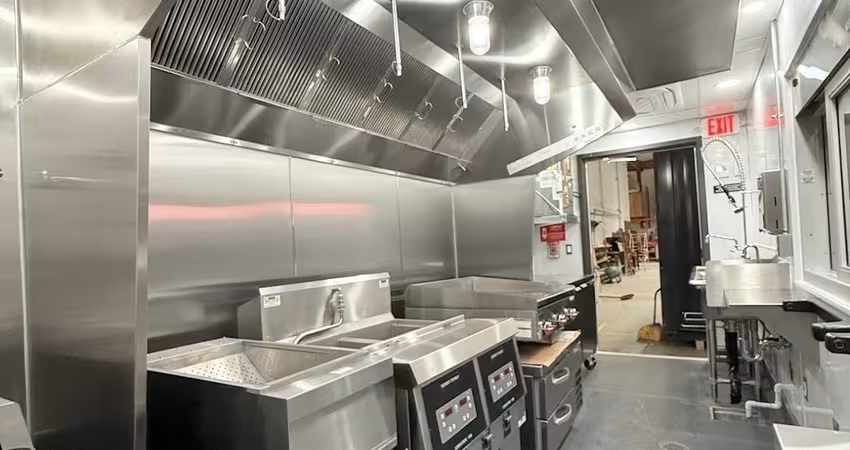
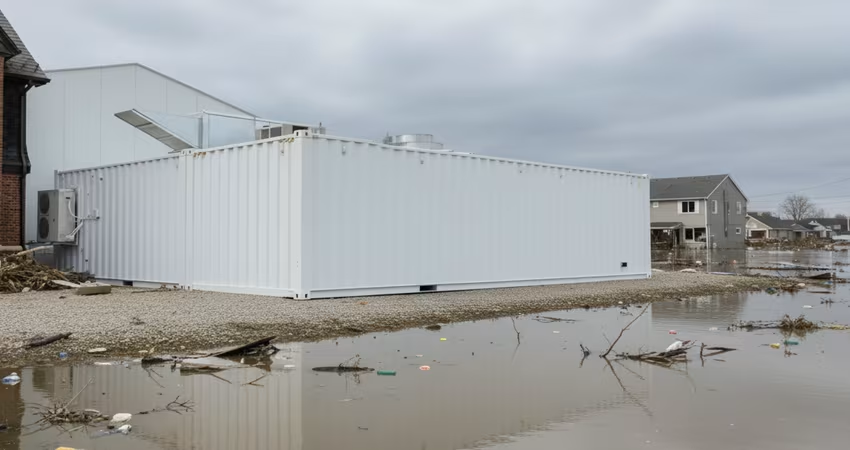
Shipping container kitchens are typically classified as either manufactured structures or modular buildings, depending on the jurisdiction. Regardless of classification, the plumbing systems within them must comply with the same grease management codes as site-built kitchens. ContekPro's modular kitchens are built to the International Building Code and delivered with all MEP systems pre-installed, which streamlines code compliance and reduces the risk of errors during the permitting process.
.avif)
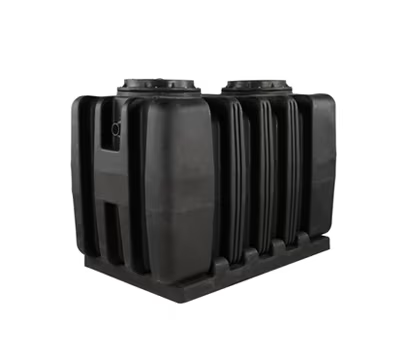
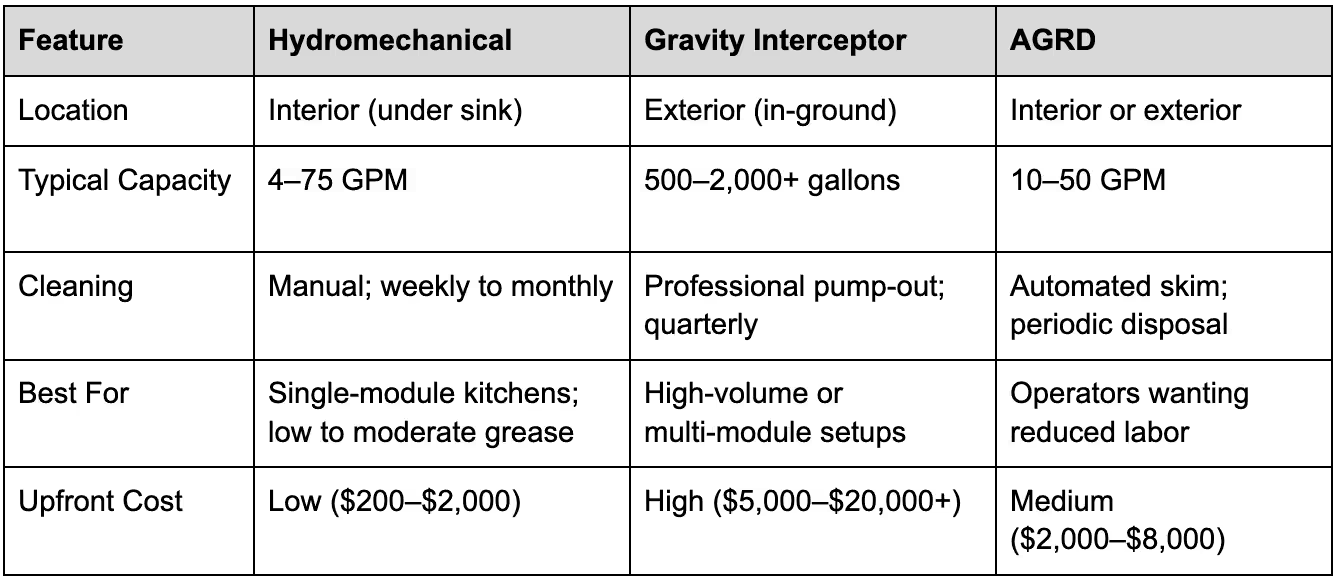
There are three primary categories of grease management devices used in commercial kitchens. Each has distinct advantages and trade-offs in a modular environment:
%20Grease%20Traps.avif)
.avif)
Grease trap sizing is one of the most common points of confusion — and one of the most frequent reasons for failed inspections. The fundamental principle is straightforward: the trap must handle the peak flow rate of all connected grease-producing fixtures without being overwhelmed.
The two most common sizing methods used in the U.S. are:
Tip: For a step-by-step walkthrough of the fixture capacity formula, Thermaco's sizing methodology offers a practical, real-world approach to estimating peak flow accurately.
Beyond flow rate, many jurisdictions require a minimum retention time — the time wastewater remains in the trap to allow separation. Gravity interceptors typically require a 30-minute retention time. The retention factor can range from 1.0 for minimal grease producers (bakeries, cafes) to 2.5 for high-grease operations (fried food, grills).
Container kitchens present specific constraints that influence grease trap selection:
Note: Always obtain AHJ approval on trap sizing before purchasing equipment. Some municipalities will not approve traps under 100 gallons for new commercial installations, regardless of the fixture calculation.

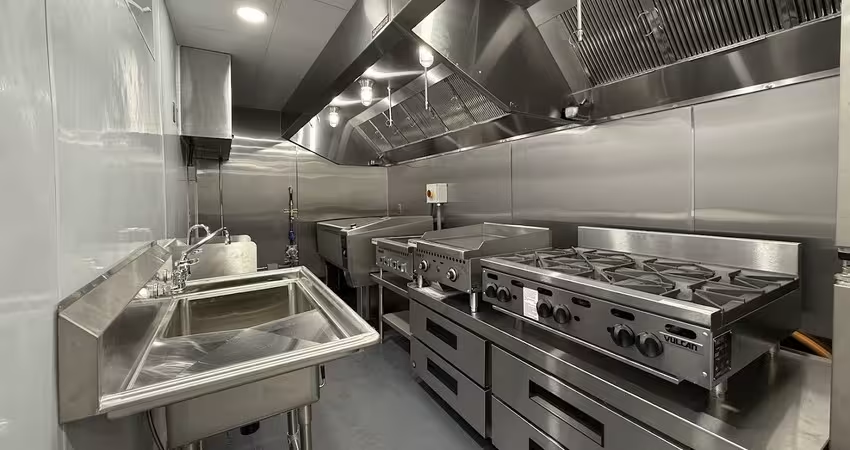
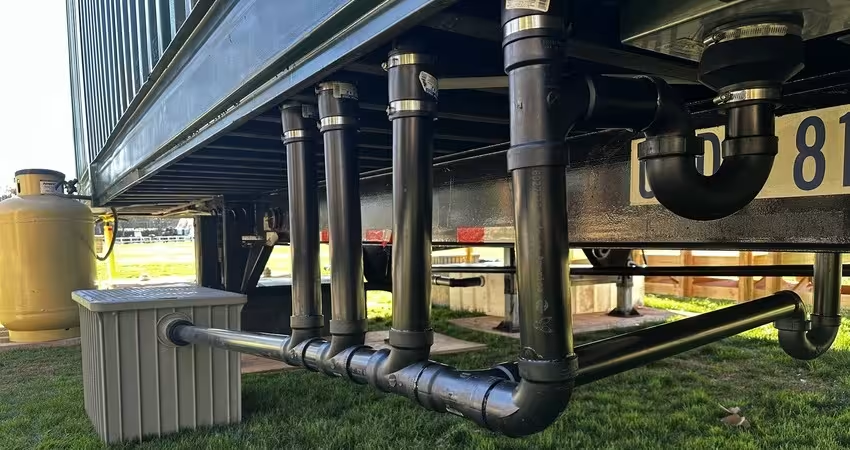
In a shipping container kitchen, the choice between interior and exterior grease trap placement depends on local code, kitchen layout, and grease output. Interior point-of-use traps are installed directly under the 3-compartment sink and capture FOG before it enters the main drain. Exterior gravity interceptors are buried outside the structure and serve the entire kitchen's drainage. Some jurisdictions mandate exterior interceptors for all new commercial kitchens; others permit interior hydromechanical traps as the sole solution for smaller operations.
Regardless of placement, plumbing codes universally require that grease traps be easily accessible for inspection, cleaning, and maintenance. The UPC explicitly states that the use of ladders or removal of bulky equipment to access an interceptor constitutes a code violation. In a container kitchen, this means the trap must be positioned where staff or service technicians can reach it without moving cooking equipment or blocking the kitchen's workflow.
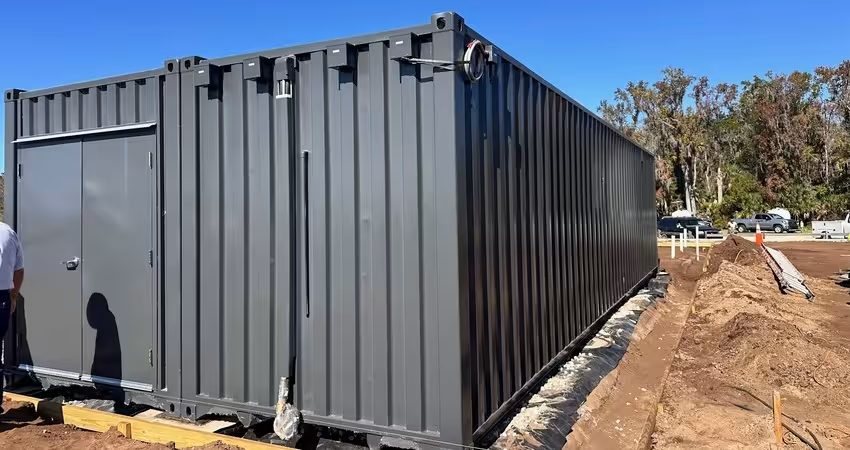
One of the key advantages of prefabricated kitchens is that plumbing, drainage, and utility connections are engineered and installed in a controlled factory environment. When a grease trap requirement is identified during the design phase, the manufacturer can integrate the trap directly into the plumbing layout — ensuring correct pipe slope, fixture connections, venting, and accessibility from day one. ContekPro's engineering team specifies the exact size and location for grease traps during the design and planning phase, which eliminates the costly retrofitting that often plagues traditional builds.
Tip: Request your modular kitchen provider's MEP drawings early and share them with your AHJ. Pre-approval of the plumbing layout — including grease trap placement — prevents inspection surprises at delivery.
The industry-standard benchmark is the 25% rule: clean or pump your grease trap when FOG accumulates to 25% of the trap's total liquid capacity. According to the Boston Water and Sewer Commission, point-of-use traps should be completely emptied at least once a month, while large in-ground interceptors require quarterly pump-outs at minimum. High-volume container kitchens serving fried or grease-heavy menus may need more frequent servicing.
Most jurisdictions require operators to maintain a grease control log that is readily available for AHJ inspection. A compliant log should include:
Note: Keep your grease control log in the kitchen or at the trap location — not in a back office. Inspectors expect it to be immediately accessible during a visit.
A common and costly mistake is adding chemicals, enzymes, or emulsifiers to a grease trap in an attempt to break down FOG. These additives are prohibited in most U.S. jurisdictions because they interfere with the gravity separation process and can cause grease to pass through the trap and into the sewer system. The City of Austin explicitly bans the direct addition of any enzyme, chemical, or microbial agent to a grease trap, with violations carrying penalties of up to $2,000 per day.
Tip: The only additive some municipalities allow is bacteria specifically formulated for aerobic bioremediation. Always check with your local AHJ before introducing any substance into your grease trap.
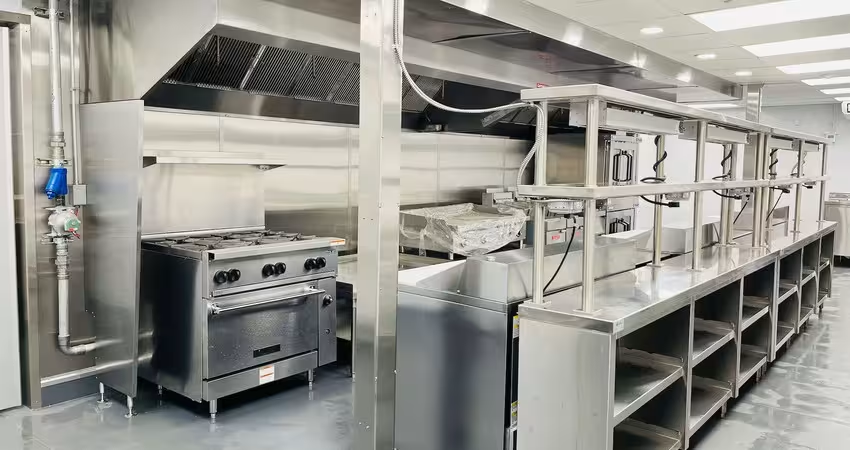
Grease trap compliance in a traditional kitchen build requires coordinating between the general contractor, plumber, kitchen designer, and local inspectors — often with expensive change orders when requirements are misunderstood or missed. Prefabricated modular kitchens eliminate much of this complexity.
When you work with a specialized modular kitchen manufacturer, grease trap integration becomes part of the standard engineering process:
ContekPro's FAQ confirms that grease traps can be installed inside modular kitchens when local code allows, typically under the 3-compartment sink. For operations requiring an exterior interceptor, ContekPro's engineering team specifies the connection points during design to ensure seamless integration once on-site.
Grease trap compliance is not optional, and it is not something to figure out after your shipping container kitchen arrives on-site. From understanding which plumbing code applies in your jurisdiction, to sizing the trap for your specific fixture load, to maintaining cleaning logs that satisfy inspectors — every step matters. The good news is that with proper planning, grease management in a container kitchen is straightforward and often simpler than in a traditional build, especially when the plumbing is pre-engineered by an experienced modular kitchen manufacturer.
ContekPro's shipping container kitchens are delivered with pre-engineered plumbing systems designed to accommodate grease trap installation, whether interior or exterior. Every unit comes with complete MEP drawings, stamped by a licensed PE, ready for your permitting submission. Explore our hotel kitchen solutions to see how we simplify compliance from day one, or contact us to discuss your project.
Yes. Any commercial kitchen that produces FOG — regardless of whether it is site-built or modular — must comply with local plumbing codes requiring grease interceptors or traps. Under both the IPC (Section 1003.3) and UPC (Chapter 10), grease traps are mandatory for food preparation areas with grease-producing fixtures like pot sinks, dishwashers, and floor drains. Container kitchens are held to the same standards as traditional builds.
Sizing depends on the flow rate (GPM) of connected fixtures, your menu's grease output, and local code. For a typical single-module container kitchen with a 3-compartment sink and dishwasher, a hydromechanical trap rated between 20–50 GPM is common. However, sizing should always follow your local AHJ's approved method and be verified by a licensed plumber or engineer.
Yes. Under-sink hydromechanical traps can be installed inside a container kitchen beneath the 3-compartment sink. In-ground gravity interceptors must be installed externally. Local codes dictate which option is required. Compact automatic grease removal devices are increasingly popular in modular kitchens because they combine a smaller footprint with reduced maintenance labor.
Most jurisdictions require cleaning when FOG reaches 25% of the trap's liquid capacity. For interior point-of-use traps, monthly cleaning is a common minimum. Gravity interceptors require quarterly pump-outs. Maintain a grease control log documenting every cleaning — inspectors can request these records at any time.