When floodwaters swept through central Texas Hill Country in July 2025, the Guadalupe River rose 26 feet in 45 minutes — destroying homes, displacing families, and shutting down every kitchen in its path. Within hours, the most urgent question wasn't about rebuilding. It was about feeding people right now.
This article examines how modular shipping container kitchens are emerging as a critical disaster relief tool for food service resilience in flood-prone regions.
A flood doesn't just damage buildings — it systematically dismantles the infrastructure required to prepare and serve food safely. When water enters a commercial kitchen, the consequences cascade:
Note: According to the USDA, congregate feeding — preparing meals in a central location like a mobile kitchen for group service — is typically the first nutrition response activated after a flood, before household food distribution programs can begin.
The numbers tell the story:
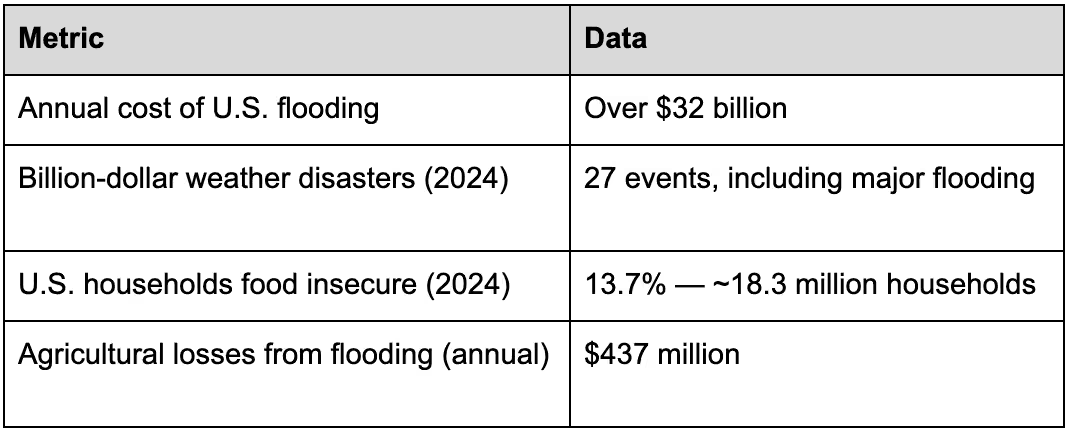
For hospitality operators in flood-prone areas, this means a dual threat: physical damage to kitchens and an immediate obligation to serve guests, staff, and displaced community members.
Tip: If your property is located in a FEMA-designated Special Flood Hazard Area (Zones A or V), your kitchen infrastructure is at elevated risk. A prefabricated kitchen disaster response plan — including a pre-identified modular kitchen provider — should be part of your facility's emergency preparedness strategy.
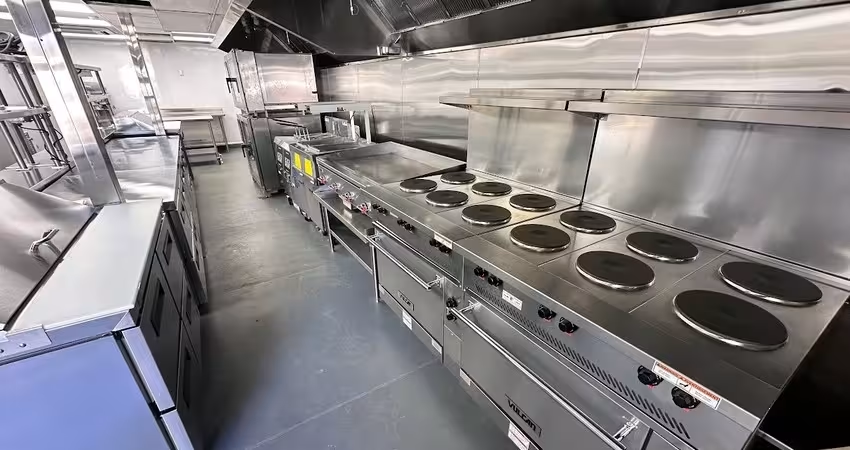
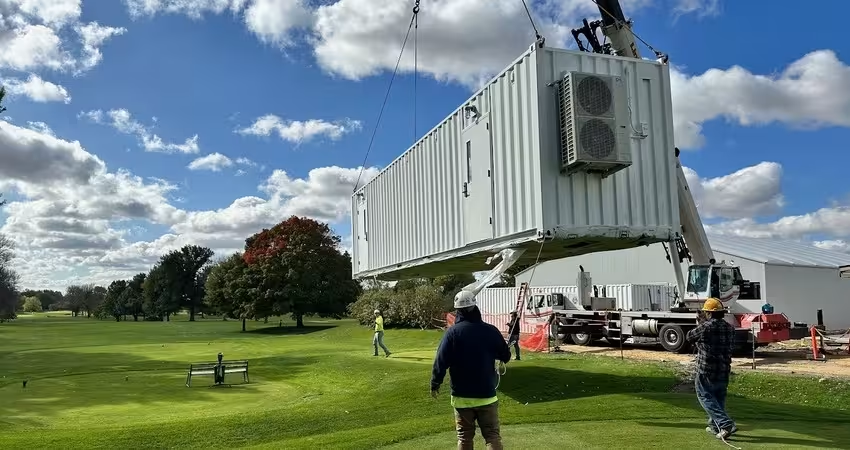
The defining advantage of a shipping container kitchen in a disaster scenario is speed. A pre-built unit can be loaded onto a flatbed truck, transported to a prepared site, and connected to utilities in a fraction of the time required for any conventional build.
For hospitality operators and relief organizations, this speed-to-service gap is what separates feeding people from leaving them without meals for weeks.
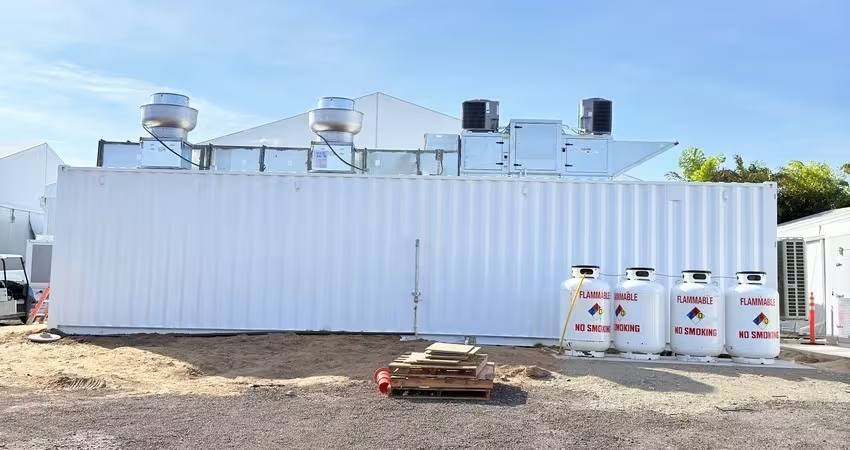
Shipping container kitchens are constructed on corten steel frames — the same material engineered for transoceanic cargo transport. This gives them inherent resilience:
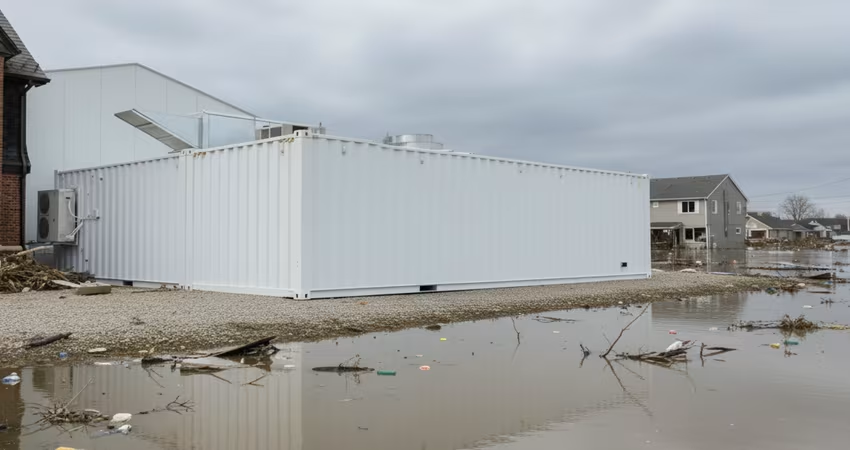
Note: While a shipping container kitchen can withstand contact with rising water, it should be elevated above the Base Flood Elevation (BFE) defined by local floodplain management codes. Proper site preparation includes a raised concrete pad, piers, or compacted gravel base to keep the unit above projected flood levels.
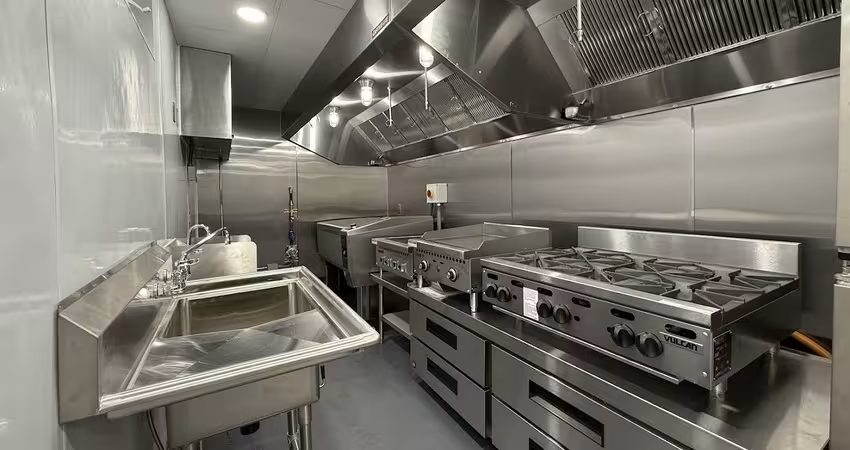
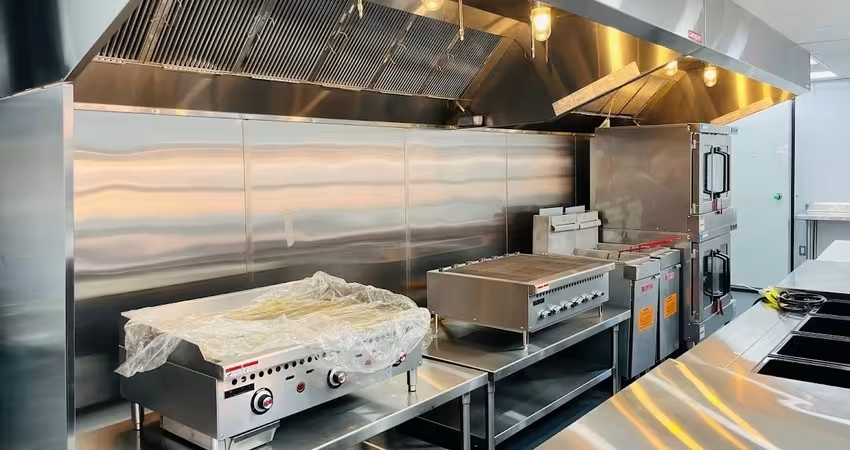
Unlike a traditional kitchen that depends entirely on the building it occupies, a shipping container kitchen is a self-contained operational unit. A well-specified unit arrives with commercial cooking equipment, exhaust hoods with integrated fire suppression (NFPA 96 compliant), HVAC and make-up air systems, plumbing (including 3-compartment sinks and handwash stations), electrical distribution panels, and insulation rated for extreme environments.
A single delivery brings a complete, code-compliant commercial kitchen — not a shell that requires months of trade coordination to finish.
In a disaster, every day without a functioning kitchen is a day communities go without reliable meals. Leading modular kitchen manufacturers deliver units 95% finished with all MEP (mechanical, electrical, plumbing), HVAC, and fire suppression systems pre-installed and inspected before leaving the factory. On-site work is limited to utility connections rather than the full scope of construction, inspections, and equipment installation required for a traditional build.
Tip: When evaluating a modular kitchen for disaster preparedness, confirm the manufacturer provides complete architectural drawings signed by a licensed Professional Engineer (PE). This accelerates permitting with your local Authority Having Jurisdiction (AHJ), even during emergency fast-track approvals.
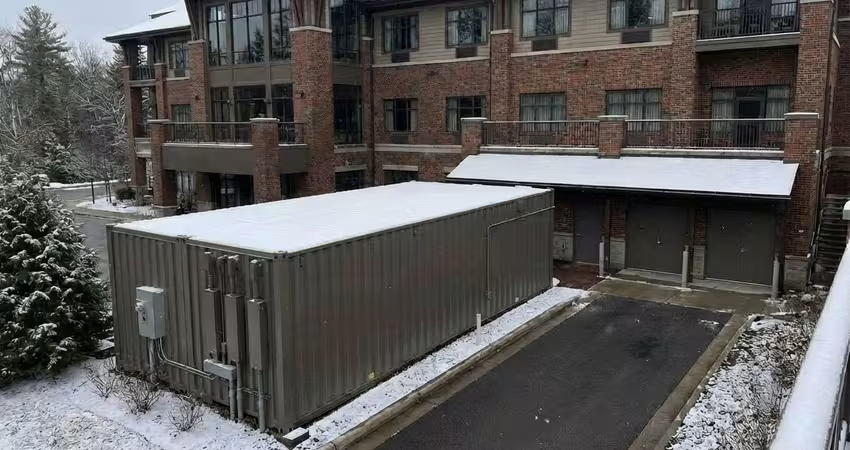
Flood zones shift. Recovery efforts move. A shipping container kitchen can move with them.
Hotels, resorts, and private clubs in flood-prone coastal and riverine areas increasingly view modular kitchens as business continuity infrastructure. When a resort's main kitchen is damaged by a hurricane, traditional reconstruction takes 12–18 months. A shipping container kitchen deployed within weeks keeps food service operational, protects revenue, and maintains the guest experience while permanent repairs proceed.
Government agencies and nonprofits are the other major deployers. The USDA's disaster feeding programs authorize mobile and modular kitchens for congregate meal service in presidentially declared disasters. Organizations like Feeding America rely on rapidly deployable kitchen infrastructure to distribute emergency food at scale.
For these organizations, a shipping container kitchen offers something a tent kitchen or food truck cannot: commercial-scale disaster relief food service, full health and fire code compliance, and the durability for extended deployment.
Even in emergencies, food safety and building codes apply. However, many jurisdictions offer expedited permitting for disaster response structures.
Tip: Keep your modular kitchen's architectural drawings, engineering certifications, and inspection reports in a cloud-accessible digital file. In a disaster, you may not have access to your office — but your permitting authority will still need documentation.
Flooding isn't a question of if — it's a question of when. For hospitality operators and emergency planners in flood-prone areas, the time to plan your kitchen resilience strategy is before the water rises.
ContekPro manufactures permanent-grade, turnkey shipping container kitchens engineered for rapid deployment, code compliance, and harsh-condition durability. Our modular kitchens range from 160 to 6,400 square feet, backed by complete architectural and engineering documentation.
Request a quote to discuss how a modular kitchen can protect your operation — and your community — when it matters most.
Yes. They arrive pre-assembled with cooking equipment, ventilation, plumbing, and fire suppression already installed, and can be connected to utilities within days. The USDA recognizes modular and container-based kitchens as viable solutions for high-volume emergency food preparation.
A pre-built unit can be placed on-site within days once a level pad and utility connections are ready. If already manufactured, deployment from factory to operational status can happen in one to two weeks — compared to 12–18 months for traditional construction.
They're built on corten steel frames engineered for ocean transit, rated for winds up to 130–150 mph, and designed to bear stacking loads exceeding 20,000 lbs. They are inherently water-tight, and when elevated above the Base Flood Elevation on a proper foundation, they can operate safely through flood events.