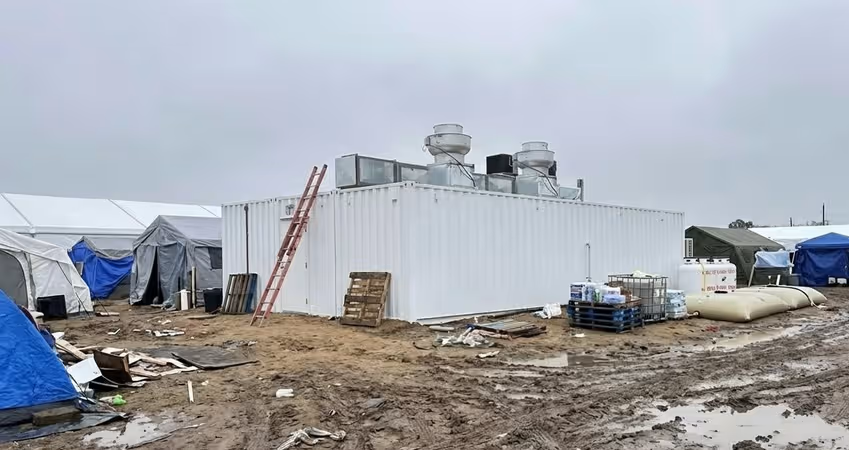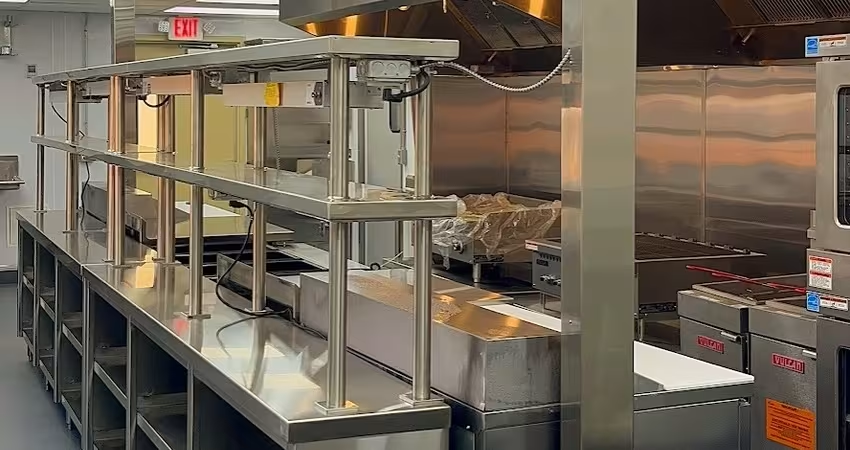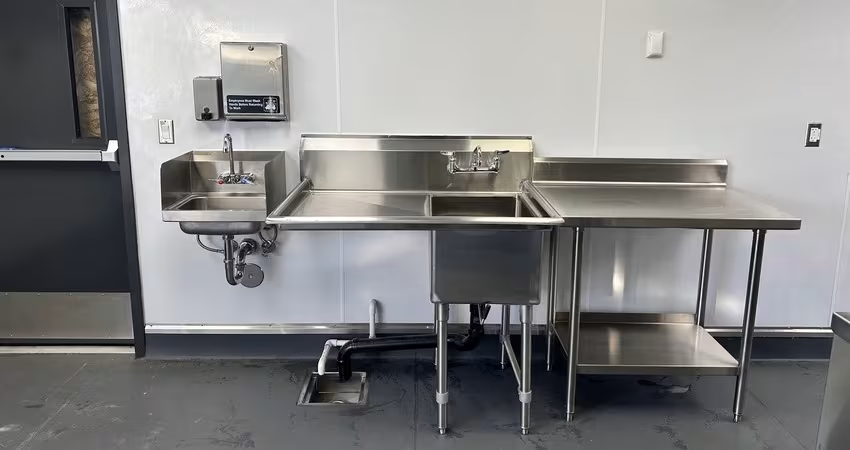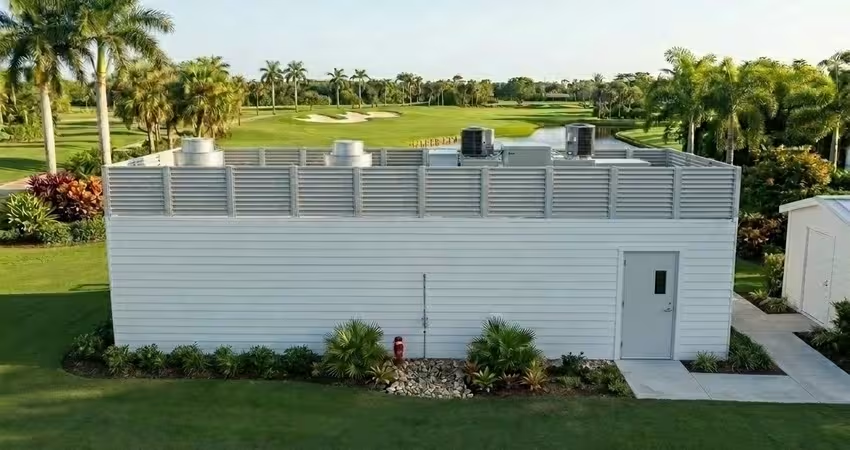
A general manager at a lakeside resort sits across from a board reviewing capital expenditure proposals. The modular kitchen option is 30% cheaper and deployable in eight weeks. But someone around the table raises an objection that kills the conversation: "Won't it wear out in a few years?"
That question — and the misconception behind it — is one of the most persistent myths in commercial foodservice construction. Modular kitchen lifespan is widely misunderstood, largely because "modular kitchen" means something very different in a home renovation context than it does in commercial foodservice.
This article sets the record straight, giving hospitality operators the technical facts they need to make a confident, informed decision.
Search "modular kitchen lifespan" online and the results are dominated by content from residential interior design brands — mostly targeting homeowners in India and the UK. These kitchens are built with MDF (medium-density fibreboard), particle board, and laminate — materials with a design life of 7–15 years in humid kitchen environments. When cabinets swell, laminates peel, and hinges corrode, operators hear about it.
The problem: that narrative gets incorrectly applied to commercial prefabricated modular kitchens, which are a fundamentally different product category built from fundamentally different materials.
Note: The residential "modular kitchen" market (cabinetry units assembled on-site) has almost nothing in common with commercial prefabricated modular kitchens (factory-built steel structures delivered turnkey). Confusing the two is like comparing a flatpack wardrobe to a steel-frame office building.
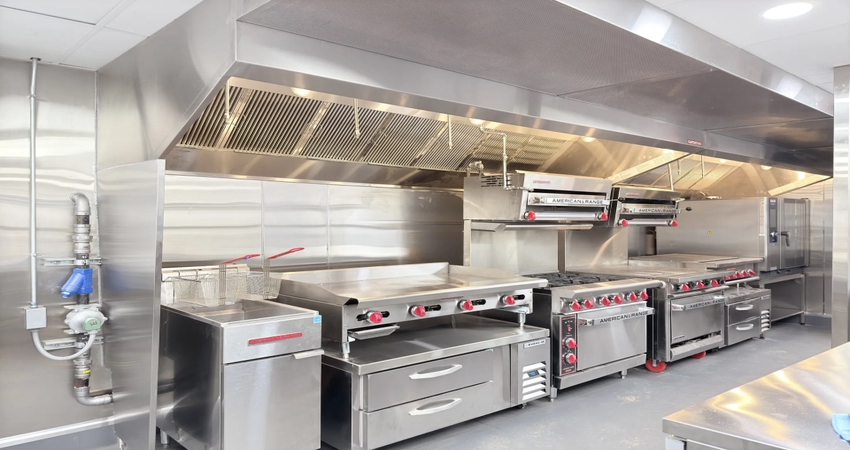
A commercial prefabricated modular kitchen is not a cabinet system. It is a complete building module — a steel-framed, code-compliant structure manufactured off-site, shipped pre-assembled, and placed on a prepared foundation. It contains:
This is a permanent structure, not a modular furniture installation.
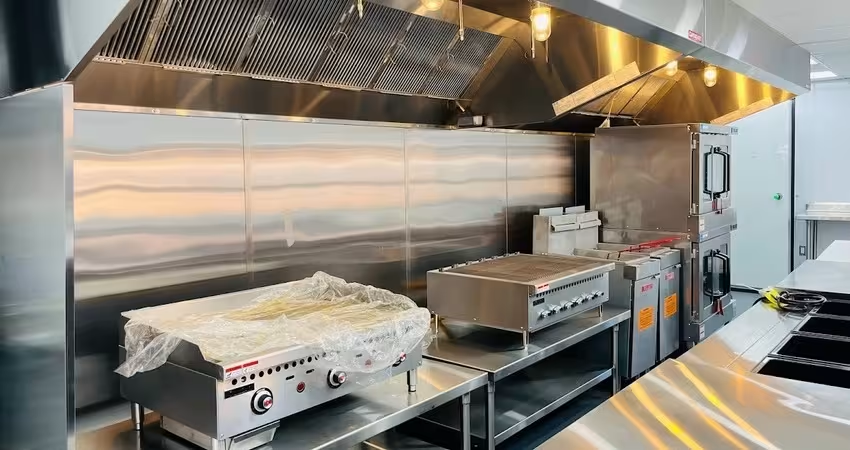
The backbone of a high-quality commercial prefabricated kitchen is its Corten steel (COR-TEN®) structure. Originally developed for the shipping industry to withstand decades of ocean exposure, Corten steel forms a self-protecting rust patina that prevents deeper corrosion — without paint or additional coatings. According to iBUILT, steel-frame modular buildings outperform wood-frame alternatives specifically because steel is fire-resistant, immune to pest damage, and does not warp under load.
Interior metal stud framing and NSF-certified stainless steel surfaces add further durability, resisting the grease, moisture, heat, and intensive daily cleaning cycles that define commercial kitchen environments.
Tip: When evaluating any prefabricated commercial kitchen, ask specifically about the structural frame material. Corten or structural steel framing is a non-negotiable indicator of long-term durability.
Traditional on-site construction is subject to weather exposure, labor inconsistencies, and sequencing errors that can compromise structural integrity from day one. Prefabricated modular kitchens are built in climate-controlled factory environments with precision CNC tooling, automated quality checks, and consistent assembly procedures. According to the Modular Building Institute, factory-built construction produces tighter dimensional tolerances and fewer defects than field-built alternatives — both of which directly extend the operational lifespan of the structure.
A permanent modular commercial kitchen must meet the same standards as any traditionally built commercial facility. Reputable manufacturers engineer to International Building Code (IBC) requirements and submit units for third-party inspection, receiving a HUD tag where applicable. Compliance with NFPA 96 for ventilation and fire suppression, ENERGY STAR equipment standards, and NSF sanitation requirements ensures the structure is designed and built for decades of heavy commercial use — not years.
Note: Third-party inspection is a meaningful durability indicator. A unit that has passed independent structural, fire, and MEP inspection has been verified to meet the same standards as a traditionally built commercial kitchen.
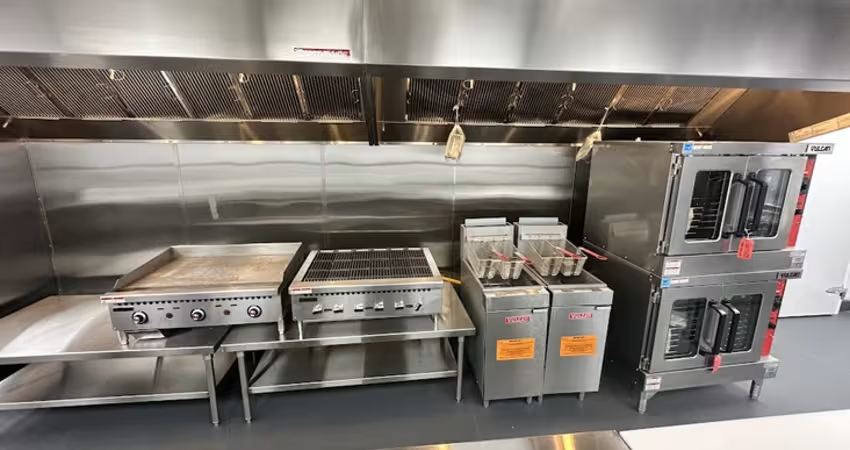
Steel-frame prefabricated structures, including permanent modular commercial kitchens, are engineered for a design life of 30 to 50+ years — comparable to traditional brick-and-mortar construction. As Elite Systems GB notes in their analysis of permanent modular buildings, modern prefabricated structures have matured into robust, durable assets capable of serving for decades. The key distinction is between permanent and temporary modular construction — a distinction that goes beyond marketing language.
According to Mobile Modular, permanent modular buildings placed on a foundation are a long-lasting investment equivalent to site-built structures, because they do not undergo the repeated stress cycles — assembly, transport, disassembly — that degrade temporary relocatable units.
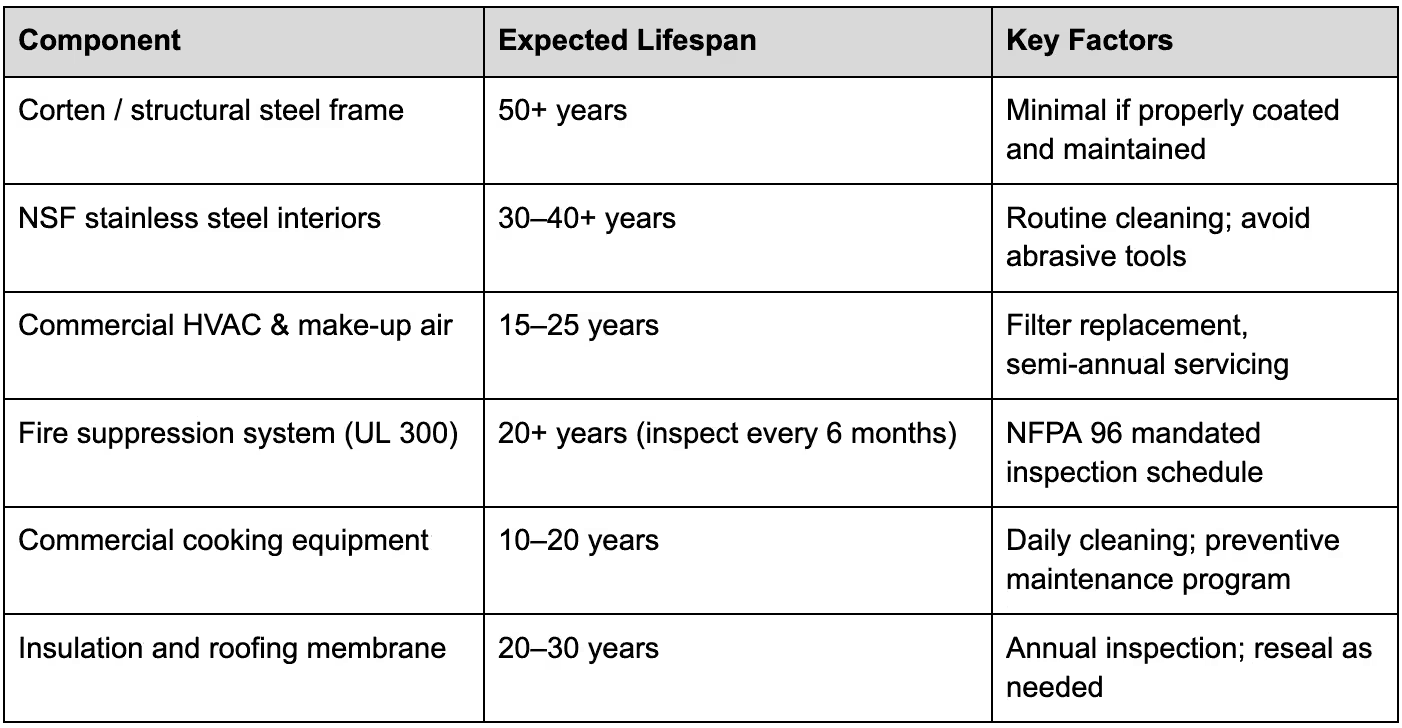
Not every element of a commercial kitchen has the same lifespan. Understanding component-level expectations helps operators plan maintenance budgets and replacement cycles accurately.
Like any high-performance commercial facility, a prefabricated modular kitchen's lifespan is not passive — it is a product of structured maintenance. Operators who treat their modular kitchen the same way they treat their brick-and-mortar facility will achieve the full design life of 30–50+ years.
Key maintenance priorities include:
Tip: Most major component failures in commercial kitchens — modular or traditional — are preventable. Build a 12-month preventive maintenance schedule into your operating budget from day one.
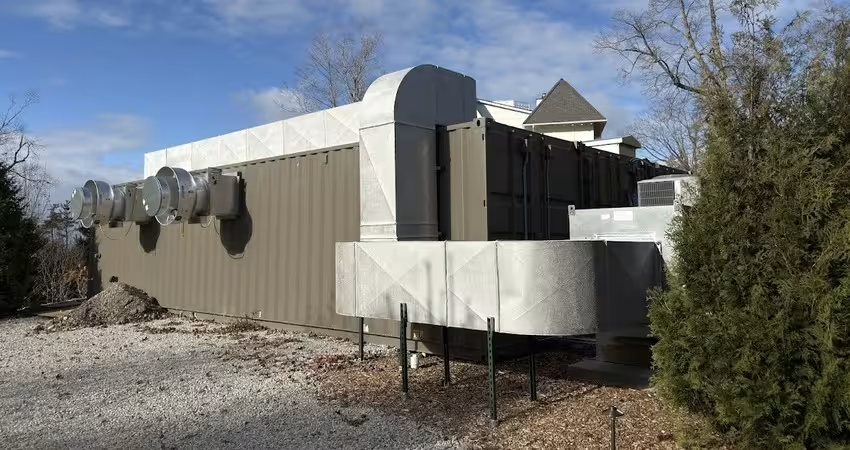
One of the most persistent myths is that a modular kitchen vs. brick and mortar comparison always favors traditional construction for long-term durability. The data tells a different story.

From a pure durability standpoint, a steel-frame permanent modular kitchen matches brick-and-mortar construction across every major structural category — while offering meaningful advantages in quality control, depreciation, and asset flexibility. For a deeper look at financial performance, see ContekPro's analysis of modular commercial kitchens for resorts.
Not all prefabricated kitchen manufacturers are equal. Before committing to any supplier, hospitality operators should ask the following:
When evaluating prefabricated commercial kitchen durability, the following standards are non-negotiable for a hospitality application:
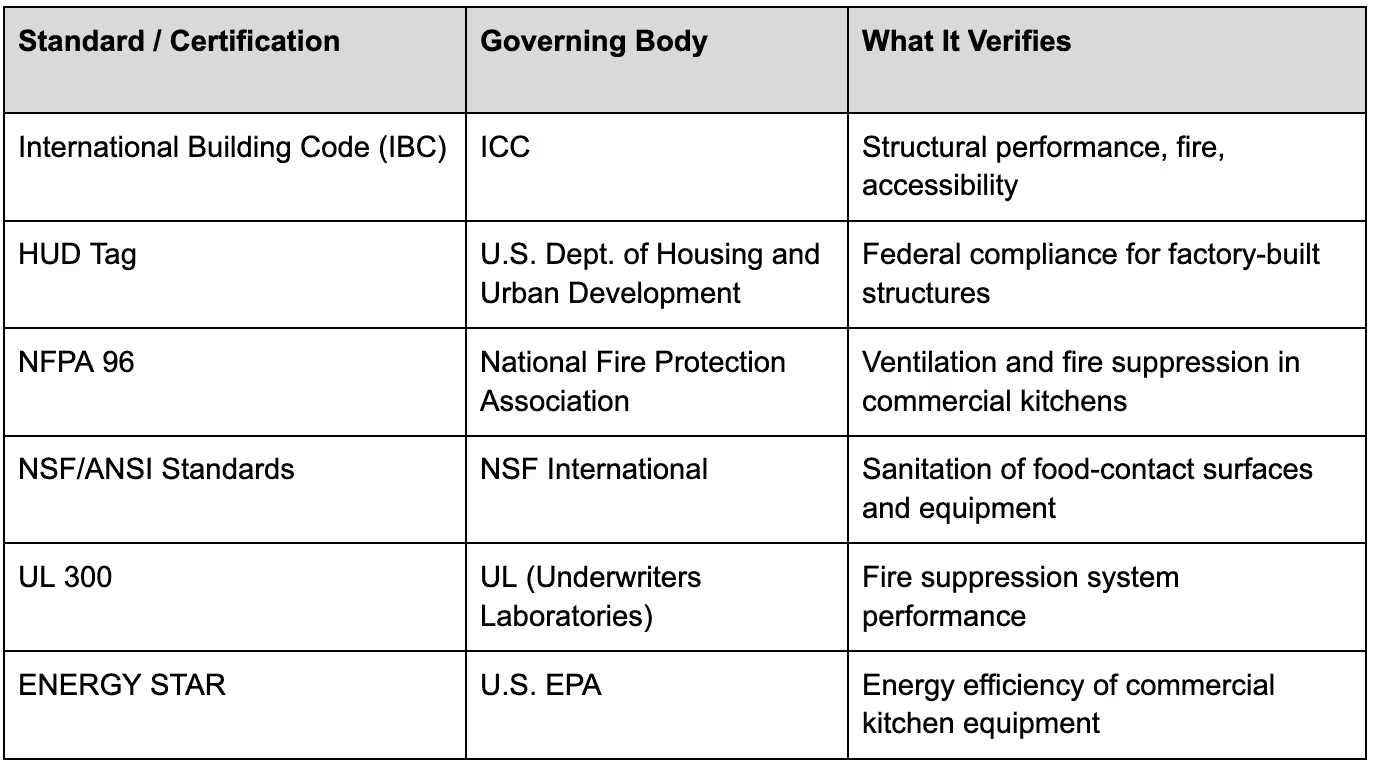
For a technical overview of how these standards apply to specific systems, ContekPro's modular construction and sustainability guide provides further detail. You can also review shipping container kitchen benefits to understand how compliant modular kitchens perform across diverse hospitality environments.
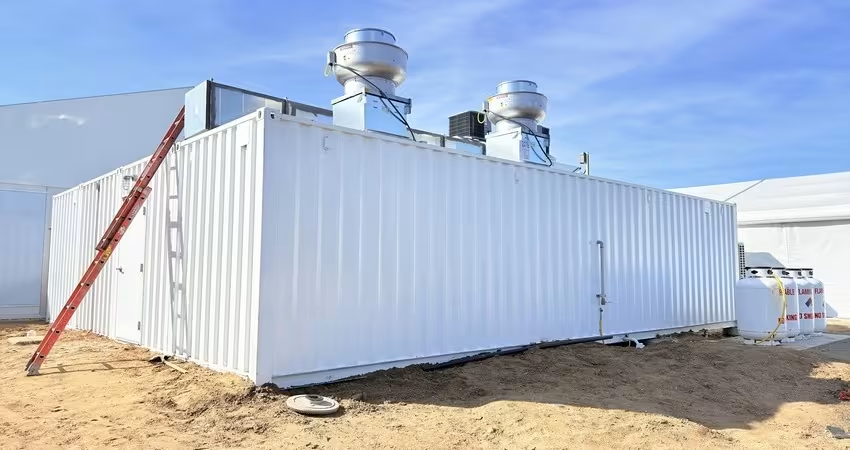
A permanent modular commercial kitchen from a qualified manufacturer delivers the structural durability of brick-and-mortar construction — in a fraction of the time and with greater financial flexibility. Explore ContekPro's hotel kitchen solutions and our full range of modular kitchen models — or request a quote to discuss your project with our team.
A commercial prefabricated modular kitchen built with a steel structural frame is engineered for a design life of 30 to 50+ years — comparable to traditional brick-and-mortar construction. The confusion often stems from residential modular kitchens (MDF/particle board cabinetry) which typically last 10–15 years. Commercial-grade units use Corten steel structures, NSF-certified interiors, and factory-installed MEP systems built to IBC standards, making them a genuinely permanent infrastructure investment.
Not all modular kitchens are temporary. Permanent modular kitchens — the kind deployed by hotels, resorts, country clubs, and QSRs — are placed on permanent foundations, engineered to full IBC standards, and carry third-party inspections and HUD tags where applicable. They are classified and financed as permanent structures. Temporary or relocatable modular units are a separate product category, typically used for short-term construction support or event catering.
When built with commercial-grade materials and properly maintained, a prefabricated commercial kitchen matches or exceeds the durability of site-built construction. Steel-frame modular structures are inherently fire-resistant, pest-resistant, and free from the weather-related quality inconsistencies common in on-site construction. Factory manufacturing also ensures tighter tolerances and more consistent MEP integration. For hospitality operators, the comparison often favors modular on total cost of ownership, factoring in the 7-year depreciation schedule and higher resale value as a moveable asset.