A hotel F&B director signs off on a $400,000 kitchen renovation with a 12-week timeline. Six months later, the project is still unfinished. Permits stalled. Equipment backorders pushed installation out by eight weeks. Every day the kitchen stays offline, the property loses $3,000–$5,000 in food and beverage revenue.
For a 200-room full-service hotel generating $15,000–$25,000 per day in F&B revenue, even a two-week delay can mean $210,000–$350,000 in lost income. During peak season, the financial impact is even greater.
This scenario plays out across the hospitality industry with alarming regularity. According to the National Restaurant Association, 90% of commercial construction projects experience budget overruns — and timelines are equally unreliable. For hotels, resorts, and private clubs, commercial kitchen construction downtime isn't just an inconvenience — it directly erodes guest satisfaction and bottom-line performance.
This guide breaks down the most common causes of commercial kitchen construction downtime and eight actionable strategies to reduce kitchen construction delays and protect your revenue.
Commercial kitchens require approvals from multiple agencies — building departments, fire marshals, health departments, and sometimes environmental review boards. In major U.S. markets, permit processing alone averages 3–6 weeks, and multi-agency inspection sequences can stall progress for days or weeks at a time.
The International Code Council (ICC) publishes the International Building Code that governs commercial kitchen construction. Compliance with NFPA 96 for ventilation and fire suppression adds another layer of inspection requirements.
Tip: Engage your local Authority Having Jurisdiction (AHJ) before design finalization — not after. Early conversations identify jurisdiction-specific requirements that can be designed in from the start, avoiding costly rework.
Commercial-grade kitchen equipment — walk-in coolers, ventilation hoods, combi ovens — can carry lead times of 10–16 weeks. According to the Bureau of Labor Statistics, the U.S. construction industry continues to face labor shortages and supply chain pressures that compound procurement delays.
When equipment arrives late, it creates a cascading effect. Plumbing and electrical rough-in can't be completed. Hood installation stalls. Final inspections get pushed back. One late delivery can add weeks to the overall commercial kitchen renovation timeline.
A typical commercial kitchen build involves 6–10 specialized trades: general contractor, plumber, electrician, HVAC technician, fire suppression installer, hood fabricator, equipment supplier, health code consultant, and more. When these trades aren't sequenced properly, the result is idle crews, rework, and compounding delays.

Don't wait until construction drawings are complete to begin the permitting conversation. Schedule a pre-application meeting with your building department, fire marshal, and local health department during the design phase.
This accomplishes three things:
Tip: Keep a dedicated permit tracking log with submission dates, reviewer names, and follow-up deadlines. Assign one team member to own the permitting timeline end-to-end.
For properties that cannot afford a full kitchen shutdown, phased construction keeps portions of the kitchen operational while other sections are renovated.
A typical phased approach:
Phased construction extends the overall project duration, but it preserves partial food service capacity throughout. This is particularly valuable for resorts and clubs where closing entirely during peak season isn't an option.
Note: Phased construction requires more detailed planning and a contractor experienced in working around active food service operations. Not all general contractors are equipped for this.
Equipment procurement should begin during the design phase — not after construction starts. Work with your kitchen design consultant and equipment supplier to:
This single step can eliminate 8–12 weeks of delays by ensuring equipment arrives when the site is ready for installation, not months after.
Not all construction methods carry the same timeline risk. Traditional stick-built commercial kitchens require sequential on-site work — foundation, framing, MEP rough-in, insulation, finishing, equipment installation, and inspection — with each step dependent on the last.
Prefabricated kitchen construction compresses this sequence by shifting 80–95% of the build to a controlled factory environment. While site preparation occurs on-property, the kitchen itself is being manufactured, equipped, and inspected off-site simultaneously.
According to the Modular Building Institute, off-site construction methods can reduce project timelines by 30–50% compared to traditional approaches — directly addressing the root causes of commercial kitchen construction downtime.
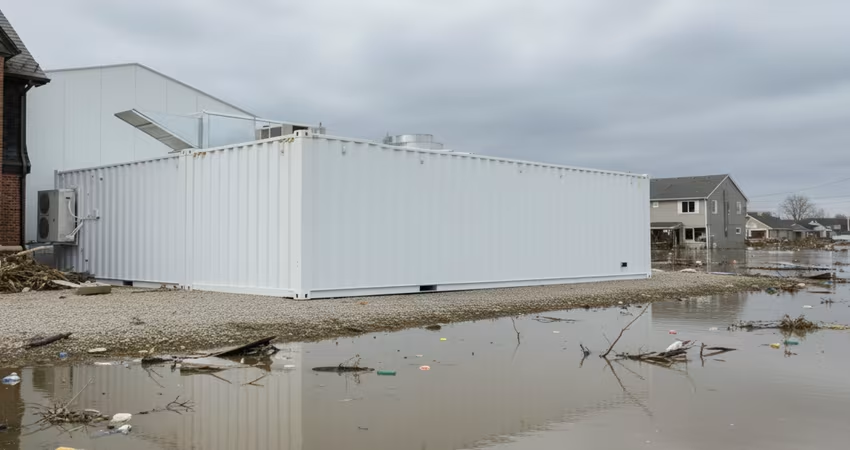
Note: This parallel-path approach is especially valuable for hospitality properties in remote or logistically challenging locations (islands, mountain resorts, desert properties) where on-site construction faces additional constraints.
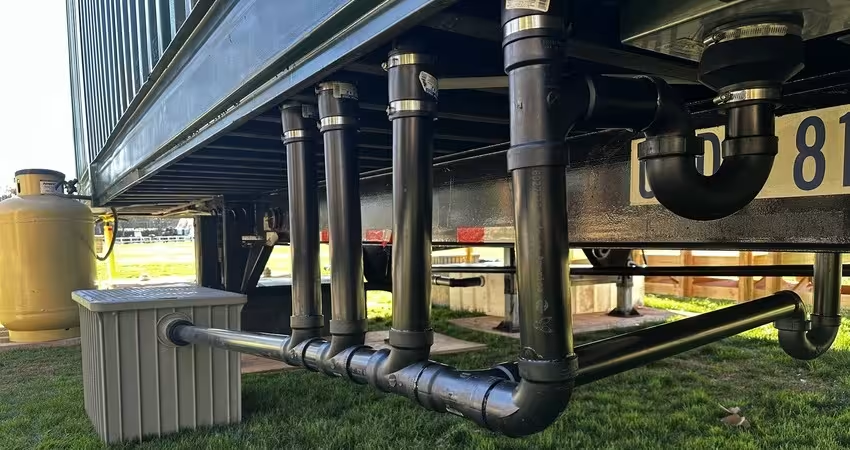
Utility work — water, gas, electrical, and sewer connections — is one of the most overlooked sources of construction delay. Site conditions, municipal coordination, and underground infrastructure surprises can each add weeks to the schedule.
Before construction begins:
Properties that pre-plan utility infrastructure before the kitchen arrives on-site can reduce installation time from weeks to days. This is one area where the difference between a well-managed project and a delayed one is most pronounced.
If full kitchen shutdown is unavoidable, plan for interim food service from day one — not as an afterthought.
Options include:
Tip: Budget for interim food service as a line item in your construction pro forma, not a contingency. It's a predictable cost that protects revenue.
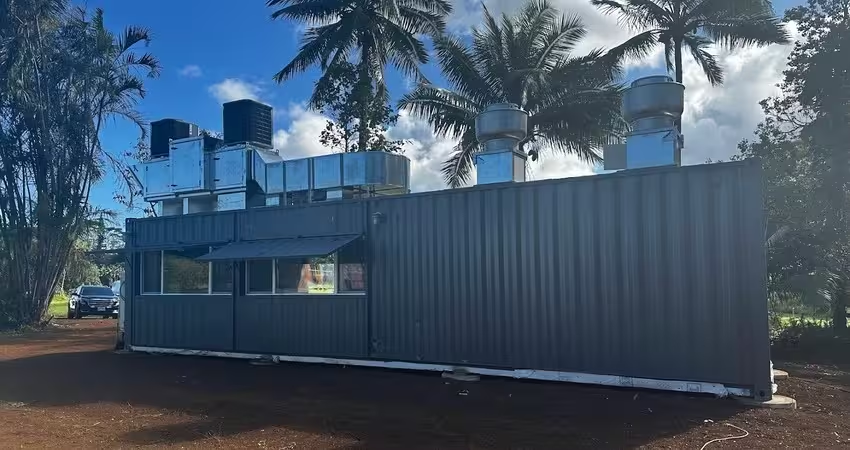
General contractors who specialize in hospitality understand what their residential and commercial counterparts don't: guest experience cannot be compromised during construction.
Hospitality-experienced contractors know how to:
Interview contractors specifically about their hospitality project history. Ask for references from hotel or resort clients, not just restaurant projects.
The most common planning mistake in commercial kitchen construction is optimism. Operators and contractors routinely underestimate permit timelines, equipment lead times, and inspection cycles.
Build buffer into the schedule at three critical points:
These buffers don't add cost — they add certainty. And for hospitality properties planning around seasonal openings, conferences, or holiday periods, schedule certainty is worth its weight in revenue.
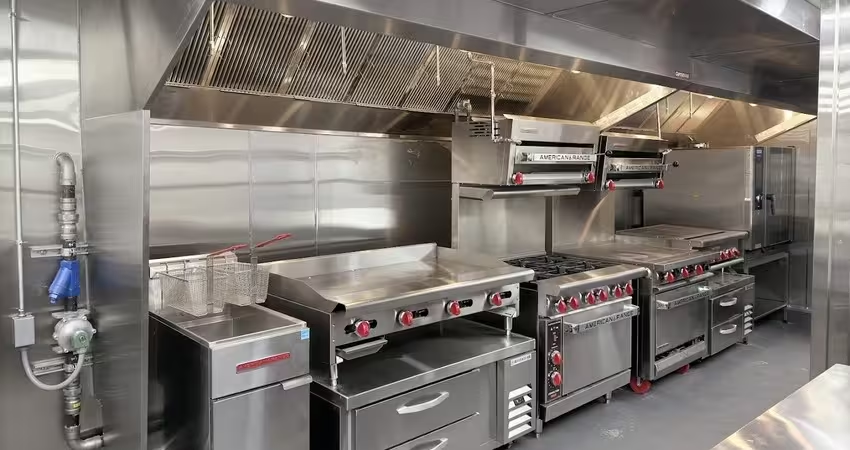
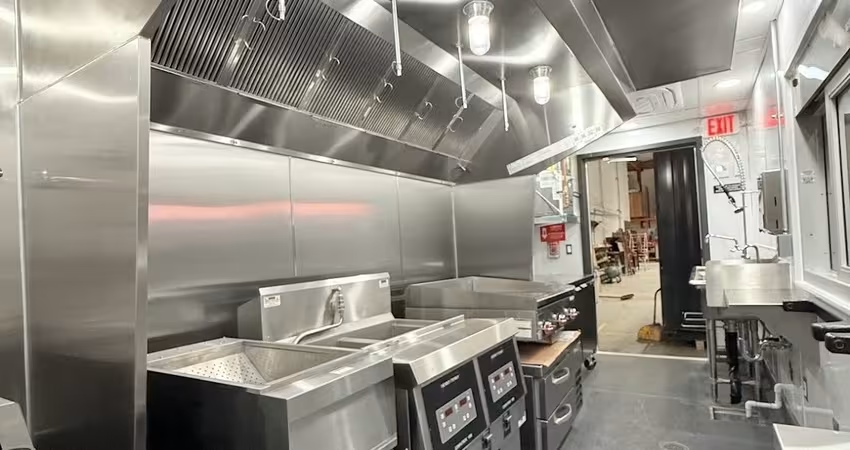
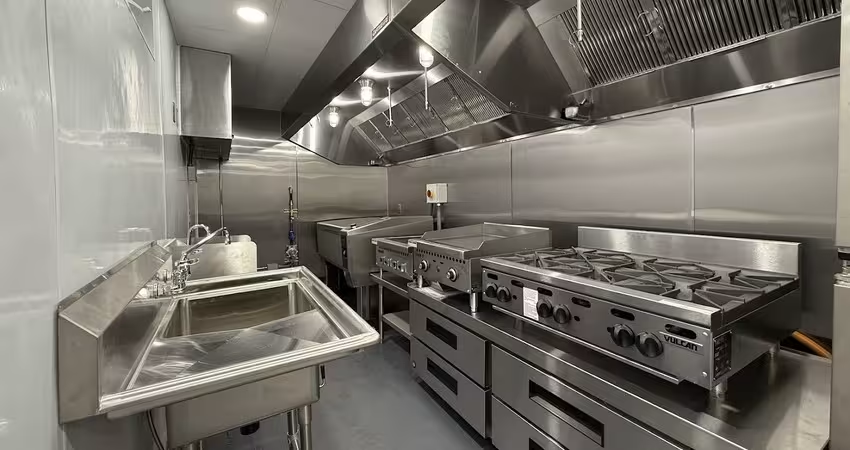
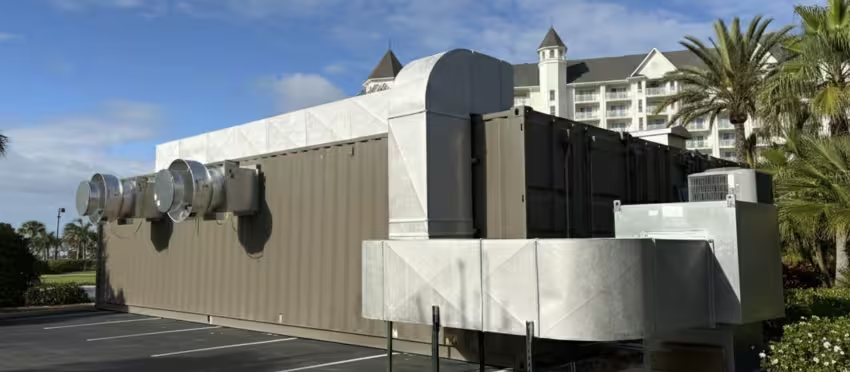
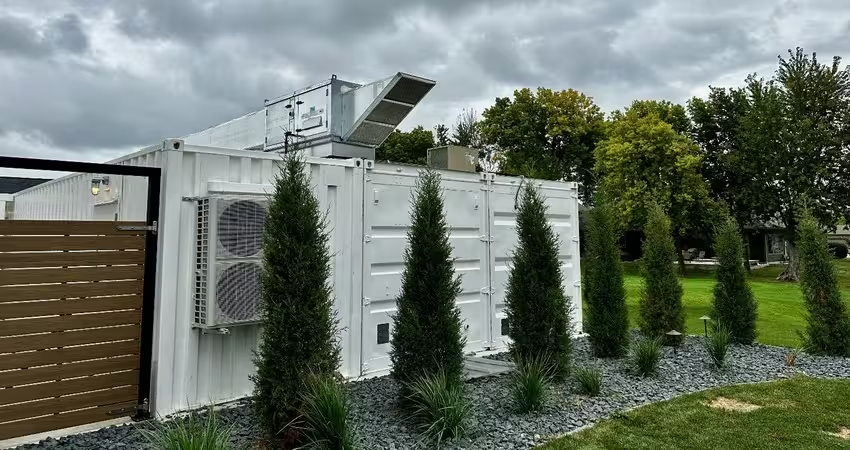
For operators where commercial kitchen construction downtime is not an option, ContekPro’s prefabricated modular kitchens offer a parallel-path solution.
Kitchens are manufactured off-site in a controlled factory environment while your existing operations continue. When delivered, units arrive up to 95% complete with:
On-site disruption is reduced to delivery and final hookups — typically measured in days rather than months.
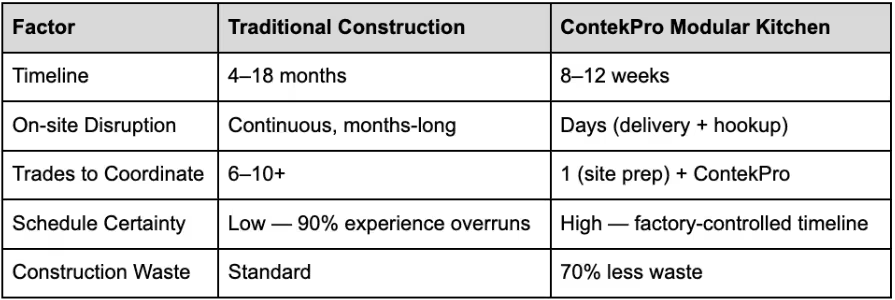
Learn more about how ContekPro's streamlined delivery process works.
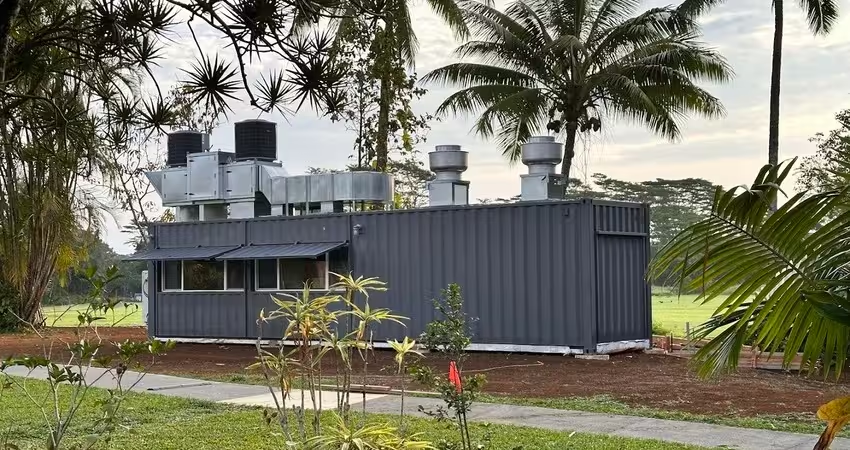
If you're planning a commercial kitchen project and schedule certainty is critical, prefabricated modular kitchens offer a faster, more predictable path to launch — compressing timelines by up to 50% and minimizing on-site disruption for your guests and operations.
Explore our hotel kitchen solutions or contact our team to discuss your project timeline.
Traditional commercial kitchen construction typically takes 4 to 18 months depending on project scope, permitting timelines, and equipment lead times. Full-scale hotel or resort kitchens with custom MEP systems, multi-agency inspections, and complex layouts trend toward the longer end. Prefabricated modular kitchens can reduce this commercial kitchen renovation timeline by up to 50%, with deployment in as little as 8–12 weeks from contract to operation.
Yes, but it requires strategic planning. Phased construction allows portions of the kitchen to remain operational while other sections are renovated. Alternatively, temporary mobile kitchens or satellite prep stations can maintain food service throughout the renovation. The key is coordinating with your contractor on a sequenced schedule that protects both revenue and FDA Food Code compliance.
Permitting and inspection bottlenecks are the most common drivers of commercial kitchen construction downtime. In major U.S. markets, permit processing alone averages 3–6 weeks. Equipment procurement is the second major cause — commercial-grade appliances can have lead times of 10–16 weeks. Poor coordination among multiple trades (plumbing, electrical, HVAC, fire suppression) compounds these delays further. The most effective way to reduce kitchen construction delays is to address all three risk areas in parallel during the planning phase.