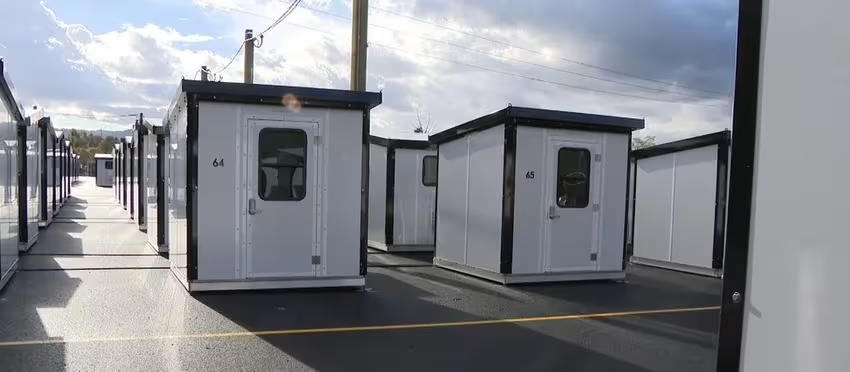
Guest contributor: Șermin Yeșilada, Founder, Sosyal Architecture and Community Development
Homelessness in the United States has reached levels not seen in decades. The 2024 Annual Homeless Assessment Report recorded over 770,000 people experiencing homelessness on a single night — the highest figure since tracking began. At the same time, chronic construction labor shortages and rising costs are making traditional building methods slower and more expensive than ever. Municipalities and nonprofits need faster, more cost-effective, and more humane ways to build shelter facilities.
Modular construction for homeless shelters is emerging as a compelling answer. But speed and savings alone are not enough. A shelter must also support healing, dignity, and community — goals that require intentional, trauma-informed design from the start.
We spoke with Șermin Yeșilada, an architect with 20 years of experience across commercial, healthcare, and residential design, to explore how modular shelter facilities can be designed to serve people experiencing homelessness without further institutionalizing their experience. Yeșilada, who founded Sosyal Architecture and Community Development in 2021, has worked on projects ranging from emergency outdoor shelters and transitional micro villages to motel conversions and congregate shelters. She also brings personal experience with neurodiversity, brain injury, and generational trauma — a perspective that deeply shapes her design philosophy.
This is Part 1 of a two-part series. In this article, we cover design challenges, trauma-informed principles, the critical role of communal kitchens, and how modular construction addresses accessibility and durability requirements. Part 2 will explore shelter guest and community perspectives, cross-sector partnerships, and practical guidance for organizations.
The current homelessness crisis is not simply a housing problem — it is a humanitarian emergency. As Yeșilada frames it: "Whether from natural disasters, rising housing costs, domestic violence, or loss of existing affordable housing stock, homelessness is a humanitarian emergency. Essentially, we have internally displaced people, as defined by the United Nations Refugee Agency."
With significant federal cuts to the Housing and Urban Development department budget dating back to the 1980s, the country is now chasing four decades of underinvestment in social housing. Additional budget reductions and widening income inequality have stretched local municipalities thin and pushed more people into homelessness.
Building a shelter through conventional construction faces the same challenges that affect commercial and hospitality projects but with higher stakes and tighter budgets. Traditional shelter construction is constrained by several factors:
Note: According to McKinsey & Company, modular construction can reduce project timelines by 30–50% and cut costs by 20–30% compared to traditional methods — critical advantages when every week without shelter puts lives at risk.
.avif)
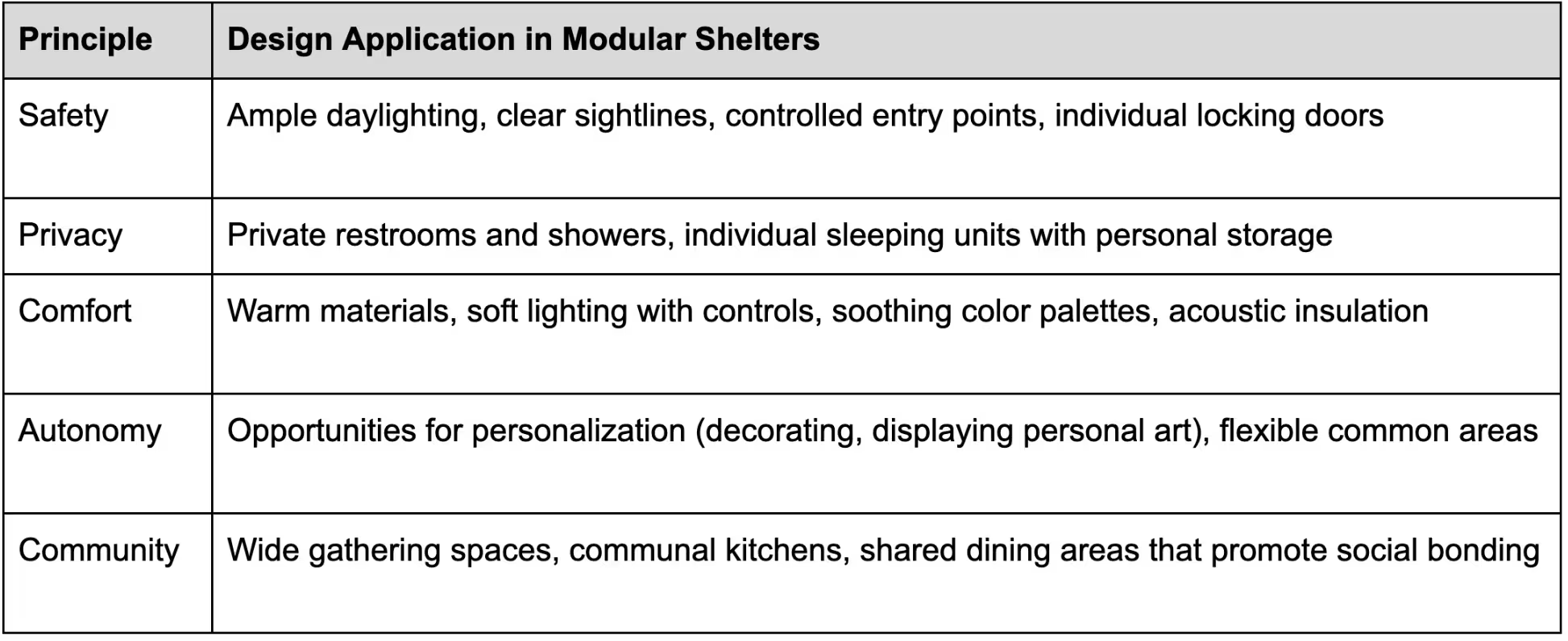
Trauma-informed design (TID) is an emerging approach that integrates principles from environmental psychology, clinical psychology, and interior design to create physical environments that support healing rather than reinforce harm. A peer-reviewed study published in Psychological Services found that trauma-informed design updates in two homeless shelters led to statistically significant improvements in residents' sense of safety, hopefulness, and preparedness. The largest effect sizes were observed for safety — a foundational need for anyone recovering from the trauma of homelessness.
The HOK Trauma-Informed Design report for ASID further outlines practical design guidelines that shelters and social service agencies can use to reduce stress and support recovery. Key trauma-informed design principles relevant to modular shelter facilities include:
One of the most critical insights Yeșilada raises is the danger of further institutionalizing shelters.

"It is important not to further institutionalize shelters to prevent harm from trauma or re-traumatization," she says. "Wide spaces to allow social gathering, ample windows for daylighting, soft lighting and lighting controls, attention to acoustics, warm and durable finishes, and thermal comfort are crucial for occupant dignity, comfort, and healing."
This perspective draws heavily from healthcare design research, where the built environment has been extensively studied for its impact on patient safety and healing outcomes. Yeșilada sees direct parallels: "I consider high-use shelter environments like healthcare settings. You have more people using the space, more healthcare needs due to the higher rate of health issues in the population, and durability and cleanability for infection control for the safety of all occupants."
Tip: When evaluating modular shelter products, look beyond structural specifications. Ask: Does the design feel residential or institutional? Can residents personalize their space? Are lighting, acoustics, and finishes selected for comfort or just durability?
When natural disasters strike or housing affordability emergencies are declared, shelter deployment must happen fast. Modular construction is uniquely suited for this urgency.
As Yeşilada explains: "In these cases, modular construction makes sense because the facility may either close or relocate in 2–5 years, and it is faster to get the facility up and running with shorter construction timelines."
Many municipalities have recognized this advantage and have either waived or adjusted local codes to allow for temporary emergency shelters built with prefabricated components.
Two real-world examples:
Note: Off-site fabrication delivers the budget predictability that publicly funded projects require. Fewer change orders, no weather delays, and reduced subcontractor coordination mean organizations can confidently plan around fixed timelines and costs. This is the same advantage that drives adoption of prefabricated solutions across commercial kitchen construction and other building types.
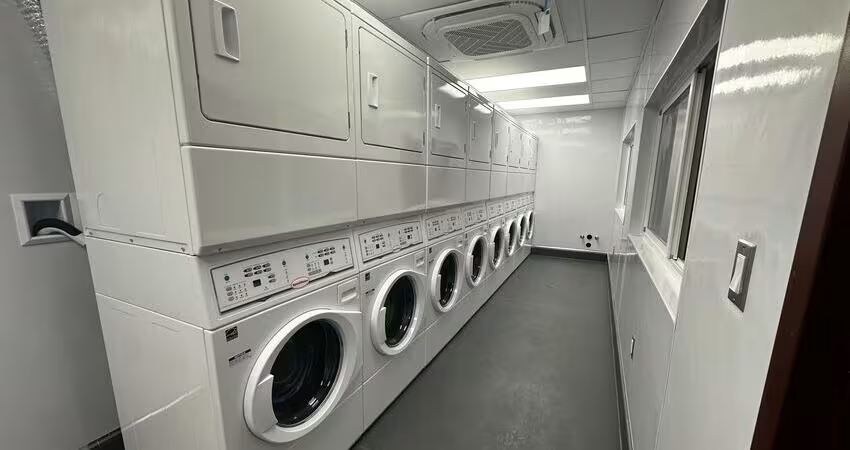
Shelters demand a level of durability that goes well beyond typical residential construction. Yeșilada highlights the importance of factory-controlled quality: "In a factory, it is easier to implement durability requirements into the building at scale and quickly. Recessed fixtures, tamper-proof attachments, and heavy-duty backing to support restroom, shower, and laundry fixtures can be incorporated easily into the production line."
In a low-barrier shelter with over 20 occupants — where people may be experiencing high levels of trauma and struggle with substance use disorder or behavioral health issues — higher levels of durability and safety are essential. At the same time, those measures need to be implemented through a trauma-informed design lens. The goal is durability without institutional coldness: commercial-grade materials and tamper-resistant fixtures paired with warm finishes, residential detailing, and careful acoustic treatment.
Shelter programs evolve. Populations shift. Service providers change. Modular construction accommodates this reality better than site-built alternatives. "Because of the transient nature of shelters, both for guests and staff or service providers, I like modular systems for flexibility," Yeșilada says. "If something isn't working for the end users, or the program changes, it is easier to shift and change elements in a modular system to support changing needs."
This adaptability extends to relocation. If a shelter site is temporary, prefabricated modules can be moved to a new location — avoiding duplication of resources and allowing organizations to respond to evolving community needs. The Modular Building Institute has documented multiple projects where the same modular components were reconfigured from sleeping pods to bathrooms to communal kitchens, depending on program requirements.
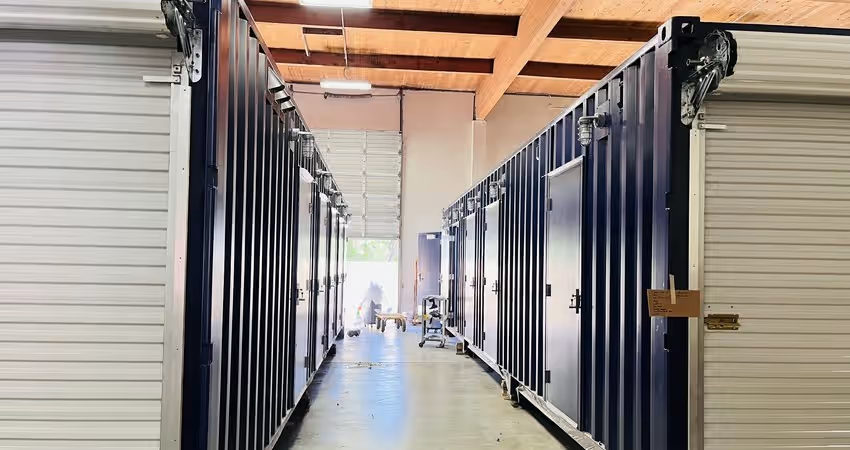
Of all the service spaces in a homeless shelter, the communal kitchen may be the most important — and the most underestimated.
Yeşilada is emphatic: "Food is a natural gathering activity. Sharing food and eating together promotes social bonding and healing from trauma. These skills are often lost or weakened when someone has gone through a traumatic experience and has lost trust in others."
The communal kitchen and dining area serve multiple functions beyond food preparation:
The 2025 Multnomah County Micro Village Expansion Project confirmed these observations through extensive research. Across every micro village studied, a communal kitchen, dining, and multipurpose gathering space was either praised by residents or specifically requested when it was absent.
Note: Social healing through shared meals is not a luxury, it is a programmatic necessity. Without trust-building spaces like communal kitchens, shelter guests are less likely to engage with the services that lead to long-term housing stability.
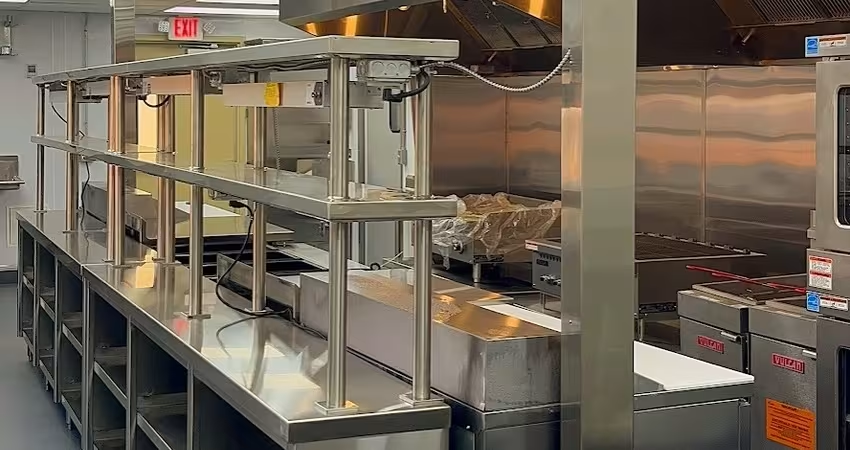
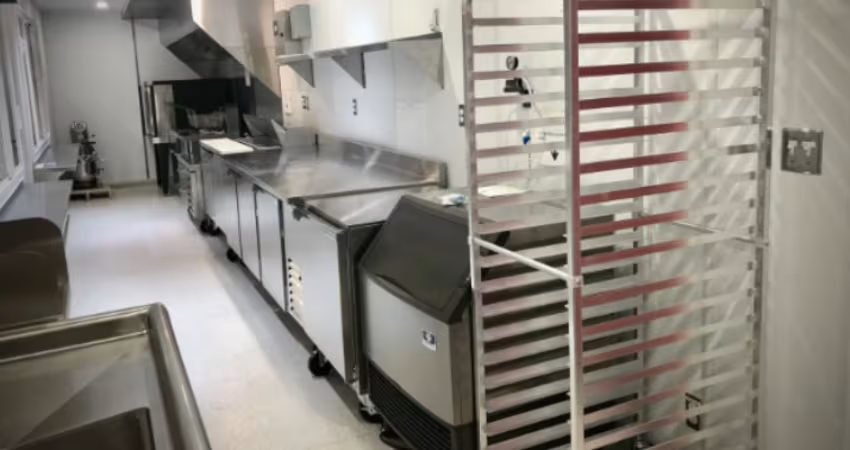
Modular or prefabricated kitchen systems offer distinct operational advantages for shelter environments:
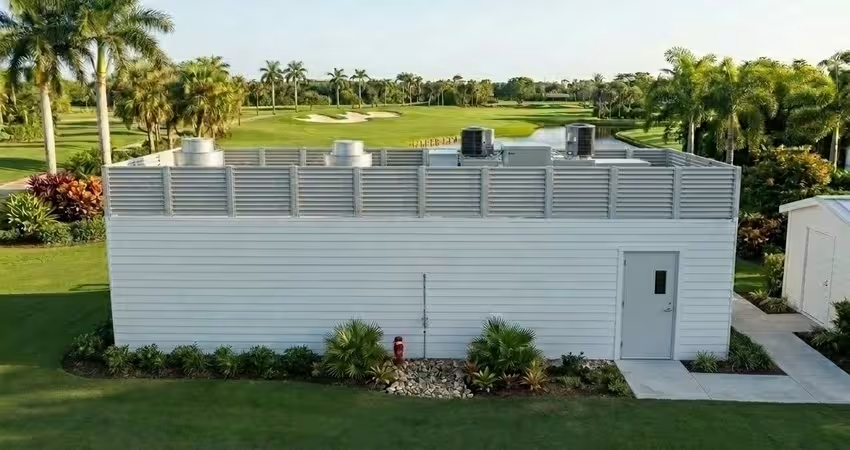
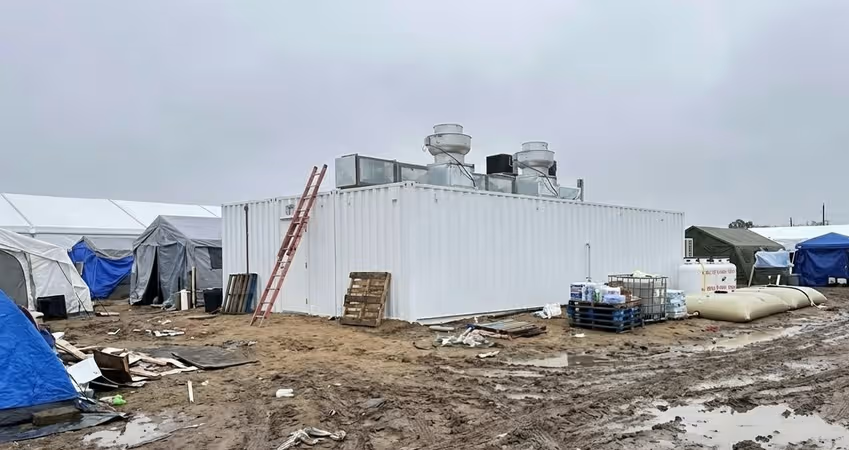
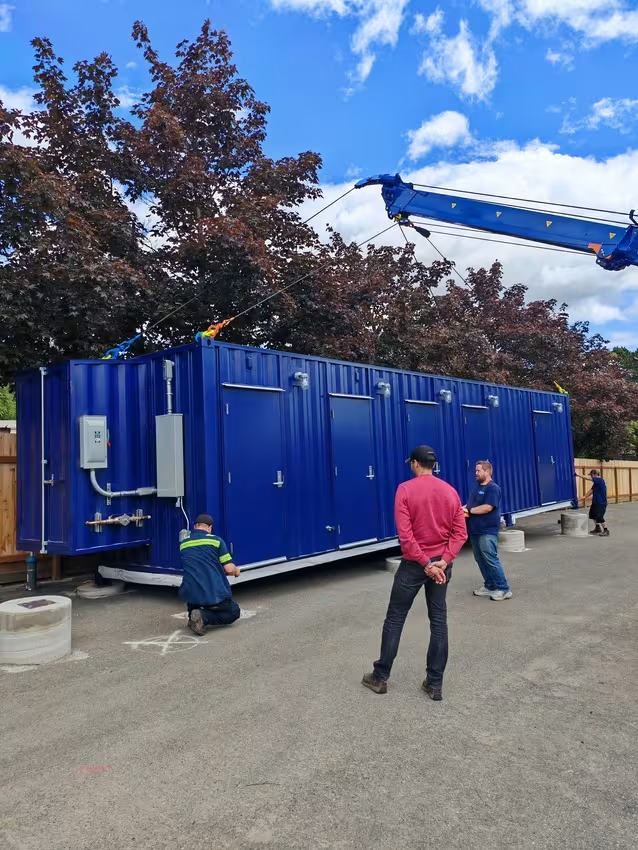
One recent TASS project illustrates both the strengths and limitations of modular deployment under budget constraints. A 40-foot modular kitchen unit was installed with commercial-grade appliances to support high-volume meal preparation for approximately 100 shelter guests. However, due to funding limitations, the site does not include a dedicated indoor communal dining or gathering space — a gap that can hinder the trust-building and social interaction central to trauma-informed design. A more effective approach would be a double-wide modular unit (approximately 40' x 16') that integrates both kitchen and dining space. In this case, a covered outdoor communal area is being developed adjacent to the kitchen to help address this need.
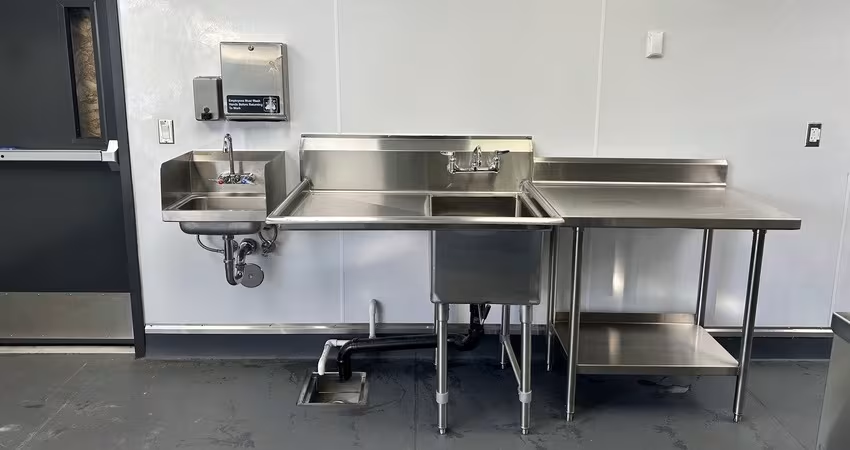
The same principles of commercial kitchen design — zoned workflows, durable surfaces, integrated ventilation, and flexible layouts — apply to shelter kitchens. Modular kitchen providers like ContekPro, who specialize in prefabricated kitchen solutions for high-volume food service environments, build units with pre-installed HVAC, plumbing, fire suppression, and commercial-grade equipment.
Yeşilada also emphasizes the importance of flexibility: "With kitchens, storage needs may vary, like if there is a change to the food service provider or the shelter capacity is increased." Modular systems accommodate these changes far more easily than fixed site-built construction.
Accessibility is not optional in modular shelter facilities — it is a legal and ethical imperative. Yeșilada stresses the importance of engaging designers, architects, and engineers to ensure health and safety codes and ADA accessibility requirements are not only met but optimally applied.
She offers a practical example: "A code would not require bariatric fixtures in this environment, but it is recommended. 36-inch wide doors are required for commercial individual rooms, sleeping units, and bathrooms — but 42-inch wide doors are more functional to allow for shelter guests using mobility aid devices, health equipment, pets, and larger-bodied individuals."
Modular construction provides an economy of scale for these enhanced accessibility features. In a factory setting, wider door frames, bariatric-rated backing, and reinforced fixtures can be incorporated into the production line without the premium cost of one-off site modifications. This makes it financially feasible to go beyond minimum code and build for the full range of shelter populations.
The demographics of homelessness are shifting, and shelter design must keep pace:
Universal design — creating environments usable by all people, regardless of age, ability, or status — should be incorporated into every space. Modular construction's factory-controlled environment makes consistent implementation of these principles more achievable and more affordable than site-built alternatives.
The sustainability advantages of modular construction, including reduced waste and energy-efficient insulation, further support the creation of healthy, dignified environments.
Tip: When specifying modular shelter units, consider going beyond minimum ADA standards. Universal design features like wider doorways, lever handles, step-free thresholds, and adjustable shelving benefit all occupants — not just those with documented disabilities.
Modular construction for homeless shelters is more than a building method — it is an opportunity to rethink how we design spaces that serve some of the most vulnerable members of our communities. When paired with trauma-informed design, meaningful accessibility, and purpose-built communal kitchens, prefabricated shelter facilities can deliver dignity, speed, and cost-effectiveness simultaneously.
In Part 2, we continue our conversation with Yeşilada to explore:
Explore Further: To learn how modular construction and prefabricated kitchen systems are transforming food service infrastructure, explore our comprehensive guide to shipping container kitchens. If you're exploring prefabricated solutions for a project, contact the ContekPro team to discuss your needs.