%20(1).avif)
Hospitality never really stands still. Guest expectations evolve, brands refresh concepts, and owners want more revenue from every square foot. Yet adding new kitchen capacity whether through a full new build or major back-of-house expansion is often expensive, disruptive, and slow.
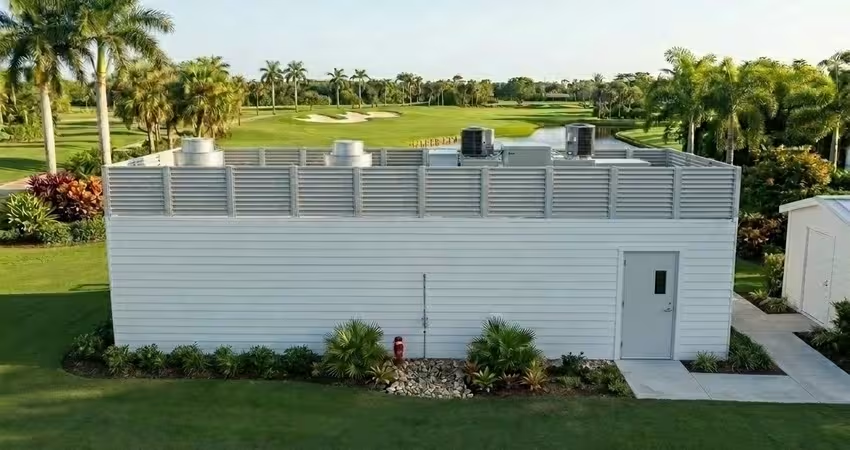
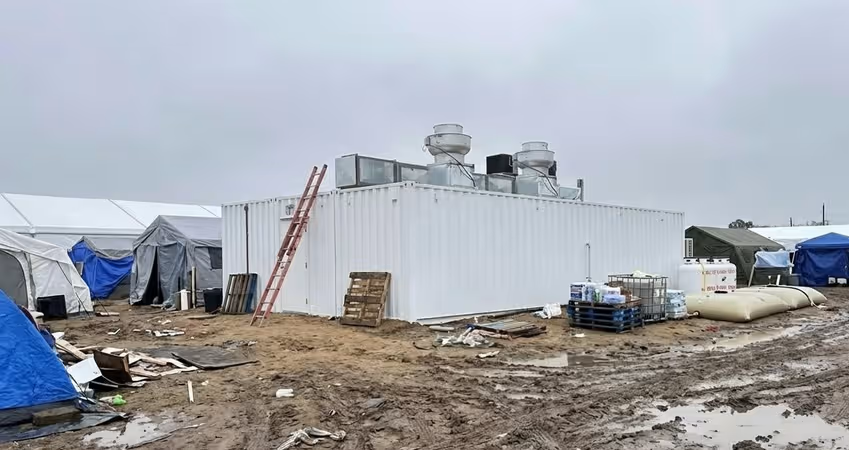
That’s why more hospitality leaders are turning to modular and prefabricated commercial kitchens as a permanent alternative to traditional brick-and-mortar projects. These factory-built units arrive pre-engineered, pre-outfitted, and designed to meet health, fire, and building codes, so you can add permanent kitchen capacity for expansion, remote locations, portfolio scaling, or rapid deployment without a multi-year construction program. Public-sector frameworks such as NHS show that permanent modular buildings, constructed off site, can be delivered significantly faster than traditional builds, often up to 50% quicker, and are designed to be expanded, reconfigured, or relocated over time.
Still, big decisions remain. How do ventilation and fire protection work in a modular kitchen? How will your local health department review the design? What does site prep involve for rooftops, courtyards, parking lots, or remote sites? How are utilities connected and sized? And what does it really cost compared with a conventional on-site build?
This article collects the top questions hotel GMs, F&B directors, asset managers, and owners ask about modular commercial kitchens and answers them through a hospitality lens so you can scale capacity faster, with less disruption, while staying compliant and on brand.
%20(1).avif)
Does this modular or prefabricated kitchen solve a specific capacity problem?
How does this kitchen support our 5–10 year growth strategy?
Is this the right location in our portfolio to add modular capacity?
.avif)
How does modular compare to traditional on-site construction?
Key trade-offs to evaluate:
The trade-off is that more design and coordination happens upfront, before fabrication begins.
How should this be positioned to ownership, asset management, and brand teams?
Frame it as a capital investment that delivers:
Clear comparisons to conventional builds make approvals easier.
What future options does this give us?
What production volume and menu mix must this kitchen support?
Does the layout support real-world workflows?
Is storage capacity sufficient for current and future demand?
How will staffing, circulation, and ergonomics perform in a compact footprint?
%20(1).avif)
Can modular kitchens support the same hood systems as traditional builds?
How are heat, grease, and odor managed?
Where do fans, ductwork, and discharge points go?
What fire suppression system is required?
How do AHJs typically classify modular kitchens?
How are interlocks and emergency controls handled?
Will health departments accept modular kitchen designs?
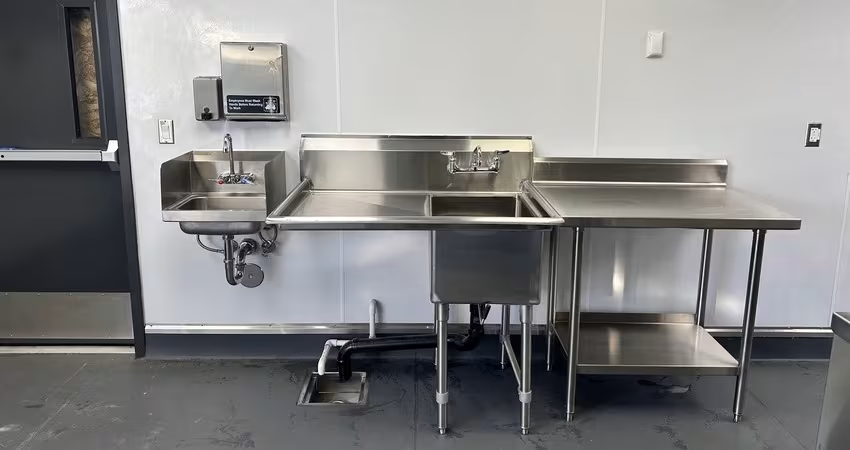
Are finishes and details food-code compliant?
How is cross-contamination avoided?
What utilities are required at the connection point?
What site work is typically needed?
How does delivery and installation work on live sites?
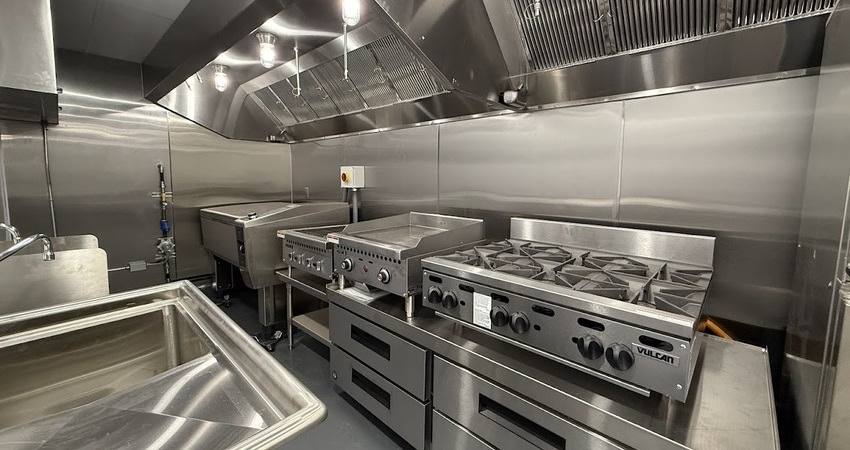
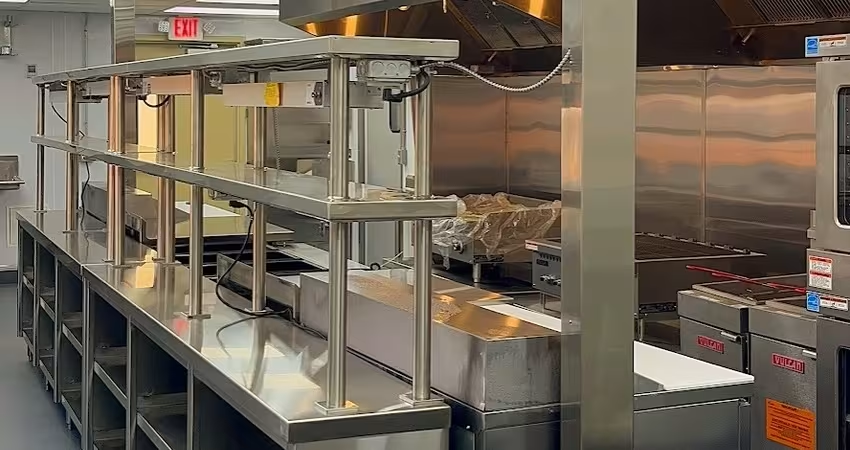
ContekPro manufactures prefabricated commercial kitchens as permanent, code-compliant modules — not retrofits or temporary fixes. Each unit is engineered as a complete commercial kitchen, integrating Type I hoods, UL 300 fire suppression, balanced make-up air, and NSF-listed fixtures. For coastal and island properties, we also offer corrosion-resistant packages and logistics support across the U.S. and Caribbean, making deployment to remote or hard-to-build sites significantly simpler.
Explore our hospitality-specific solutions:
.avif)
Modular and prefabricated commercial kitchens are no longer a niche experiment—they’re a strategic tool for hospitality leaders who need to unlock capacity, extend brands into new locations, or support remote and hard-to-build sites without waiting on a multi-year construction cycle. The core questions you’ve asked about strategy, ventilation, fire protection, health code, utilities, layout, cost, and guest experience are not obstacles to modular solutions; they’re the blueprint for doing them right.
When those questions are addressed up front, a factory-built kitchen can function exactly like a high-performing back-of-house inside the main building: same codes, same durability, same production capability. The difference is how the project is delivered. Off-site engineering and fabrication compress schedules, make costs more predictable, and reduce disruption to guests and operations, while giving you the option to replicate, relocate, or expand capacity over time.
ContekPro is built around that reality. Our prefabricated commercial kitchens are engineered as permanent assets for hotels, resorts, and foodservice brands, not temporary stopgaps or retrofits. By integrating code-compliant ventilation, fire protection, and utilities into each module, and by designing around real hospitality use cases: expansion, remote locations, portfolio scaling, and rapid deployment, we help you move faster without lowering the bar on compliance or guest experience.
If you’re evaluating how to add or re-balance kitchen capacity across your portfolio, the next step is simple: map your strategic objectives to the questions in this guide, then overlay where a permanent modular kitchen could de-risk your timeline, protect your guest journey, and open up new revenue you can’t reach with traditional construction alone. If you’re interested, contact us today!
Modular commercial kitchens can be designed as either, but ContekPro focuses on permanent, code-compliant kitchens that function like a built-in back-of-house. They’re engineered to local building, fire, and health codes and are meant to serve as long-term assets, not short-term event units.
Yes, if they are engineered correctly. A shipping container or prefabricated module must use commercial-grade finishes, Type I hoods, UL 300 suppression, proper make-up air, and NSF-listed equipment, and it must be reviewed by local authorities just like any other commercial kitchen.
They’re especially valuable for expansions, remote or hard-to-build locations, rooftop or courtyard installs, central production hubs, and rapid deployment of new concepts. Anywhere traditional construction is slow, disruptive, or logistically complex is a strong candidate for a modular solution.