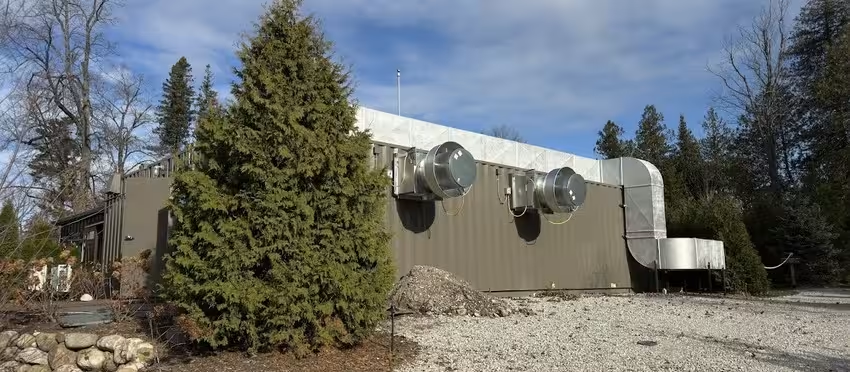
Your resort's main kitchen is three months into a renovation. Guests are arriving for peak season. The executive chef is threatening mutiny. Sound familiar?
For F&B directors at hotels and resorts, expanding or maintaining kitchen capacity without disrupting the guest experience is one of the most persistent operational challenges. Traditional construction takes 12-18 months, creates noise and debris, and often exceeds budget by the time permits clear. The U.S. hospitality industry is projected to reach nearly $250 billion in 2025, with guest spending at U.S. hotels expected to hit a record $777.25 billion according to the AHLA 2025 State of the Industry Report. Meeting this demand requires resort kitchen infrastructure that can scale fast.
Fortunately, prefabricated solutions—including shipping container kitchens and modular buildings—offer a faster, quieter, and more predictable alternative. In this article, we explore nine practical use cases where resorts are deploying these solutions to solve real operational problems. Whether you're planning a new venue or need continuity during a renovation, these scenarios will help you envision your next F&B project.
Before exploring specific use cases, it helps to understand what sets resort kitchen operations apart from standard restaurant environments. These distinctions shape which solutions work best for different scenarios.
A single resort property may operate a fine-dining restaurant, poolside grill, grab-and-go café, banquet hall, room service operation, and staff cafeteria—all from interconnected or separate kitchen facilities. Each concept requires different equipment configurations, workflow patterns, and production volumes. During peak occupancy, a 300-room resort might serve 1,500+ meals daily across these venues. This complexity demands kitchens designed with commercial kitchen design principles that prioritize flexibility and efficient workflow.
Unlike standalone restaurants, resort kitchens must operate invisibly. Construction noise, equipment deliveries, and kitchen odors can directly impact guest satisfaction scores. Any expansion or renovation project carries reputational risk if not managed carefully. This constraint makes off-site manufactured solutions particularly attractive—95% of construction happens in a factory, not on your property.
Many premium resorts occupy remote, environmentally sensitive, or infrastructure-limited locations. Island properties, mountain retreats, and coastal destinations often face limited utility access, challenging terrain for heavy equipment, and strict environmental regulations. Traditional construction in these settings is not just expensive—it may be impractical or prohibited during certain seasons.
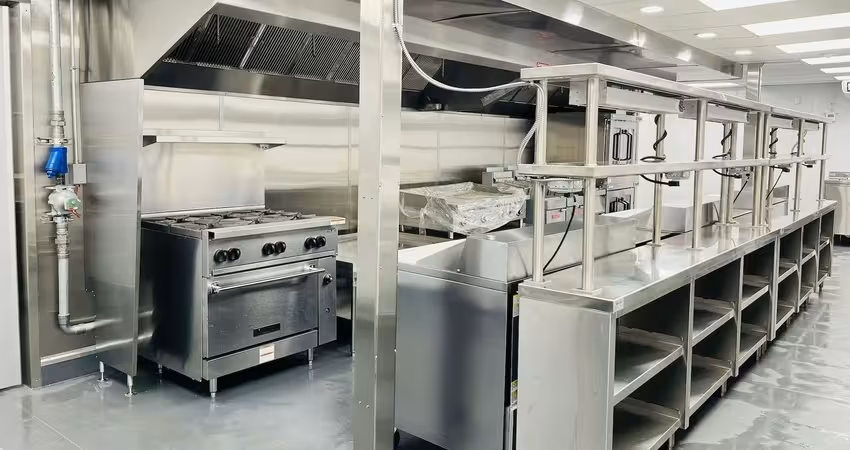
The following shipping container kitchen use cases represent real operational scenarios where prefabricated and modular kitchens deliver measurable value. Each includes a situation, challenge, solution, and outcome framework to help you evaluate applicability to your own property.
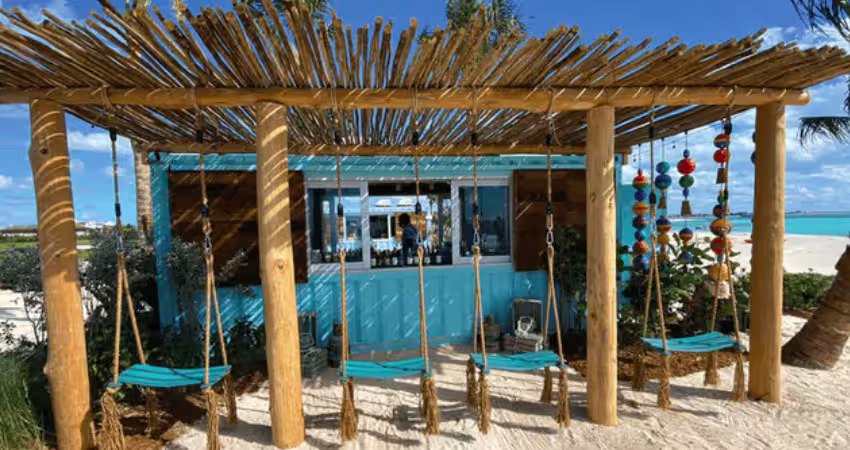
Situation: A luxury Caribbean resort wants to activate its pool deck with a full-service café offering fresh-prepared food and craft cocktails. The nearest existing kitchen is a five-minute walk through the main building, resulting in cold food and slow service times.
Challenge: Installing a traditional kitchen adjacent to the pool would require months of construction, disrupting guests during high season. Underground utility runs across manicured grounds would damage landscaping. The pool area also lacks the structural foundation for a permanent building.
Solution: A 320 sq. ft. shipping container kitchen positioned on a simple pier foundation near the pool deck. The unit arrives fully equipped with commercial cooking equipment, refrigeration, ventilation, and beverage stations. Exterior cladding matches the resort's tropical aesthetic. Utility connections tie into existing infrastructure with minimal trenching.
Outcome: The resort launches poolside dining within eight weeks of project approval. Average guest spend at the pool increases significantly as visitors order fresh meals instead of returning to their rooms. F&B revenue from the pool area becomes a meaningful contributor to overall property performance, and guest satisfaction scores improve due to convenience.
Situation: A destination resort hosts 40+ weddings annually on its oceanfront event lawn, plus corporate retreats and galas throughout the year. The main kitchen is 200 yards from the event space, requiring staff to transport plated meals across the property.
Challenge: Food temperature and presentation suffer during transport. Staff make dozens of trips per event, reducing efficiency and increasing labor costs. Renting temporary catering equipment for each event is expensive and inconsistent in quality. The resort needs dedicated production capacity at the event site without permanent construction on the scenic lawn.
Solution: A relocatable modular kitchen positioned seasonally near the event lawn. The 640 sq. ft. unit includes hot holding equipment, finishing stations, cold storage, and plating areas. During off-season, the kitchen relocates to support other property needs or stores in a service area.
Outcome: Plate-to-table time drops dramatically. Food quality scores from event clients improve. The resort reduces per-event rental costs and labor hours. The modular kitchen's flexibility allows repositioning for different event configurations throughout the year.
Situation: A ski resort experiences a dramatic occupancy spike during winter holidays, spring break, and major competitions. The existing kitchen operates at maximum capacity during these periods, with ticket times increasing and quality suffering under pressure.
Challenge: Building permanent kitchen expansion for demand that occurs only 10-12 weeks per year is financially unjustifiable. Temporary food trucks lack the capacity and compliance standards expected at a premium property. The resort needs scalable production capacity that can deploy quickly and store efficiently during off-peak months.
Solution: A 640 sq. ft. shipping container kitchen deployed adjacent to the main kitchen during peak season. The unit handles overflow prep work, dedicated stations for high-volume items like breakfast service, or serves as a standalone outlet near ski lifts. Pre-installed HVAC ensures comfortable operation in extreme cold.
Outcome: Kitchen ticket times remain consistent even at peak occupancy. Staff stress decreases as workload distributes across more stations. The resort captures additional revenue during high-demand periods without turning away guests or compromising quality. During summer, the unit supports outdoor dining programs or special events.

Situation: A private island resort in the Bahamas needs to replace aging kitchen infrastructure. The property is accessible only by boat or seaplane, with no local construction workforce and limited material supply chains.
Challenge: Importing construction materials and skilled labor to a remote island dramatically inflates costs and timelines. Weather windows for construction are narrow due to hurricane season. On-site construction would disrupt the intimate guest experience that defines the property's brand.
Solution: A complete modular kitchen manufactured stateside and shipped via barge to the island. The Caribbean resort kitchen arrives fully equipped with hurricane-resistant construction, corrosion-resistant finishes for salt air exposure, and all MEP systems pre-installed. Installation requires only local utility connections and a prepared foundation.
Outcome: The resort completes its kitchen replacement in a fraction of the time traditional construction would require. The new facility withstands subsequent storm seasons without damage. Operational costs decrease due to energy-efficient equipment, and the resort maintains uninterrupted service throughout the project.
Situation: A wellness-focused resort wants to offer fresh-pressed juices, smoothie bowls, and health-conscious meals at its spa facility. Currently, these items are prepared in the main kitchen and transported across the property, limiting freshness and menu options.
Challenge: The spa building lacks kitchen infrastructure, and adding traditional construction would require extensive permitting, utility work, and months of disruption to spa operations. The resort needs a compact, compliant production space dedicated to wellness cuisine without the footprint of a full commercial kitchen.
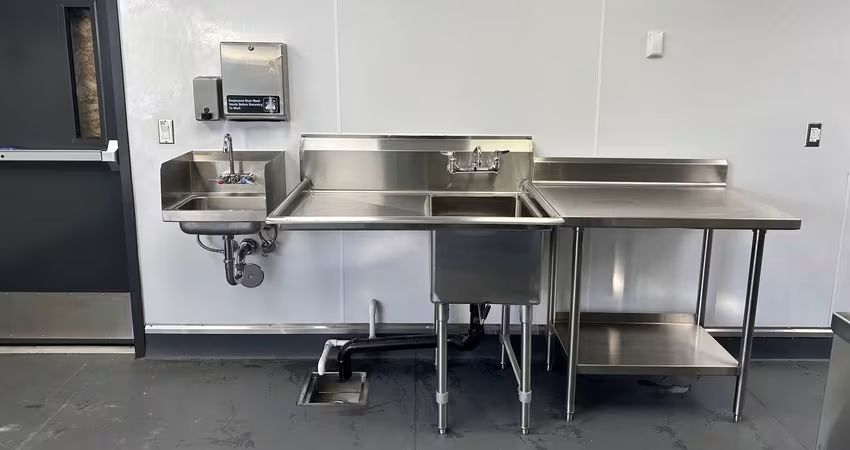
Solution: A compact 160 sq. ft. shipping container prep kitchen positioned near the spa, outfitted specifically for cold prep, juicing, and light cooking. The unit includes commercial refrigeration, prep surfaces, a three-compartment sink, and ventilation appropriate for the menu scope. Exterior design complements the spa's aesthetic.
Outcome: The spa launches a dedicated wellness menu featuring items prepared moments before service. Guest feedback highlights the freshness and quality. The spa generates new revenue from food and beverage without cannibalizing main restaurant traffic. Staff efficiency improves as wellness-focused prep no longer competes for main kitchen space.
Situation: A private golf club with three 18-hole courses wants to offer food service at a halfway point on its most remote course. The nearest clubhouse kitchen is a 15-minute cart ride away, leaving golfers without convenient dining options during rounds.
Challenge: Running utilities to the remote course location would require extensive trenching across fairways and environmentally sensitive areas. Traditional construction would take months and create disruption during the busy golf season. The club needs a self-contained solution that can operate with minimal infrastructure.
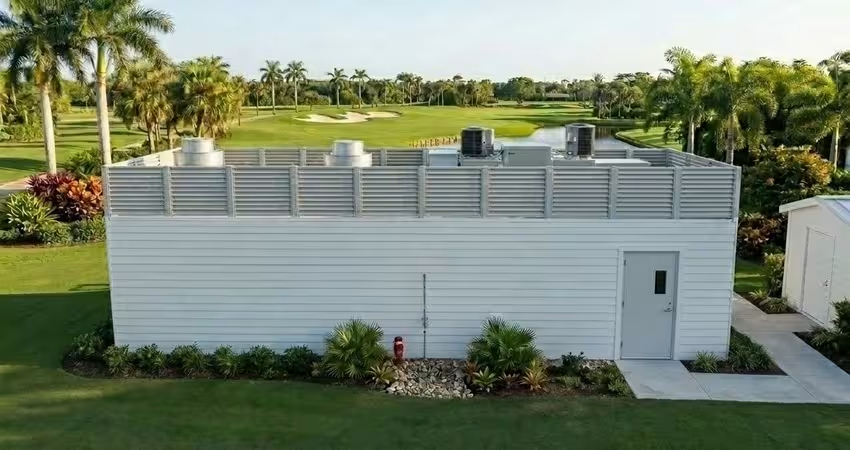
Solution: A 320 sq. ft. shipping container kitchen positioned at the halfway point, designed for grab-and-go items and grilled favorites popular with golfers. The unit connects to existing water and electrical service at a nearby maintenance building. Exterior cladding and landscaping integrate the structure into the course aesthetic.
Outcome: Golfers gain convenient mid-round dining without leaving the course. Per-round F&B revenue increases as members purchase items they previously skipped. The halfway house becomes a social gathering point that enhances the member experience. During tournaments, the kitchen supports elevated catering for larger groups.
%20(1)%20(1).avif)
Situation: A large integrated resort employs 800+ staff members across hotel, casino, and entertainment operations. The existing employee cafeteria operates at capacity during shift changes, with long lines reducing actual break time for workers.
Challenge: Expanding the staff cafeteria within the existing building would require costly construction and displace other back-of-house operations. The resort needs additional employee meal production capacity without sacrificing valuable interior square footage or disrupting ongoing operations.
Solution: A dedicated 640 sq. ft. staff dining kitchen positioned in a back-of-house service area, connected to the existing employee cafeteria via a covered walkway. The unit handles high-volume production for employee meals, freeing the main cafeteria kitchen for service and distribution. Equipment focuses on batch cooking and holding capacity appropriate for institutional feeding.
Outcome: Employee meal service lines decrease substantially as production capacity increases. Staff satisfaction scores improve as workers enjoy actual break time rather than waiting in queues. The resort demonstrates investment in employee welfare, supporting retention in a challenging labor market where 67% of hotels report staffing shortages.
Situation: A historic resort hotel is undertaking a complete renovation of its main kitchen facility. The project will take eight months, spanning the property's busiest summer season. Closing food service entirely would devastate revenue and guest satisfaction.
Challenge: The resort cannot afford to lose F&B revenue for eight months or damage its reputation by offering substandard temporary dining options. Renting temporary kitchen trailers is expensive for extended periods and often results in compliance issues. The property needs full production capability that maintains brand standards throughout the renovation.
Solution: A modular commercial kitchen installed in a service area adjacent to the main building before renovation begins. The 960 sq. ft. unit replicates the main kitchen's core production capabilities, allowing the resort to maintain its full menu and service standards. Upon renovation completion, the modular kitchen transitions to a permanent back-of-house expansion or relocates to another property need.
Outcome: The resort completes its renovation without closing the restaurant or reducing menu offerings. Guest reviews remain strong throughout the construction period. Staff maintain employment continuity rather than facing temporary layoffs. The modular kitchen becomes a permanent asset supporting future capacity needs.
Situation: A coastal resort in Florida wants to expand its beachfront dining program from a basic bar to a full-service restaurant experience. The existing beach bar has minimal prep capacity, limiting the menu to pre-made items and bottled beverages.
Challenge: Beachfront locations face salt air corrosion, humidity, sand infiltration, and hurricane exposure. Traditional construction on beach-adjacent land requires extensive environmental permitting and faces strict setback requirements. The resort needs durable, code-compliant kitchen infrastructure that can withstand coastal conditions.
Solution: A 480 sq. ft. shipping container kitchen built with marine-grade finishes, corrosion-resistant stainless steel, and reinforced construction rated for high-wind events. The unit positions on a raised platform behind the dune line, connecting to the existing beach bar via a short service path. Full cooking capability enables an expanded menu.
Outcome: The beach restaurant offers fresh-grilled seafood, appetizers, and elevated cocktails that transform the guest experience. Revenue per beachfront cover increases substantially compared to the previous bar-only model. The kitchen withstands subsequent storm events without significant damage, demonstrating long-term durability in the demanding coastal environment.
The use cases above share common threads that explain why shipping container kitchen features align so well with resort operational needs.
Traditional kitchen construction takes 12-18 months from design through completion. Shipping container kitchens deploy in 8-16 weeks, with 95% of construction happening off-site in a controlled factory environment. For resorts, this means new F&B venues can launch before peak season rather than after it, and renovation projects proceed without extended service interruptions.
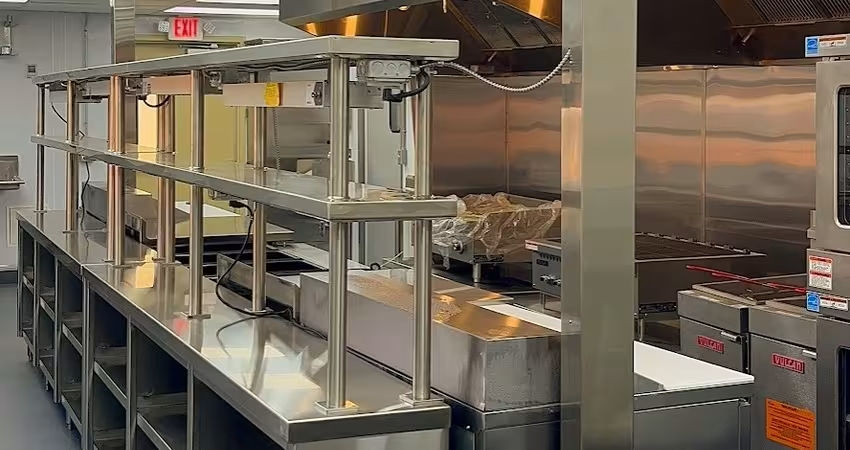
Professional modular kitchen manufacturers deliver units that meet International Building Code (IBC) standards and comply with NFPA 96 ventilation and fire suppression requirements, FDA Food Code sanitation standards, and local health department regulations. Pre-installed fire suppression systems, NSF-certified equipment, and complete architectural documentation streamline the permitting process.
Resort properties invest heavily in design consistency across guest-facing venues. Shipping container kitchens accept custom exterior finishes—wood cladding, metal panels, stucco, or vinyl wraps—that integrate seamlessly with existing architecture. From a guest perspective, these units blend into the property rather than appearing as industrial add-ons.
Resort locations often present environmental challenges that stress conventional construction. Shipping container kitchens built from Corten steel and marine-grade materials withstand salt air, high humidity, extreme temperatures, and severe weather events. Properties in coastal, tropical, mountain, and desert climates operate these units year-round with minimal maintenance requirements.
If any of these use cases resonate with your property's operational challenges, the path forward involves several key steps.
Define the operational need. Identify the specific problem you're solving—whether that's activating an underutilized space, supporting peak demand, maintaining service during renovation, or reaching a remote location. Clear objectives guide equipment selection and layout decisions.
Assess site conditions. Evaluate utility access, foundation requirements, delivery logistics, and any environmental or zoning constraints. Professional modular kitchen providers conduct site assessments to identify potential challenges early.
Engage stakeholders. Involve your executive chef, F&B director, facilities team, and ownership in the planning process. Their input ensures the final kitchen design supports actual operational workflows rather than theoretical ideals.
Evaluate timeline and budget. Compare modular solutions against traditional construction for your specific project. In most cases, prefabricated resort kitchens deliver 20-30% cost savings and 50% faster deployment according to hospitality industry research.
ContekPro specializes in hotel kitchen solutions designed for the unique demands of hospitality environments. From compact prep kitchens to full-service production facilities, our modular and shipping container kitchens deliver the speed, quality, and compliance resort operators require.
Ready to bring one of these use cases to life at your property? Request a custom quote to discuss your project with our team.
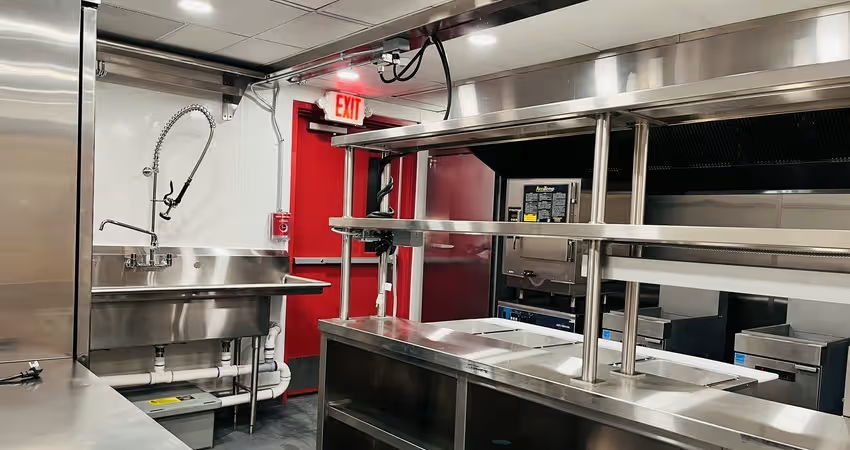
A resort kitchen is a commercial food preparation facility within a hotel or resort property designed to serve multiple dining concepts, high guest volumes, and diverse service areas including restaurants, poolside venues, banquet halls, and room service. Resort kitchens must meet strict health, fire, and building codes while operating efficiently across peak and off-peak seasons. Large properties may operate several interconnected or standalone kitchens supporting different F&B concepts.
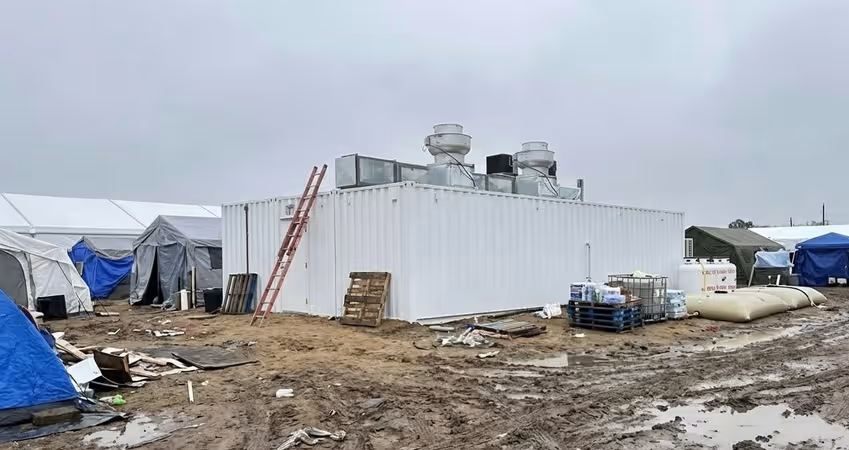
Resorts expand kitchen capacity rapidly using prefabricated modular or shipping container kitchens. These units are manufactured off-site and delivered turnkey-ready with pre-installed equipment, HVAC, plumbing, and fire suppression systems. Deployment takes 8-16 weeks rather than 12-18 months for traditional construction, minimizing guest disruption and allowing properties to scale for seasonal demand, special events, or renovation continuity.
Yes, professionally manufactured shipping container kitchens meet International Building Code (IBC) standards and comply with NFPA 96, FDA Food Code, and local health department requirements. Reputable suppliers deliver units with NSF-certified equipment, UL 300 fire suppression systems, commercial ventilation, and complete architectural and MEP documentation to support the permitting process. These kitchens pass the same inspections as traditional commercial kitchen construction.