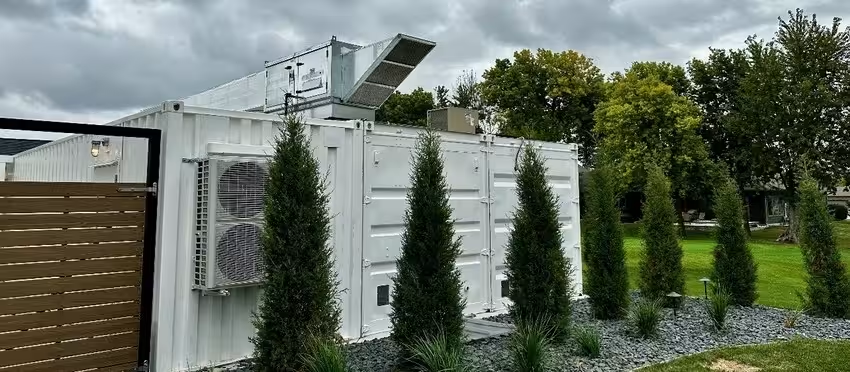
Food and beverage on the golf course has become a true business driver, not just a nice-to-have amenity. According to a recent global market study, golf course food and beverage services were valued at about US$ 3.46 billion in 2024, and are forecast to grow to approximately US$ 5.5 billion by 2035, reflecting a compound annual growth rate of ~4.3%. Golfers now expect better food, faster service, and more variety.
The question for operators is how to add real, code-compliant kitchen capacity exactly where it is needed, without lengthy construction schedules or major interference with daily play and member experience. This is where the shipping container kitchen comes in. Built as a permanent, commercial-grade structure, a containerized kitchen gives golf course operators a construction-quality solution that can be delivered and installed in a fraction of the time of a conventional build. It is engineered with full commercial ventilation, fire suppression, appropriate utility loads, and optimized workflow for high-volume service, all within a compact, durable footprint.
In this blog, we explain what a shipping container kitchen is, why it appeals to golf course and country club operators, how clubs are using these kitchens across their properties, and why ContekPro’s prefabricated solutions are an elite option for long-term F&B growth.
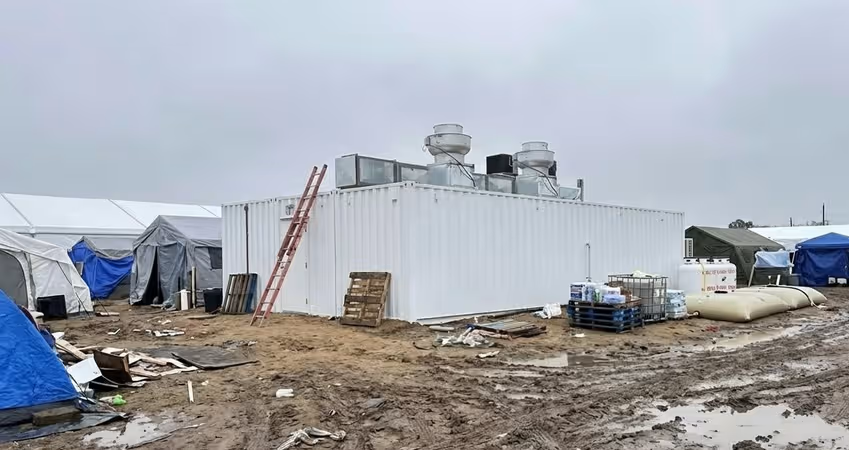
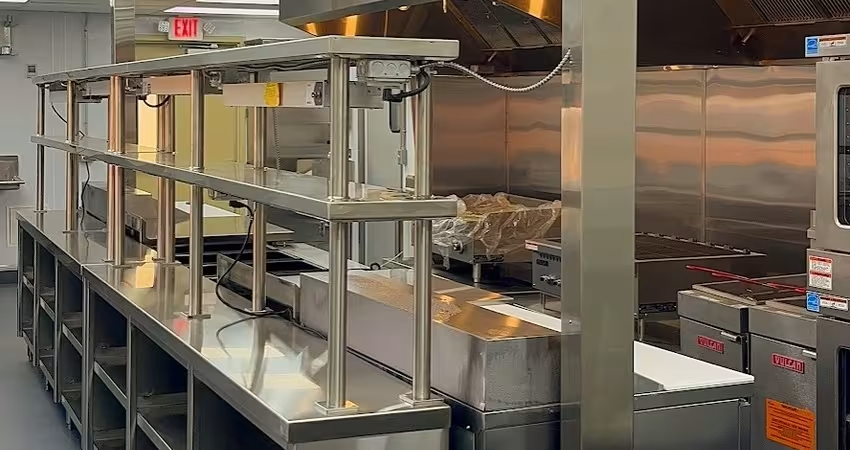
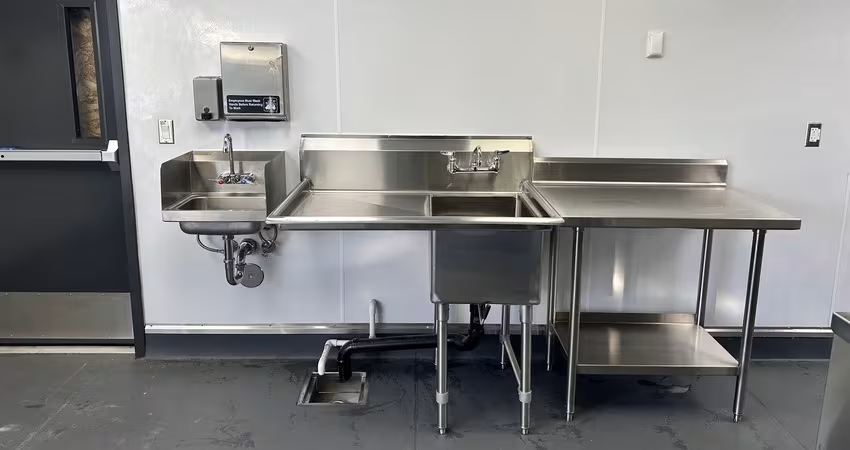
A shipping container kitchen is a repurposed or newly fabricated steel ISO container converted into a fully equipped commercial kitchen. Instead of building a kitchen from the ground up, operators install a kitchen shipping container that’s been pre-engineered to support commercial cooking, prep, refrigeration, and sanitation.
Unlike temporary food trailers, these are permanent-grade facilities designed to meet the same building, health, and fire safety codes as traditional kitchens. They combine the structural resilience of shipping containers with the full utility and workflow infrastructure of a professional foodservice operation.
Container kitchens are engineered to the same performance standards as brick-and-mortar builds, but with the flexibility of modular construction. They can range from compact 160 sq ft footprints suitable for concessions or beverage stations to larger multi-container configurations of 6,400 sq ft or more capable of supporting high-volume service.
Typical features include:
Note: For more detailed information on shipping container kitchens, read our blog here.
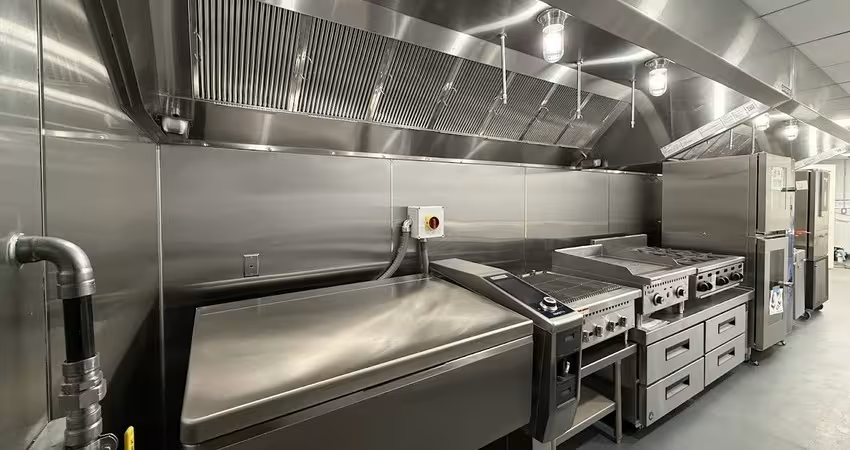
The financial advantage of a shipping container kitchen is one of its strongest appeals for golf course operators. Traditional commercial kitchen construction can range from $250–$400 per sq ft, and projects often exceed budgets due to site conditions, scope creep, or contractor delays. In contrast, a containerized commercial kitchen typically ranges from $150,000 to $800,000 depending on size, configuration, and equipment package — representing up to 30% in capital savings compared to conventional builds.
Because the unit is fabricated off-site in a controlled environment, pricing is far more predictable. Clubs receive a fixed scope and fixed price for the kitchen itself, with site work generally limited to utilities, pad, and access. This reduces the cost volatility associated with ground-up construction and shortens the time it takes for the kitchen to begin generating revenue. Smaller footprints and high-efficiency equipment packages further reduce operating expenses, allowing golf properties to expand F&B capacity without straining budgets.
Speed is another decisive advantage. A conventional brick-and-mortar expansion can take 6–12 months or longer, depending on permitting, construction schedules, and clubhouse disruption. A prefabricated shipping container kitchen, by contrast, can typically be delivered, installed, and operational in 8–12 weeks.
Industry data supports this acceleration: the Modular Building Institute reports that modular construction can reduce project timelines by up to 50%, thanks to parallel production and reduced on-site labor. For golf properties with growing F&B demand, rapid deployment means operators can bring new capacity online quickly: supporting members, tournaments, corporate outings, and patio dining without waiting through a lengthy construction cycle.
Shipping container kitchens eliminate much of the complexity associated with expanding a golf club’s foodservice infrastructure. Because they arrive fully outfitted and code-compliant, they require no coordination of multiple subcontractors, no phased construction schedules, and no architectural redesign of existing facilities.
Installation is straightforward: place the container, connect utilities, pass inspections, and begin service. This streamlined process drastically reduces administrative burden for general managers and F&B directors, allowing them to focus on guest experience rather than project management. The result is a turnkey, permanent kitchen asset that delivers predictable performance without the headaches of a traditional build.
Sustainability has become an important consideration for both private clubs and resort properties. Shipping container kitchens align naturally with these goals through efficient use of materials, reduced waste, and lower energy consumption over their life cycle.
Repurposing ISO shipping containers significantly reduces embodied carbon, while off-site fabrication minimizes construction waste and limits the environmental impact on the course. The U.S. Environmental Protection Agency (EPA) identifies material reuse as one of the most effective strategies for reducing the footprint of construction and demolition activities.
Container kitchens are also energy-efficient by design. Enhanced insulation, right-sized HVAC, demand-control ventilation, and ENERGY STAR equipment reduce daily utility consumption. For golf courses where sustainability targets and green certifications are growing priorities, containerized kitchens offer an environmentally responsible path to expanding F&B operations.
Golf clubs exist to deliver an elevated member and guest experience, which makes construction disruption a major concern. Traditional expansion often introduces months of noise, dust, blocked access routes, and visual clutter directly impacting member satisfaction.
Shipping container kitchens avoid this entirely. Because fabrication happens off-site, on-course disruption is minimal, often limited to pad preparation and utility connections. Once delivered, the unit is placed, leveled, inspected, and ready to operate. Members hardly notice the process, and club operations continue uninterrupted. This helps maintain the premium atmosphere expected at golf clubs while expanding capacity behind the scenes.
One of the most unique advantages of a shipping container kitchen is its inherent mobility. Even though the unit is engineered as a permanent, commercial-grade structure, it can still be relocated, resold, or re-positioned on the property as needs change.
For golf clubs, this mobility enables strategic flexibility:
This agility allows clubs to evolve their foodservice strategy over time without committing to immovable, high-cost construction. Container kitchens offer long-term durability with short-term adaptability — something traditional buildings simply cannot match.
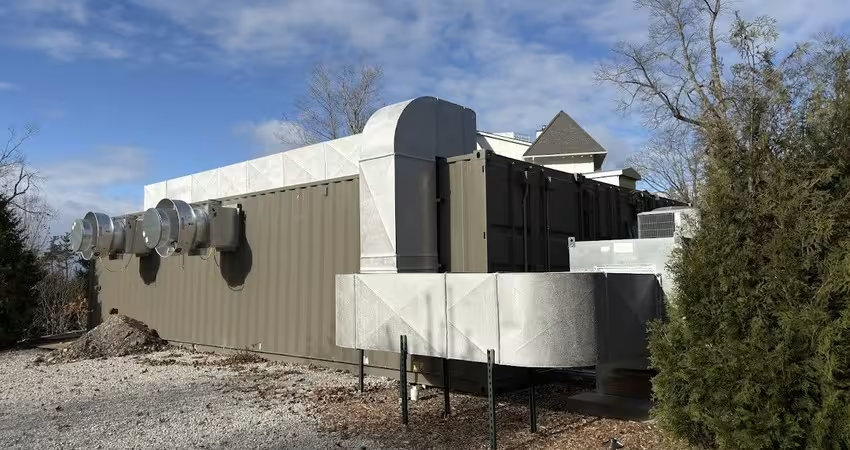
Golf and country clubs face unique operational challenges: fluctuating play volume, high-profile tournaments, and the expectation of consistent, high-quality dining across multiple venues on the property. Shipping container kitchens provide a flexible, premium solution that functions as permanent infrastructure in a variety of scenarios.
As membership grows, demand on dining programs intensifies. A prefabricated container kitchen allows clubs to expand capacity as a permanent extension of their F&B footprint, without taking on a lengthy ground-up construction project. These units can operate as auxiliary kitchens dedicated to banquets, pastry production, or cold prep — freeing up the main kitchen to focus on everyday à la carte service. The result is shorter wait times, faster ticket times, and a more consistent member experience across the board.
Note*:* ContekPro delivered a 960 sq ft shipping container kitchen aligned with a private club’s project schedule. Outfitted with premium equipment, dedicated walk-in refrigeration and freezer space, dishwashing zones, and customized dry storage, the unit now serves as a long-term production asset that streamlines operations and supports future growth.
Golf and country clubs regularly host large-scale gatherings such as charity tournaments, member-guest events, corporate outings, and weddings. These events can easily strain a single clubhouse kitchen. A shipping container kitchen positioned near the event zone allows chefs to plate and serve meals at volume, close to the point of service, without overloading the main kitchen or compromising food quality.
Clubs can also use these units to anchor dedicated concepts such as a BBQ pavilion, pizza program, grill station, or bar and bites concept, supporting a more diverse and resilient F&B strategy that runs year-round, not just for isolated events.
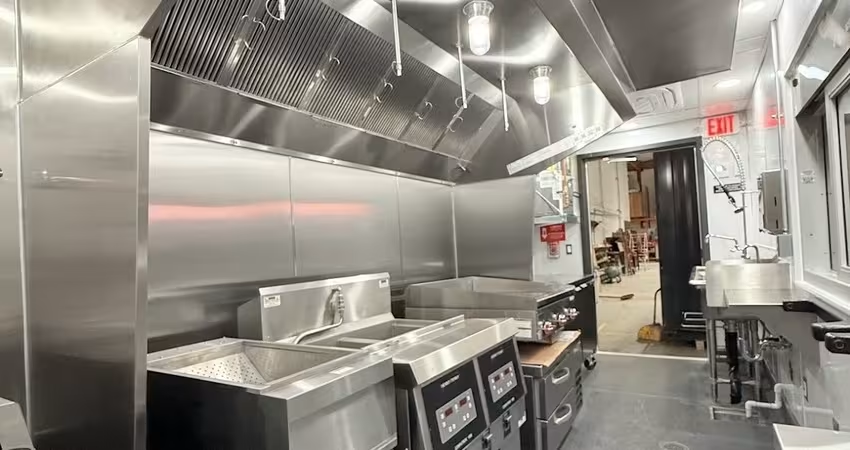
Note*:* At a world-class private golf destination in Florida, ContekPro delivered a 1,280 sq ft shipping container kitchen in just five weeks. Equipped with Vulcan charbroilers, griddles, heavy-duty fryers, and Beverage-Air refrigeration, the unit supports high-volume dining for members and guests during tournaments and ongoing club events, with the added benefit of being relocatable as the property’s program evolves.
When clubs undertake major clubhouse expansions or multi-phase campus upgrades, maintaining F&B performance is non-negotiable. A shipping container kitchen provides additional, fully featured production capacity that can operate in parallel with existing facilities. Over the life of the project and beyond, it functions as a permanent satellite kitchen that can be repositioned or repurposed as the property’s master plan comes to life.
Note*:* When one of Florida’s most prestigious private clubs embarked on a $74 million clubhouse transformation, ContekPro supplied a 1,280 sq ft shipping container kitchen and a 640 sq ft dishwashing and laundry unit to sustain operations throughout the multi-year project. Engineered for Florida’s climate and designed for long-term use, the solution enabled the club to maintain five-star dining standards while creating additional capacity that will continue to support the property’s future vision.
Not all member experiences happen inside the clubhouse. Receptions, tournaments, activations, and casual gatherings often take place at remote parts of the property where traditional back-of-house infrastructure is limited. A shipping container kitchen can be placed at the 18th hole, near the driving range, poolside, or adjacent to an event lawn, bringing a full commercial kitchen directly to the venue.
By placing permanent satellite kitchens closer to demand points, clubs can execute ambitious menus, maintain food quality at temperature, and reduce reliance on long food runs from the main clubhouse. This improves pace of service, enhances the on-course experience, and supports stronger F&B revenue across the property’s entire footprint.
.avif)
At ContekPro, we bring over 10 years of experience designing and delivering premium prefabricated shipping container kitchens for hospitality projects across the U.S. and Caribbean. Unlike basic container conversions, our units are purpose-built commercial kitchens engineered from the ground up for high-volume foodservice, not retrofitted from surplus boxes. For golf and country clubs, that means a fully compliant, customizable, turnkey kitchen that supports faster deployment, lower capital investment, and long-term growth as member demand increases.
Every club has a distinct F&B profile: weddings and banquets, member dining, tournament concessions, poolside service, or patio activation. ContekPro kitchens are designed around your menu and workflows, with optimized layouts that support high-volume production while protecting staff ergonomics and speed of service. From dedicated banquet lines and cold prep zones to integrated dishwashing and storage, each container kitchen is configured to function as a seamless extension of your overall F&B operation.
Built in a controlled factory environment, ContekPro kitchens go through rigorous quality assurance at every stage. We use high-grade Corten steel exteriors for strength and weather resistance and NSF-certified stainless steel interiors for hygiene and durability. Floors, walls, and work surfaces are selected to stand up to heavy-duty hospitality use, day in and day out. The result is a permanent kitchen asset engineered for long-term performance in demanding club environments.
Peace of mind starts with compliance. Every ContekPro unit is engineered to meet or exceed NSF, NFPA, ADA, and local health and building codes, with ventilation, fire suppression, egress, and accessibility built into the design from day one. Our goal is to deliver a kitchen that is not only high-performing, but also inspection-ready, helping streamline plan review and approvals with your local authorities.
ContekPro kitchens arrive as fully outfitted, ready-to-connect units. Commercial-grade appliances, plumbing, electrical systems, fire suppression, and ventilation are integrated and tested before shipment. Once on-site, the container is set in place, connected to utilities, and brought online, allowing golf and country clubs to launch new kitchens in weeks, not months, with minimal disruption to members and daily operations.
As your club evolves, so can your kitchen infrastructure. ContekPro’s modular approach allows you to:
This combination of permanent construction quality with relocatable flexibility gives clubs a future-proof way to expand capacity without committing to large, immovable capital projects.
From concept to commissioning, ContekPro acts as a partner, not just a supplier. Our team supports you through layout and design, equipment selection, coordination with your design professionals, permitting support, logistics, and post-installation follow-up. Whether it is your first container kitchen or your fifth, the process is structured, predictable, and transparent so you can focus on the member experience while we take care of the kitchen.
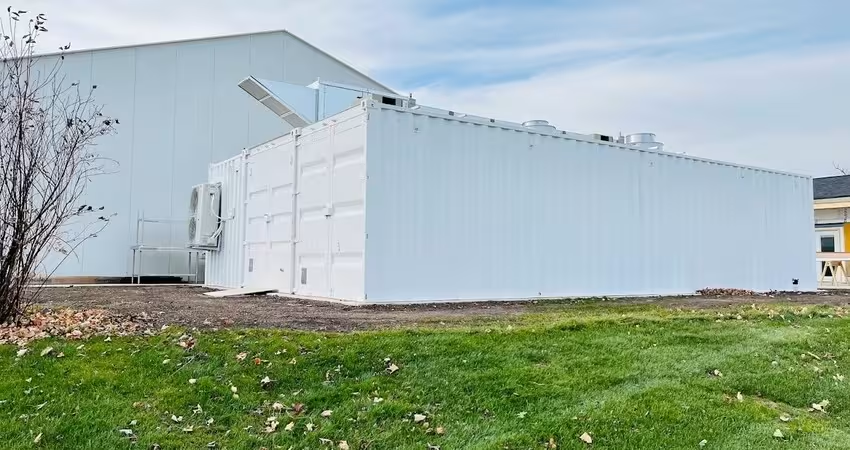
As golf courses continue elevating their dining programs, the need for efficient, high-quality kitchen infrastructure has never been greater. Shipping container kitchens offer a powerful solution by combining the durability and performance of a traditional commercial kitchen with the speed, flexibility, and cost efficiency of modular construction. For clubs seeking to expand capacity, serve remote venues, or enhance the member experience without lengthy construction timelines, a prefabricated container kitchen delivers unmatched advantages.
ContekPro’s purpose-built shipping container kitchens stand at the forefront of this evolution. Each unit is engineered as a permanent, code-compliant asset that arrives ready to operate, integrates seamlessly into the property, and scales with the club’s long-term vision. From high-volume tournament support to everyday member dining, these kitchens empower clubs to meet rising expectations while strengthening operational resilience and F&B revenue.
For golf properties looking to future-proof their culinary operations, containerized kitchens aren’t just an alternative to traditional construction, they’re a smarter, faster, and more strategic way forward. ContekPro makes that transition seamless, predictable, and built for the next decade of club growth.
Ready to reimagine your food and beverage operations? Explore ContekPro’s Hotel Kitchen and Fast Food Kitchen models or contact our team to design a bespoke container kitchen tailored to your club’s needs.
Golf courses are turning to shipping container kitchens because they offer fast deployment, lower capital costs, permanent-grade construction, and placement flexibility. They can expand dining capacity, support tournaments, add satellite kitchens near high-traffic areas, and enhance member experience without long construction timelines or disruptions. Container kitchens provide the same performance as a traditional kitchen — just delivered faster and with predictable pricing.
Placement depends on the club’s F&B strategy. Common locations include behind the clubhouse as a dedicated production or banquet kitchen, near the turn (holes 9/10) for snacks and quick-service, close to the driving range or practice facilities, or adjacent to event lawns and pavilions. The goal is to position the kitchen closer to demand points to shorten ticket times and reduce pressure on the main clubhouse kitchen.
Most of the work happens off-site in the factory. On-site, clubs typically need to prepare a pad or foundation, run utilities (power, water, sewer, gas where applicable), and coordinate inspections. Once the unit is delivered, it’s set in place, leveled, connected, and commissioned. For many clubs, this means going from delivery to operational in a matter of weeks, with minimal disruption to play or member experience.