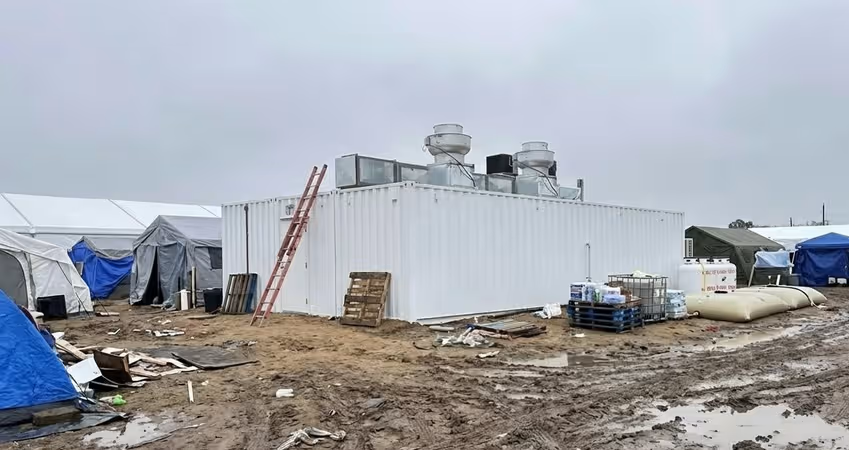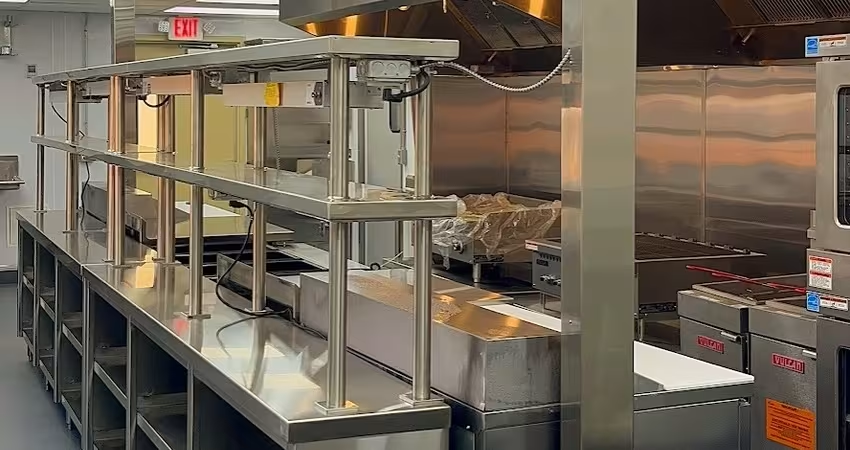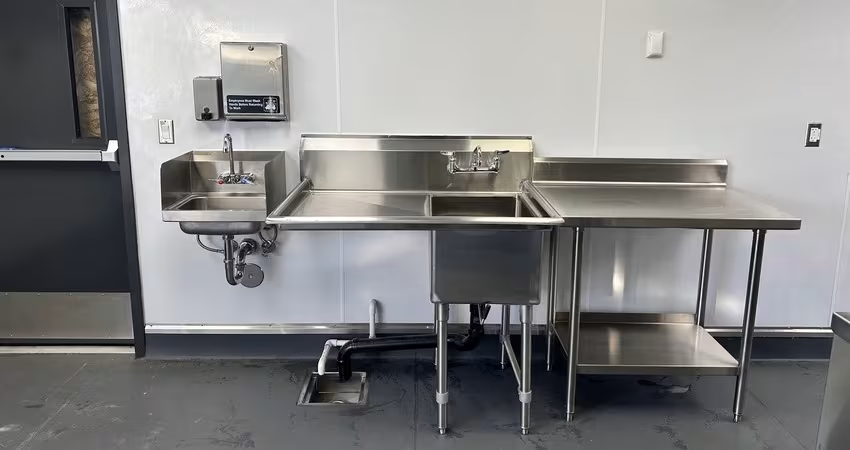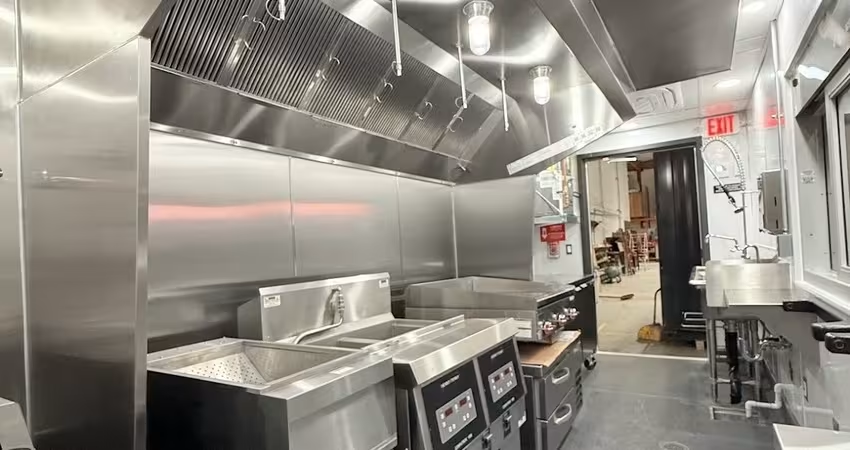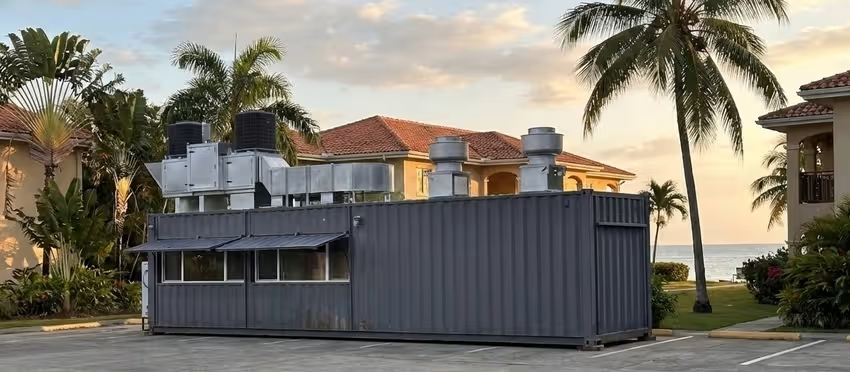
When you're investing in a commercial kitchen for a Gulf Coast resort or a Caribbean hotel property, wind resistance is not optional — it's a code requirement and a business imperative. Hurricanes cause billions of dollars in damage to U.S. infrastructure every year, according to NOAA's National Hurricane Center, and foodservice infrastructure is often among the first casualties. Shipping container kitchens, built from the same Corten steel that survives transatlantic crossings, offer inherent structural advantages in hurricane-prone regions. But how much wind can they actually handle? And what separates a container that survives a Category 2 storm from one engineered for Category 5 conditions?
This article breaks down the shipping container kitchen hurricane rating — from the Saffir-Simpson scale and ASCE 7 wind load standards to anchoring systems, structural modifications, and the building codes that govern installation in high-wind zones. Whether you're exploring a shipping container kitchen for a hotel or planning a modular expansion in the Southeast, understanding hurricane ratings is essential to protecting your investment.
The Saffir-Simpson Hurricane Wind Scale rates hurricanes from 1 to 5 based solely on maximum sustained wind speed. It does not account for storm surge, rainfall flooding, or tornadoes — all of which cause catastrophic damage independently.
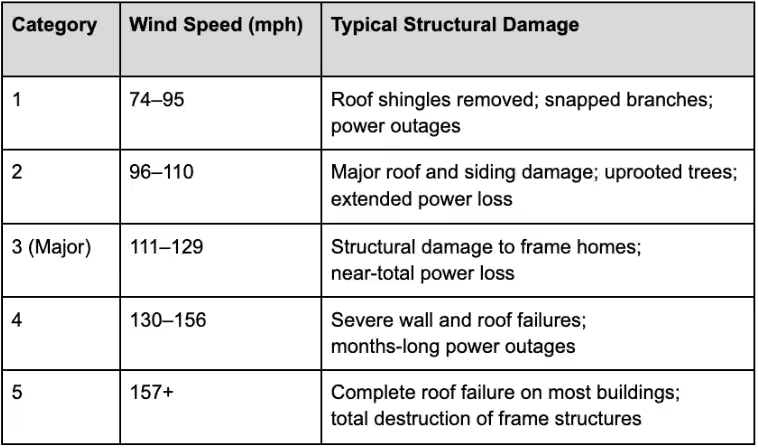
Source: NOAA Saffir-Simpson Hurricane Wind Scale
Beyond wind speed, hospitality operators must also account for storm surge (the leading cause of hurricane fatalities), windborne debris (responsible for most structural penetrations), and rain infiltration that can compromise HVAC, electrical, and insulation systems.
Note: Wind speed resistance is only one part of a comprehensive storm resilience strategy. Foundation design, flood elevation, and debris protection are equally critical.
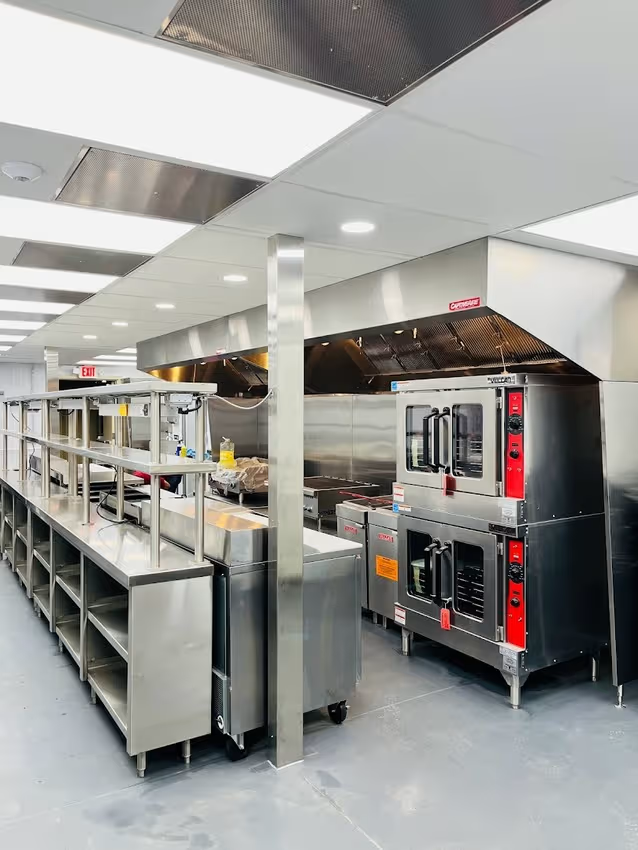
Shipping containers were originally engineered to survive the open ocean — stacked on cargo vessels, exposed to sustained winds exceeding 100 mph and 50-foot swells. This maritime DNA gives them a natural structural advantage over conventional construction in high-wind environments. For a full overview of container kitchen construction, see our guide on shipping container kitchen features, use cases, and costs.
Shipping containers are fabricated from Corten steel (also known as weathering steel), a high-strength, corrosion-resistant alloy. The corrugated wall panels and reinforced corner posts distribute wind forces evenly across the structure. According to sources, the ISO rigidity test demonstrates that a standard shipping container can withstand lateral forces equivalent to 180 mph wind speeds without structural failure.
Key structural properties that contribute to shipping container wind resistance include:
The shipping container kitchen hurricane rating varies dramatically depending on whether the unit is anchored or freestanding. Industry data and engineering estimates provide the following general benchmarks:
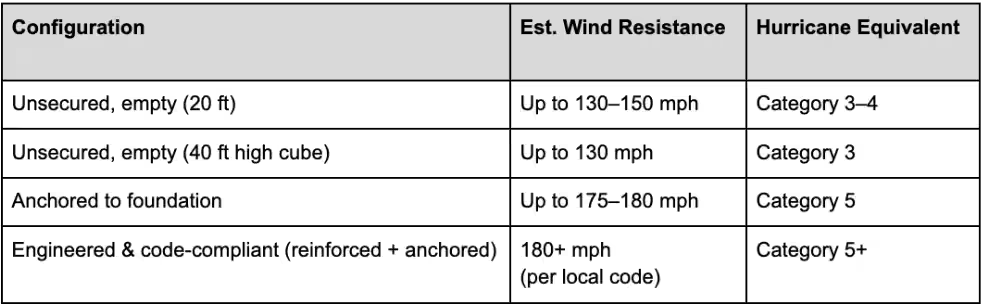
Note: These are general engineering estimates. Actual wind resistance depends on site-specific conditions including exposure category, terrain, orientation to prevailing winds, and soil type. A licensed professional engineer (PE) should perform site-specific wind load calculations per ASCE 7 for any permanent installation.
Every cutout made to a shipping container — for doors, windows, service hatches, or exhaust hoods — removes corrugated steel that contributes to the structure's overall rigidity. In a commercial kitchen application, these modifications are extensive and include:
Each modification must be reinforced — typically with welded steel portal frames or header beams — to maintain structural integrity and meet wind load requirements. This is a critical distinction between an engineered shipping container kitchen manufacturer and a DIY container conversion. Purpose-built modular kitchens account for these openings in the original structural engineering package.
Tip: If you're deploying a container kitchen in a hurricane zone, verify that your manufacturer provides structural engineering documentation signed and sealed by a licensed PE. This documentation is required for permitting and confirms that the unit's wind load capacity accounts for all modifications.
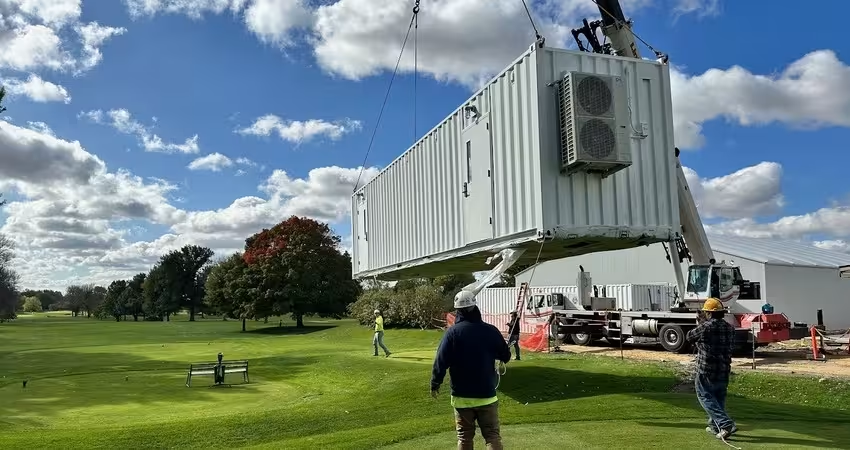
A shipping container kitchen hurricane rating is about more than what the steel can handle — it's about what codes require. For a complete permitting walkthrough, see our shipping container kitchen codes and permits guide.
The International Building Code (IBC) references ASCE 7 (Minimum Design Loads and Associated Criteria for Buildings and Other Structures) as the standard for calculating wind loads. ASCE 7 provides wind speed maps for the entire United States, broken out by Risk Category:
Most shipping container kitchens fall under Risk Category II or III depending on occupancy. According to the 2024 IBC code updates, design wind speeds in hurricane-prone regions range from 130 mph in moderate-risk coastal areas to 180+ mph in the most exposed zones. ASCE 7 provides the methodology for translating these wind speeds into actual design pressures applied to the structure, accounting for exposure, directionality, topography, and building geometry.
Florida has some of the most stringent wind load requirements in the country, established in response to the devastating impact of Hurricane Andrew in 1992. According to the Florida Building Commission, the state designates High Velocity Hurricane Zones (HVHZ) in Miami-Dade and Broward Counties, where design wind speeds reach 180 mph for Risk Category II structures.
HVHZ requirements impose additional mandates that directly affect container kitchen installations:
Note: Many coastal Florida counties outside the HVHZ still require 150–170 mph design wind speeds. Always confirm with the local Authority Having Jurisdiction (AHJ).
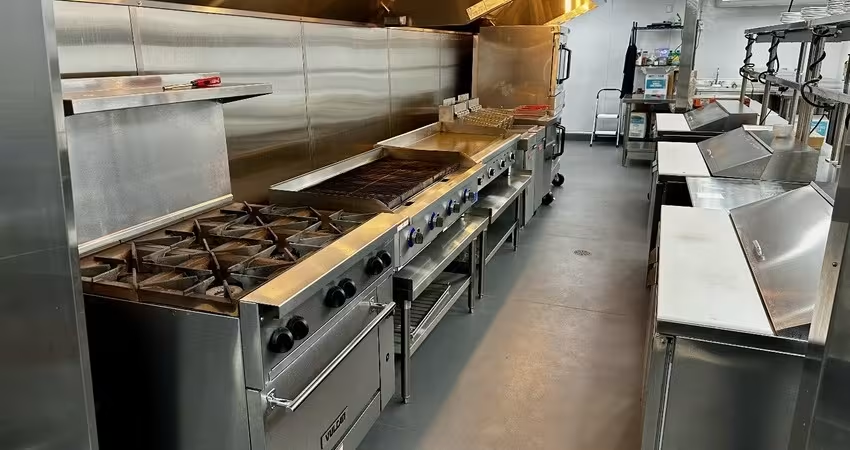
Achieving a hurricane proof container kitchen requires a systems-level approach. For broader planning guidance, see our article on planning and designing a shipping container kitchen.
Foundation design is the single most important factor in a shipping container kitchen's hurricane performance. Without adequate anchoring, even the strongest Corten steel structure can be displaced by wind forces. Common anchoring methods for modular kitchen hurricane zone installations include:
Tip: In flood-prone areas, elevating the container on piers or a raised foundation above the Base Flood Elevation (BFE) serves a dual purpose: it protects against storm surge while providing clearance for utility connections beneath the unit.
The weakest points in any container structure during a hurricane are its openings. Standard glass or aluminum-frame doors and windows can shatter under debris impact, leading to sudden internal pressurization — the leading cause of roof failure during hurricanes. For container kitchens in hurricane zones:
Commercial kitchens require exhaust hoods, make-up air units, and HVAC equipment — much of which sits on or penetrates the roof. According to ASCE 7 rooftop equipment provisions, rooftop structures on buildings under 60 feet must be designed with a wind load factor (GCr) as high as 1.9 applied to the standard wind pressure. In Florida, this factor increases to 3.1 for buildings of all heights.
Practical measures to protect rooftop kitchen systems include:
As referenced by FEMA's building code guidance, any structure in a FEMA-designated flood zone must be elevated to or above the Base Flood Elevation (BFE). For shipping container kitchens in coastal hurricane zones, this typically means:
Structural engineering protects the container. Operational planning protects the business.
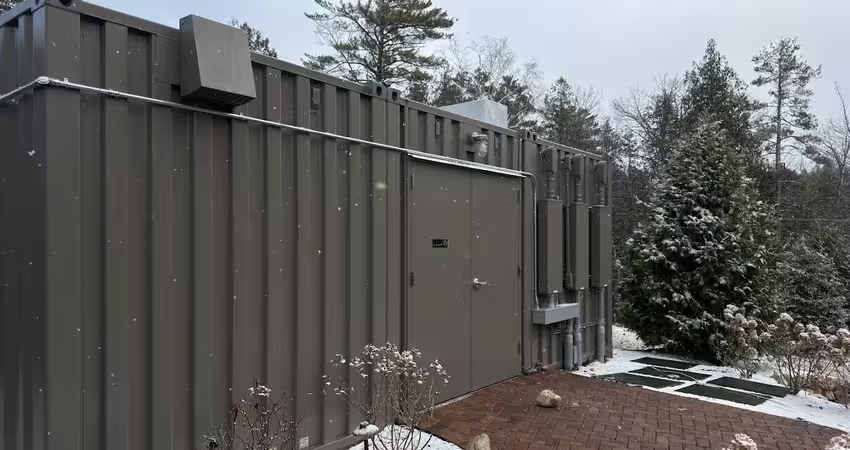
Not all container kitchens are created equal — particularly in hurricane-prone regions. The difference between an engineered modular kitchen and a DIY container conversion can be the difference between surviving a major storm and suffering a total loss.
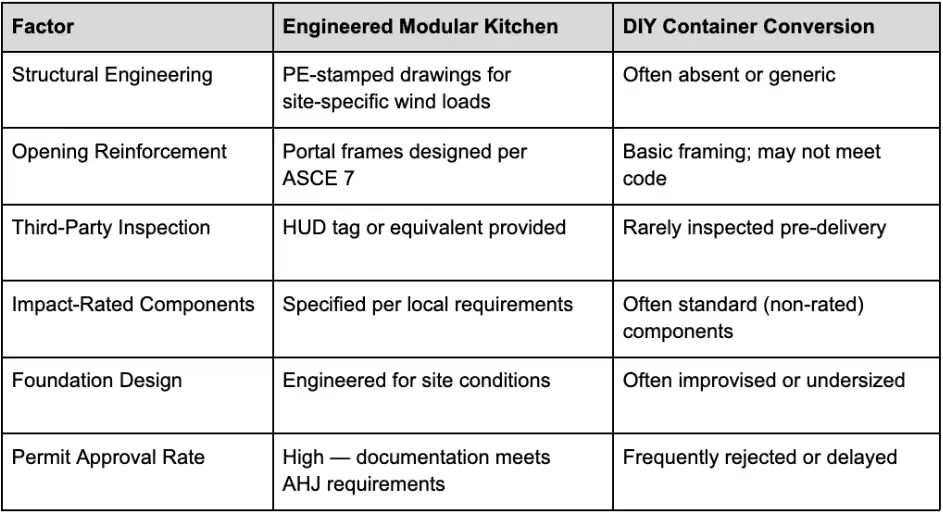
ContekPro's modular kitchens are built with Corten steel structures and metal stud framing, engineered to the IBC, and third-party inspected. Every unit ships with PE-stamped structural drawings — the critical requirement for permitting in hurricane zones.
If you're planning a shipping container kitchen for a hurricane-prone location, engineering matters. ContekPro's modular kitchens are built with Corten steel, engineered to the IBC, and third-party inspected — ready to perform in any conditions. Explore our hotel kitchen solutions or request a quote to get started.
This article is provided for informational purposes only and does not constitute structural engineering, architectural, or legal advice. Wind resistance values and hurricane ratings discussed here are general estimates and may vary depending on site conditions, structural modifications, foundation design, anchoring systems, and local building code requirements. Always consult a licensed professional engineer (PE) and the local Authority Having Jurisdiction (AHJ) to determine the appropriate design wind loads and permitting requirements for your specific installation.
When properly anchored to an engineered foundation, reinforced at all openings, and fitted with impact-rated components, a shipping container kitchen can withstand 175–180 mph winds — equivalent to a strong Category 5. Actual performance depends on site-specific engineering and compliance with the IBC and ASCE 7.
The IBC references ASCE 7 for wind loads. Florida's HVHZ requires 180 mph design speeds and impact-rated glazing. Local health departments and fire marshals review ventilation, fire suppression, and plumbing per NFPA 96 and the FDA Food Code.
Yes. Cutting openings removes structural steel. Each must be reinforced with portal frames to maintain integrity. Engineered manufacturers like ContekPro account for this in original calculations; DIY conversions frequently fail code — a risk amplified in hurricane zones.